Technology
Collaboration Technology – a Sound Investment for the Finance Sector
Published by Gbaf News
Posted on August 2, 2016
8 min readLast updated: January 22, 2026
Add as preferred source on Google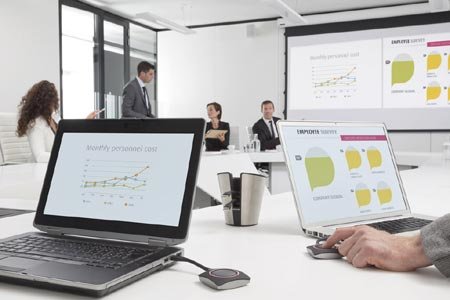
Published by Gbaf News
Posted on August 2, 2016
8 min readLast updated: January 22, 2026
Add as preferred source on GoogleBy Jan Willem-Brands, VP Collaboration, Barco

Jan Willem-Brands
Technological advancements have had a profound impact on the financial sector – from prompting changes in business models and corporate practices to increasing customers’ expectations in service standards. In fact, technology in general has been the driving force behind many positive changes in the industry, with banking and finance companies becoming more agile, innovative, collaborative and customer-centric than ever before.
Many of the biggest changes in the working environment stem from greater levels of collaboration, a trend originally sparked by BYODand the workforce naturally being more ‘digitally social’. This is being reflected in many new technologies developed for businesses; the latest solutions are fundamentally designed to allow employees to communicate more effectively – whether it is a revamp of the company’s intranet or introducing the latest HD video conferencing system.
To foster the right working environment, banks and financial institutions have started to provide their employees with more collaborative work spaces where they can work together to share ideas and information, manage projects, create and review shared documents, and ensure consistent knowledge is shared among all relevant team members.One area that should be the hub of sharing, creativity and collaboration is the meeting room – yet traditionally meeting room set ups tend to have a distinct lack of technological tools that make it easy to share information and ultimately improve productivity from employees.
Reaching collaborative standards in the meeting room
Meeting rooms in every type of organisation, from small huddle rooms for financial start-ups to large boardrooms for global multinationals, provide an ideal environment to capture the collective brainpower, so it is perhaps somewhat ironic that all too often there aren’t the right technological tools in place to encourage collaborative behaviour.
All digital devices, whether laptops, smartphones or tablets, play such a critical role in today’s business environment, it is only logical that the meeting room equipment is advanced enough to be able to be integrated with them. Yet, a common scenario is that business meeting rooms are even too ill-equipped to deal with the day-to-day equipment workers use at their desks. We have moved a world away from paper presentations and PowerPoints and meeting attendees taking on a passive role in meetings. The use of personal and digital devices has paved the way for ‘active’ attendees, who want to contribute by bringing their own content, collaborate and share their views in a quick and simple way.
Wireless Collaboration Technology
The ability for multiple participants to be able to display their screen on a shared monitor, regardless of the operating system, has to be a staple of meeting rooms within businesses that wish to promote collaboration and productivity. As a result, onesolution that has grown from being a niche, emerging trend, to a well-established must-have in the meeting room is wireless collaboration technology.
Ideally, any technology in the meeting room has to be as user-friendly as possible and effectively plug and play so it is accessible to all attendees. For true collaboration, the screen should also be available to every meeting participant, either through USB, app or Wi-Fi, so several people can share the screen at the same time and show different information or compare data. The ability to share screens is also important, perhaps by simply clicking a button, to keep the flow of the meeting and ensure it runs to time.
The latest technological tools on the marketenable employees to share content from their PC, Mac, Android or iOS devices on a meeting room screen, without the inflexibility and hassle of needing the right cables or adaptors. The wireless collaboration tools also ensure that content is displayed correctly and at the right resolution without having to use a physical connection.
In every corporate working environment, the meeting room is where the most critical business decisions are made, and is the main hub of communication, creativity and collaboration. The meeting environment has to have the right set up, with the ability to share visuals or information from different devices in order to help engage the participants and encourage collaboration to make the meeting far more effective. With the pressure on the financial sector to reduce operating costs while increasing business capability, investment in today’s meeting rooms has to be based on bolstering productivity, innovation and that all-important element of improving collaboration.
By Jan Willem-Brands, VP Collaboration, Barco
Jan Willem-Brands
Technological advancements have had a profound impact on the financial sector – from prompting changes in business models and corporate practices to increasing customers’ expectations in service standards. In fact, technology in general has been the driving force behind many positive changes in the industry, with banking and finance companies becoming more agile, innovative, collaborative and customer-centric than ever before.
Many of the biggest changes in the working environment stem from greater levels of collaboration, a trend originally sparked by BYODand the workforce naturally being more ‘digitally social’. This is being reflected in many new technologies developed for businesses; the latest solutions are fundamentally designed to allow employees to communicate more effectively – whether it is a revamp of the company’s intranet or introducing the latest HD video conferencing system.
To foster the right working environment, banks and financial institutions have started to provide their employees with more collaborative work spaces where they can work together to share ideas and information, manage projects, create and review shared documents, and ensure consistent knowledge is shared among all relevant team members.One area that should be the hub of sharing, creativity and collaboration is the meeting room – yet traditionally meeting room set ups tend to have a distinct lack of technological tools that make it easy to share information and ultimately improve productivity from employees.
Reaching collaborative standards in the meeting room
Meeting rooms in every type of organisation, from small huddle rooms for financial start-ups to large boardrooms for global multinationals, provide an ideal environment to capture the collective brainpower, so it is perhaps somewhat ironic that all too often there aren’t the right technological tools in place to encourage collaborative behaviour.
All digital devices, whether laptops, smartphones or tablets, play such a critical role in today’s business environment, it is only logical that the meeting room equipment is advanced enough to be able to be integrated with them. Yet, a common scenario is that business meeting rooms are even too ill-equipped to deal with the day-to-day equipment workers use at their desks. We have moved a world away from paper presentations and PowerPoints and meeting attendees taking on a passive role in meetings. The use of personal and digital devices has paved the way for ‘active’ attendees, who want to contribute by bringing their own content, collaborate and share their views in a quick and simple way.
Wireless Collaboration Technology
The ability for multiple participants to be able to display their screen on a shared monitor, regardless of the operating system, has to be a staple of meeting rooms within businesses that wish to promote collaboration and productivity. As a result, onesolution that has grown from being a niche, emerging trend, to a well-established must-have in the meeting room is wireless collaboration technology.
Ideally, any technology in the meeting room has to be as user-friendly as possible and effectively plug and play so it is accessible to all attendees. For true collaboration, the screen should also be available to every meeting participant, either through USB, app or Wi-Fi, so several people can share the screen at the same time and show different information or compare data. The ability to share screens is also important, perhaps by simply clicking a button, to keep the flow of the meeting and ensure it runs to time.
The latest technological tools on the marketenable employees to share content from their PC, Mac, Android or iOS devices on a meeting room screen, without the inflexibility and hassle of needing the right cables or adaptors. The wireless collaboration tools also ensure that content is displayed correctly and at the right resolution without having to use a physical connection.
In every corporate working environment, the meeting room is where the most critical business decisions are made, and is the main hub of communication, creativity and collaboration. The meeting environment has to have the right set up, with the ability to share visuals or information from different devices in order to help engage the participants and encourage collaboration to make the meeting far more effective. With the pressure on the financial sector to reduce operating costs while increasing business capability, investment in today’s meeting rooms has to be based on bolstering productivity, innovation and that all-important element of improving collaboration.
Explore more articles in the Technology category