
Top Stories
Britons Pay Their Respects at Queen Elizabeth’s Coffin
Published by Jessica Weisman-Pitts
Posted on September 12, 2022
3 min readLast updated: February 4, 2026
Add as preferred source on Google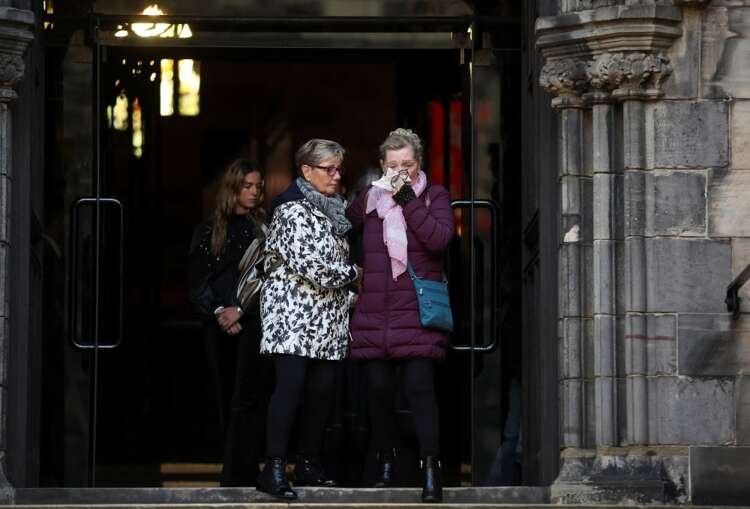
Published by Jessica Weisman-Pitts
Posted on September 12, 2022
3 min readLast updated: February 4, 2026
Add as preferred source on GoogleEDINBURGH (Reuters) -After queuing for hours to pay their respects to Queen Elizabeth, the first members of the public to file past the coffin of Britain’s longest-serving monarch on Monday spoke of their sadness and a sense of peace within the cathedral.
EDINBURGH (Reuters) -After queuing for hours to pay their respects to Queen Elizabeth, the first members of the public to file past the coffin of Britain’s longest-serving monarch on Monday spoke of their sadness and a sense of peace within the cathedral.
Queen Elizabeth died on Thursday in her holiday home at Balmoral in the Scottish Highlands, and her coffin was taken along the Royal Mile in the Scottish capital on Monday to lay at rest in the city’s St. Giles Cathedral for 24 hours.
“It was very beautiful, very peaceful and quiet,” said Marie Claire Cross, 55, who works in the National Health Service and had been queuing since 11am to enter the cathedral, before finally making it in over seven hours later.
“I was awed by the fact that I was in the cathedral with Queen Elizabeth, who I have looked up to all my life. It was awesome in the true sense of the word and it was so sad.”
Television footage showed people filing slowly past the coffin, which was draped in the Royal Standard of Scotland flag and topped with a wreath of white flowers and the Crown of Scotland, historically used for the coronations of monarchs of Scotland. Some stopped to bow as they passed, others wiped away tears.
Thousands queued outside to enter the cathedral, with people due to continue paying their respects through the night.
On Tuesday, the coffin will be flown to London, where on Wednesday it will begin a period of lying in state until Sept. 19 – the day of Elizabeth’s state funeral – on a catafalque at Westminster Hall.
Retired music teacher Michael Hainsworth, 70, was one of the first to enter the cathedral in Edinburgh.
“We were very upset. It was so emotional. It brought it all home. It is hard to put into words. You don’t think it will hit you but then it does,” he said, as he comforted his tearful wife.
Four ceremonial guards from the Royal Company of Archers stood at the four corners of the coffin. For around ten minutes, they were also joined by King Charles and his three siblings, who held a silent, sombre vigil at their mother’s side.
“It was a really surreal moment. To see the members of the royal family there really brought it home,” said Peter Cliff, 66, a retired business owner. “When you see members of the royal family there grieving it really hits you.”
(Reporting by Andrew MacAskill and Lindsay Dunsmuir, Writing by Kylie MacLellan, editing by Deepa Babington)
A coffin is a box or container in which a deceased person is placed for burial or cremation. It is often made of wood or metal and can be elaborately designed.
A vigil is a period of keeping awake during the time usually spent asleep, especially to keep watch or pray. In the context of mourning, it often involves gathering to honor the deceased.
A state funeral is a public funeral ceremony held to honor a deceased head of state or other significant national figure, typically characterized by formalities and ceremonies.
A ceremonial guard is a group of soldiers or personnel assigned to perform ceremonial duties, such as guarding a monument or participating in state functions, often in formal uniforms.
Explore more articles in the Top Stories category











