
Top Stories
Britain’s Broken Egg Industry Shows the Price of Food Inflation
Published by Uma Rajagopal
Posted on December 19, 2022
5 min readLast updated: February 2, 2026
Add as preferred source on Google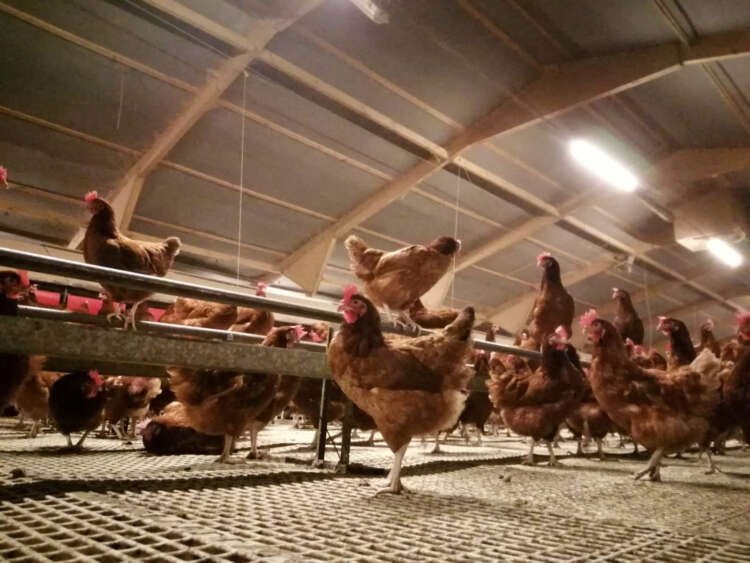
Published by Uma Rajagopal
Posted on December 19, 2022
5 min readLast updated: February 2, 2026
Add as preferred source on GoogleBy James Davey
LONDON (Reuters) – In Britain, the damage wrought by rampant inflation can be seen in the fate of the humble egg.
With war in Ukraine driving energy and chicken feed costs higher, farmers say what they get paid is no longer enough, upending the economics of a key food staple.
Many of the country’s supermarkets, including market leader Tesco and No. 3 Asda, have rationed sales, blaming the bout of bird flu that has ravaged flocks across Europe and the United States and, they say, led to a British shortage.
But British farmers argue that while the outbreak is a factor, there are not enough eggs because they lose money on every box sold, forcing many to cut production and some to quit altogether.
“The stupidity of the whole thing is that we warned retailers, we’ve given them plenty of notice this was going to happen,” Robert Gooch, chief executive of the British Free Range Egg Producers Association (BFREPA) told Reuters.
The association estimates the total UK laying flock has fallen 6% to 36.4 million over the past 12 months, suggesting even tighter supply ahead.
Frank Thompstone says that last year he cut the number of free range hens at his farm in Burton-on-Trent, central England, to 24,000 from 36,000 to limit his losses. By October he had had enough, giving the required 12-month notice on his contract with his buyer.
The buyer, who packs and sells the eggs to supermarkets, offered 15 pence per dozen more in response, which Thompstone says still leaves him with a loss.
“Why would we commit to that?” he told Reuters. “I’m aghast frankly. It’s the retailers that hold the purse strings.”
Driven by consumer demand, British egg producers have for years focused on free range, which now represents 70% of the market. But with only 13% of eggs in the European Union free range, the option to fill the gaps on UK supermarket shelves with imports is limited.
Britain’s National Farmers Union (NFU) says the eggs shortage could be just the beginning, as the new era of costly energy and grains combined with labour shortages could bring more empty shelves unless food producers and retailers agree fairer terms for the future.
While double-digit inflation has strained the relationship between producers and retailers across the globe, intense competition among British food retailers has kept prices below European averages and their profit margins among the lowest around.
That, combined with a cost-of-living crisis fuelled by soaring food and energy costs, limits their room for manoeuvre, retailers say.
Yet egg producers say that while the supermarkets have raised retail prices and paid farmers more, that increase is not enough to cover exploding costs.
The NFU says that while British producers are being paid 35% more for their eggs than in 2019, the cost of chicken feed raw materials has surged 90%.
Official UK data shows retail prices for eggs have increased 27% over the last year alone.
‘TOLD YOU SO’
According to BFREPA, it costs a farmer about 138 pence to produce a dozen eggs. But buyers are only paying around 109 pence while retailers are selling them for between 219 and 410 pence.
Ballooning costs and bird flu have hurt farmers across Europe, with global egg production expected to fall for the first time ever this year, according to the EU’s largest producer, French group CNPO.
Some 750,000 UK birds have been culled due to bird flu and there is no guarantee they will be replaced, but more may fall victim to financial pressures.
Daniel Brown, whose 44,000 hens lay 40,000 eggs a day at his farm at Bury St Edmunds in eastern England, says a recent 18 pence per dozen price increase offered some relief, but he was still not breaking even.
“We explained clearly to the retailers why the price needs to go up, what the cost increases are, what the consequences will be and they just ignore you,” he told Reuters. “And then it plays out.
“It is basically ‘I told you so’, but it doesn’t give you any satisfaction.”
Last month Tesco, Aldi and Waitrose between them said they had provided an additional 29 million pounds ($35 million) of support to the egg industry.
The British Retail Consortium, which represents the supermarkets, says they recognise the need to pay a sustainable price to farmers, but say they are also facing higher costs.
Brown said he will decide by April 2023 whether it is worth re-stocking birds for another production cycle but warned industry capacity won’t improve any time soon.
“If the retailers were to come to the industry today with a brilliant offer and say ‘have another 70 pence a dozen’, it would still take six to eight months to rear enough birds to replace those that have been lost,” he said.
($1 = 0.8216 pounds)
(Reporting by James Davey, Editing by Kate Holton and Tomasz Janowski)
Inflation is the rate at which the general level of prices for goods and services rises, leading to a decrease in purchasing power.
Food inflation refers to the increase in the prices of food items over time, often driven by factors like supply chain disruptions and production costs.
Bird flu, or avian influenza, is a viral infection that primarily affects birds but can also infect humans and other animals, leading to significant poultry losses.
Free-range farming is an agricultural practice where animals, such as chickens, are allowed to roam outdoors for at least part of the day, promoting animal welfare.
Retailers play a crucial role in food supply by sourcing products from producers, setting prices, and managing inventory to meet consumer demand.
Explore more articles in the Top Stories category











