Search
00
GBAF Logo
trophy
Top StoriesInterviewsBusinessFinanceBankingTechnologyInvestingTradingVideosAwardsMagazinesHeadlinesTrends

Subscribe to our newsletter

Get the latest news and updates from our team.

Global Banking and Finance Review

Global Banking and Finance Review - Subscribe to our newsletter

Company

    GBAF Logo
    • About Us
    • Profile
    • Privacy & Cookie Policy
    • Terms of Use
    • Contact Us
    • Advertising
    • Submit Post
    • Latest News
    • Research Reports
    • Press Release
    • Awards▾
      • About the Awards
      • Awards TimeTable
      • Submit Nominations
      • Testimonials
      • Media Room
      • Award Winners
      • FAQ
    • Magazines▾
      • Global Banking & Finance Review Magazine Issue 79
      • Global Banking & Finance Review Magazine Issue 78
      • Global Banking & Finance Review Magazine Issue 77
      • Global Banking & Finance Review Magazine Issue 76
      • Global Banking & Finance Review Magazine Issue 75
      • Global Banking & Finance Review Magazine Issue 73
      • Global Banking & Finance Review Magazine Issue 71
      • Global Banking & Finance Review Magazine Issue 70
      • Global Banking & Finance Review Magazine Issue 69
      • Global Banking & Finance Review Magazine Issue 66
    Top StoriesInterviewsBusinessFinanceBankingTechnologyInvestingTradingVideosAwardsMagazinesHeadlinesTrends

    Global Banking & Finance Review® is a leading financial portal and online magazine offering News, Analysis, Opinion, Reviews, Interviews & Videos from the world of Banking, Finance, Business, Trading, Technology, Investing, Brokerage, Foreign Exchange, Tax & Legal, Islamic Finance, Asset & Wealth Management.
    Copyright © 2010-2026 GBAF Publications Ltd - All Rights Reserved. | Sitemap | Tags | Developed By eCorpIT

    Editorial & Advertiser disclosure

    Global Banking and Finance Review is an online platform offering news, analysis, and opinion on the latest trends, developments, and innovations in the banking and finance industry worldwide. The platform covers a diverse range of topics, including banking, insurance, investment, wealth management, fintech, and regulatory issues. The website publishes news, press releases, opinion and advertorials on various financial organizations, products and services which are commissioned from various Companies, Organizations, PR agencies, Bloggers etc. These commissioned articles are commercial in nature. This is not to be considered as financial advice and should be considered only for information purposes. It does not reflect the views or opinion of our website and is not to be considered an endorsement or a recommendation. We cannot guarantee the accuracy or applicability of any information provided with respect to your individual or personal circumstances. Please seek Professional advice from a qualified professional before making any financial decisions. We link to various third-party websites, affiliate sales networks, and to our advertising partners websites. When you view or click on certain links available on our articles, our partners may compensate us for displaying the content to you or make a purchase or fill a form. This will not incur any additional charges to you. To make things simpler for you to identity or distinguish advertised or sponsored articles or links, you may consider all articles or links hosted on our site as a commercial article placement. We will not be responsible for any loss you may suffer as a result of any omission or inaccuracy on the website.

    Home > Top Stories > BIOMETRIC AUTHENTICATION: BALANCING CONVENIENCE, SECURITY AND PRIVACY AS ONLINE AUTHENTICATION EVOLVES
    Top Stories

    BIOMETRIC AUTHENTICATION: BALANCING CONVENIENCE, SECURITY AND PRIVACY AS ONLINE AUTHENTICATION EVOLVES

    Published by Gbaf News

    Posted on May 20, 2016

    5 min read

    Last updated: January 22, 2026

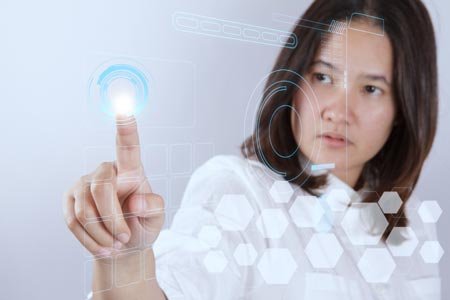
    An infographic showcasing various biometric authentication methods, highlighting their role in enhancing security and convenience for online banking transactions, as discussed in the article.
    Graphic illustrating biometric authentication methods for online banking - Global Banking & Finance Review
    Why waste money on news and opinion when you can access them for free?

    Take advantage of our newsletter subscription and stay informed on the go!

    Subscribe

    By Philip Dunkelberger, President and CEO, Nok Nok Labs Prepared for Global Banking and Finance Review, May 2016

    Philip Dunkelberger

    Philip Dunkelberger

    The bulk of today’s consumers have reached a level of comfort when it comes to storing and accessing their banking information online. Connected mobile devices are commonplace and consumers no longer think twice about making payments, checking bank accounts, trading stocks and performing a multitude of other transactions with their devices.

    FinTech innovation with new forms of banking and payments is increasing, and transactions that would previously have taken place in other domains are now moving to mobile – largely a result of comparative convenience and ease of use, as well as the backing of players such as Apple, Samsung and leading financial institutions around the world.

    While online applications are protected by a combination of usernames and passwords, this traditional method of authentication has taken a big hit over the last few years from both a usability and a security perspective. While usernames and passwords might be manageable on a desktop computer, fumbling to enter them on mobile device results in a poor user experience that holds up business.

    In terms of security, recent data breaches have resulted in the exposure and subsequent online dumping of millions of online credentials that are now for sale on the dark web. Password reuse means that your password security may only be as good as the weakest site on the web. Similarly, multiple studies have outed consumers for selecting weak, easy to guess passwords such as ‘12345’ or ‘password’. In short, authentication is no longer as simple, secure and convenient for the user, and we need to rethink current methods to keep consumers secure, as more of our daily tasks are carried out online.

    Innovations in biometrics offer a way to step beyond the usability and security limitations inherent in the username/password approach. Biometrics, the use of a distinct body attribute such as a fingerprint, voice or heart rate, provide a compelling way to prove one’s identity. The advantage is simple – biometrics are easy to use, don’t have to be remembered, and can provide superior security. Fingerprint sensors have become standard fare across most smartphone devices. Earlier this year, Amazon, MasterCard and HSBC hit headlines with their plans to use photos or videos of a user’s face as a way to approve their online purchases, dubbed ‘selfie pay’. Because of how intrinsic it is to an individual and its uniqueness, biometric data is particularly sensitive and efforts must be made to keep this data secure and avoid having it become a lucrative and worrying new currency for cybercriminals.

    We have already seen incidents of large-scale breaches of biometric data.  At the end of last year, the US Federal Government Office of Personnel Management (OPM) revealed that it had suffered a breach that included more than 5.6 million sets of fingerprints at all levels of sensitivity from US federal employees, contractors, and other subjects of federal background checks. In the Philippines, personal data of up to 55 million voters was lost in a cyber-attack on the Philippine Commission on Elections, and the data included more than 15.8 million fingerprint records. The lesson is clear: if organisations continue to build large databases of biometric information, we will likely see further breaches. Canada and the EU strongly advise against the storage of biometrics on large databases unless absolutely necessary, for this very reason.

    As a result of its uniqueness and how intrinsic it is to a specific person, biometric data is generally considered extremely sensitive personal data, so organisations must now urgently assess ways in which to keep it secure, as well as the global privacy implications of processing it. While some jurisdictions have specifically called out biometric data in privacy legislation, most countries do not yet have specific laws addressing its collection and use.

    As biometric technology becomes more widely adopted, it is important that users are notified of the collection of their data and given information about how it will be used.  In the EU and Australia, for example, individuals must also be informed where their data will be stored and who will have access to it. This is often achieved through the use of an accessible privacy policy, but first organisations must understand the differences and risks surrounding the two primary approaches to biometric authentication.

    The first involves comparing an individual’s biometric data against a database of biometric information to find a match. This is known as ‘one to many’ or server-side biometric matching. The second involves comparing an individual’s biometric data against a single biometric identifier – perhaps a fingerprint, voice sample or face scan – that is stored on a single device. This is known as ‘one to one’ or device-side biometric matching.

    Device-side biometric matching eliminates the need for large repositories of biometric information, as well as the need to transfer data from the device to a remote database, which could impact compliance with laws governing cross-border transfers of biometric data. Avoiding the retention of biometric data eliminates the need to hold data that could be an appealing target for hackers. Since each device retains its user’s biometric data, any hacker would need to target each individual device rather than execute a scalable attack against a large repository of information – a rather unappealing prospect for cybercriminals.

    Unsurprisingly, this authentication process is fast becoming standardised through the likes of the FIDO (Fast IDentity Online) Alliance, which has a rapidly growing base of member companies across an ecosystem that includes biometric authenticator vendors, device makers and deploying organisations including leading financial institutions. When one considers how to deliver the convenience and ease-of-use provided by biometrics, device-side biometric matching provides privacy advantages that make it the strongest option from a global privacy perspective, affording consumers more control over their personal data while enabling financial institutions to minimise their security exposure.

    More from Top Stories

    Explore more articles in the Top Stories category

    Image for Lessons From the Ring and the Deal Table: How Boxing Shapes Steven Nigro’s Approach to Banking and Life
    Lessons From the Ring and the Deal Table: How Boxing Shapes Steven Nigro’s Approach to Banking and Life
    Image for Joe Kiani in 2025: Capital, Conviction, and a Focused Return to Innovation
    Joe Kiani in 2025: Capital, Conviction, and a Focused Return to Innovation
    Image for Marco Robinson – CLOSE THE DEAL AND SUDDENLY GROW RICH
    Marco Robinson – CLOSE THE DEAL AND SUDDENLY GROW RICH
    Image for Digital Tracing: Turning a regulatory obligation into a commercial advantage
    Digital Tracing: Turning a regulatory obligation into a commercial advantage
    Image for Exploring the Role of Blockchain and the Bitcoin Price Today in Education
    Exploring the Role of Blockchain and the Bitcoin Price Today in Education
    Image for Inside the World’s First Collection Industry Conglomerate: PCA Global’s Platform Strategy
    Inside the World’s First Collection Industry Conglomerate: PCA Global’s Platform Strategy
    Image for Chase Buchanan Private Wealth Management Highlights Key Autumn 2025 Budget Takeaways for Expats
    Chase Buchanan Private Wealth Management Highlights Key Autumn 2025 Budget Takeaways for Expats
    Image for PayLaju Strengthens Its Position as Malaysia’s Trusted Interest-Free Sharia-Compliant Loan Provider
    PayLaju Strengthens Its Position as Malaysia’s Trusted Interest-Free Sharia-Compliant Loan Provider
    Image for A Notable Update for Employee Health Benefits:
    A Notable Update for Employee Health Benefits:
    Image for Creating Equity Between Walls: How Mohak Chauhan is Using Engineering, Finance, and Community Vision to Reengineer Affordable Housing
    Creating Equity Between Walls: How Mohak Chauhan is Using Engineering, Finance, and Community Vision to Reengineer Affordable Housing
    Image for Upcoming Book on Real Estate Investing: Harvard Grace Capital Founder Stewart Heath’s Puts Lessons in Print
    Upcoming Book on Real Estate Investing: Harvard Grace Capital Founder Stewart Heath’s Puts Lessons in Print
    Image for ELECTIVA MARKS A LANDMARK FIRST YEAR WITH MAJOR SENIOR APPOINTMENTS AND EXPANSION MILESTONES
    ELECTIVA MARKS A LANDMARK FIRST YEAR WITH MAJOR SENIOR APPOINTMENTS AND EXPANSION MILESTONES
    View All Top Stories Posts
    Previous Top Stories PostNETSUITE OPTIMIZES OMNICHANNEL FULFILLMENT WITH INTELLIGENT ORDER MANAGEMENT
    Next Top Stories PostVISA EUROPE ANNOUNCES NEW DIGITAL ENABLEMENT PROGRAMME WITH LAUNCH PARTNERS TO INCLUDE GOOGLE’S ANDROID PAY AND LEADING UK BANKS