
Top Stories
Bayer to Introduce Its Direct-Seeded Rice System in the Philippines
Published by Uma Rajagopal
Posted on October 16, 2023
2 min readLast updated: January 31, 2026
Add as preferred source on Google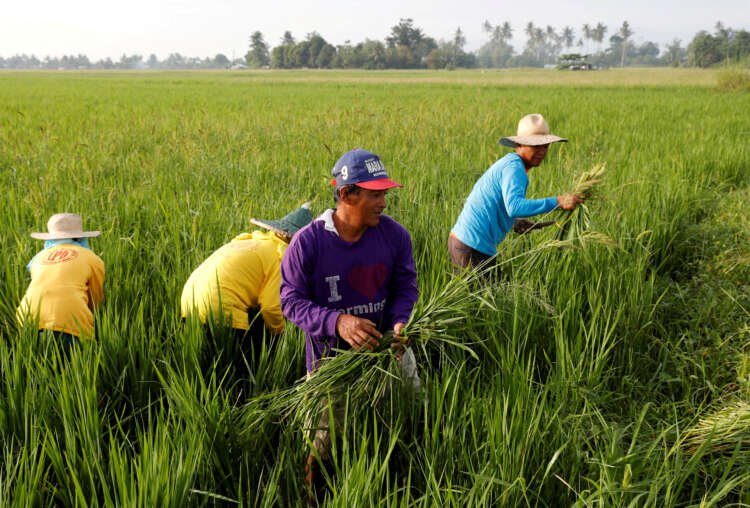
Published by Uma Rajagopal
Posted on October 16, 2023
2 min readLast updated: January 31, 2026
Add as preferred source on GoogleMANILA (Reuters) – Bayer AG said on Monday it plans to bring its direct-seeded rice programme to the Philippines in 2024, offering farmers an alternative cultivation method touted to be more climate-friendly.
Bayer launched the system in India this year and says it can help reduce water use by up to 40%, greenhouse gas emissions by up to 45%, and manual labour costs by up to 50%.
Rice farmers traditionally first grow seedlings in nurseries before transplanting them in flooded paddy fields, a practice used on about 80% of the world’s rice crop currently. Bayer said its system involves rice hybrids that can be sown directly in the soil.
The Philippines is among the world’s top 10 rice producers, but its output remains insufficient to meet domestic demand, while India is the world’s largest exporter of the staple grain.
Bayer made its announcement at the start of a four-day international rice conference in Manila organised by the Philippines-based International Rice Research Institute (IRRI).
Separately, IRRI announced that its scientists have identified genes in rice with low and ultra-low glycaemic index (GI), which it considered a breakthrough in efforts to help curb rising cases of diabetes globally.
At present, many cultivated rice varieties have a GI level not considered healthy for people with diabetes, IRRI said.
“IRRI’s latest discovery offers the opportunity to develop rice varieties with low GI, and for the first time ever, ultra-low GI levels, to meet the health needs and dietary preferences of consumers,” said Dr. Nese Sreenivasulu, head of IRRI’s grain quality and nutrition research unit.
(Reporting by Enrico Dela Cruz and Karen Lema; Editing by Susan Fenton)
Direct-seeded rice is a cultivation method where rice seeds are sown directly into the soil, eliminating the need for nursery-grown seedlings and transplanting, which is traditionally used in rice farming.
Climate-friendly agriculture refers to farming practices that reduce environmental impact, such as lowering greenhouse gas emissions, conserving water, and promoting biodiversity.
The glycaemic index (GI) is a measure that ranks foods based on their effect on blood sugar levels. Foods with low GI values are digested slowly, leading to a gradual rise in blood sugar.
The International Rice Research Institute (IRRI) focuses on improving rice production and sustainability through research and innovation, aiming to enhance food security and reduce poverty.
Rice hybrids are genetically distinct varieties of rice developed through crossbreeding, designed to exhibit specific traits such as higher yield, disease resistance, and adaptability to various growing conditions.
Explore more articles in the Top Stories category











