
Top Stories
Bank of England Sketches Out Lighter Regime for Small Banks
Published by Wanda Rich
Posted on April 29, 2022
2 min readLast updated: February 7, 2026
Add as preferred source on Google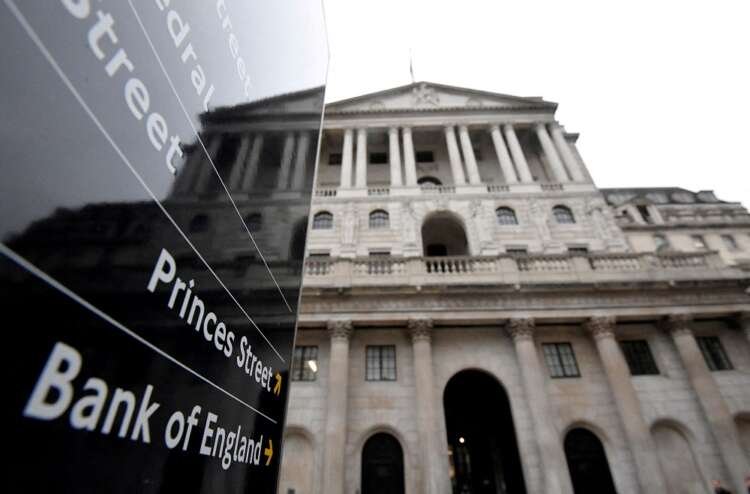
Published by Wanda Rich
Posted on April 29, 2022
2 min readLast updated: February 7, 2026
Add as preferred source on GoogleBy Huw Jones
LONDON (Reuters) – Banks in Britain with no more than 15 billion pounds ($19 billion) in assets could benefit from lighter capital requirements given they would pose less of a risk to financial stability if they went bust, the Bank of England said on Friday.
Britain’s departure from the European Union makes it possible for the country to tailor its bank capital rules.
The Bank of England (BoE) published a consultation paper that began fleshing out its previously flagged plans for a “strong and simple” capital regime for smaller, less risky banks to avoid the complex rules applied across the board currently.
The BoE’s Prudential Regulation Authority (PRA) said banks that want to benefit from the new regime must not have a trading book worth more than 44 million pounds, or be equivalent to 5% of the bank’s total assets.
“The PRA does not consider significant foreign exchange or any commodity positions consistent with the aims of the simpler regime,” it said.
The “simpler” banks must also use rules set out by regulators when it comes to calculating how much capital to hold and would not be allowed to use their own computer models.
Banks providing wholesale services or some clearing, settlement and custody services would also be excluded, the PRA proposed in its paper.
At least 85% of a bank’s loans and deposits would be with customers inside the UK, it added.
The PRA estimated that 61 firms would be eligible for the simpler capital regime, 34 of which are building societies.
The regulator said it would publish proposals for liquidity rules for “simpler” banks in the first half of next year, followed by proposals on capital requirements in 2024.
($1 = 0.7978 pounds)
(Reporting by Huw Jones; Editing by Mark Potter)
Capital requirement refers to the minimum amount of capital that a bank must hold as a percentage of its risk-weighted assets to ensure stability and solvency.
Financial stability is a condition where the financial system operates effectively, maintaining confidence in the economy and preventing systemic risks.
The Prudential Regulation Authority (PRA) is a regulatory body in the UK responsible for ensuring the safety and soundness of banks, insurers, and investment firms.
A trading book is a portfolio of financial instruments held by a bank or financial institution that is actively traded for profit.
Liquidity refers to the ease with which an asset can be converted into cash without affecting its market price.
Explore more articles in the Top Stories category











