
Search
00
GBAF Logo
trophy
Top StoriesInterviewsBusinessFinanceBankingTechnologyInvestingTradingVideosAwardsMagazinesHeadlinesTrends

Subscribe to our newsletter

Get the latest news and updates from our team.

Global Banking & Finance Review®

Global Banking & Finance Review® - Subscribe to our newsletter

Company

    GBAF Logo
    • About Us
    • Advertising and Sponsorship
    • Profile & Readership
    • Contact Us
    • Latest News
    • Privacy & Cookies Policies
    • Terms of Use
    • Advertising Terms
    • Issue 81
    • Issue 80
    • Issue 79
    • Issue 78
    • Issue 77
    • Issue 76
    • Issue 75
    • Issue 74
    • Issue 73
    • Issue 72
    • Issue 71
    • Issue 70
    • View All
    • About the Awards
    • Awards Timetable
    • Awards Winners
    • Submit Nominations
    • Testimonials
    • Media Room
    • FAQ
    • Asset Management Awards
    • Brand of the Year Awards
    • Business Awards
    • Cash Management Banking Awards
    • Banking Technology Awards
    • CEO Awards
    • Customer Service Awards
    • CSR Awards
    • Deal of the Year Awards
    • Corporate Governance Awards
    • Corporate Banking Awards
    • Digital Transformation Awards
    • Fintech Awards
    • Education & Training Awards
    • ESG & Sustainability Awards
    • ESG Awards
    • Forex Banking Awards
    • Innovation Awards
    • Insurance & Takaful Awards
    • Investment Banking Awards
    • Investor Relations Awards
    • Leadership Awards
    • Islamic Banking Awards
    • Real Estate Awards
    • Project Finance Awards
    • Process & Product Awards
    • Telecommunication Awards
    • HR & Recruitment Awards
    • Trade Finance Awards
    • The Next 100 Global Awards
    • Wealth Management Awards
    • Travel Awards
    • Years of Excellence Awards
    • Publishing Principles
    • Ownership & Funding
    • Corrections Policy
    • Editorial Code of Ethics
    • Diversity & Inclusion Policy
    • Fact Checking Policy
    Original content: Global Banking and Finance Review - https://www.globalbankingandfinance.com

    A global financial intelligence and recognition platform delivering authoritative insights, data-driven analysis, and institutional benchmarking across Banking, Capital Markets, Investment, Technology, and Financial Infrastructure.

    Copyright © 2010-2026 - All Rights Reserved. | Sitemap | Tags

    Editorial & Advertiser disclosure

    Global Banking & Finance Review® is an online platform offering news, analysis, and opinion on the latest trends, developments, and innovations in the banking and finance industry worldwide. The platform covers a diverse range of topics, including banking, insurance, investment, wealth management, fintech, and regulatory issues. The website publishes news, press releases, opinion and advertorials on various financial organizations, products and services which are commissioned from various Companies, Organizations, PR agencies, Bloggers etc. These commissioned articles are commercial in nature. This is not to be considered as financial advice and should be considered only for information purposes. It does not reflect the views or opinion of our website and is not to be considered an endorsement or a recommendation. We cannot guarantee the accuracy or applicability of any information provided with respect to your individual or personal circumstances. Please seek Professional advice from a qualified professional before making any financial decisions. We link to various third-party websites, affiliate sales networks, and to our advertising partners websites. When you view or click on certain links available on our articles, our partners may compensate us for displaying the content to you or make a purchase or fill a form. This will not incur any additional charges to you. To make things simpler for you to identity or distinguish advertised or sponsored articles or links, you may consider all articles or links hosted on our site as a commercial article placement. We will not be responsible for any loss you may suffer as a result of any omission or inaccuracy on the website.

    1. Home
    2. >Finance
    3. >Audit Reform: Why the finance industry must prepare now
    Finance

    Audit Reform: Why the Finance Industry Must Prepare Now

    Published by Jessica Weisman-Pitts

    Posted on July 1, 2022

    4 min read

    Last updated: February 5, 2026

    Add as preferred source on Google
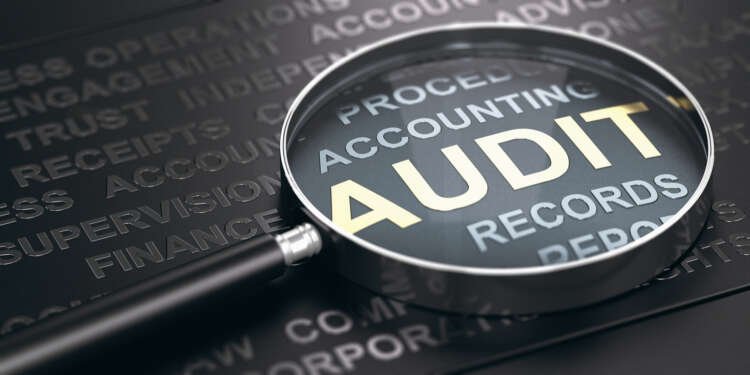
    An image depicting financial auditing tools such as a calculator and documents, symbolizing the need for audit reform in the finance industry. This visual relates to the article's emphasis on proactive measures for audit firms amidst upcoming legislative changes.
    Financial audit reform theme with a calculator and documents - Global Banking & Finance Review
    Why waste money on news and opinion when you can access them for free?

    Take advantage of our newsletter subscription and stay informed on the go!

    Subscribe

    Tags:accountingfinancial managementtechnologycompliance

    By Jack Skov, Chief Financial Officer, Konsolidator

    Following much speculation about whether or not the long-awaited audit reform bill would be included in the Government’s next legislative programme, a draft audit reform bill was finally included within supporting papers issued alongside the recent Queen’s speech. However, despite this, there continues to be uncertainty over the timing and details of the bill, and whether it is still likely to feature in the parliamentary sessions for 2022/23.

    While we cannot control when or how the bill is finally put in place and actioned, there are some steps that audit and accounting firms can take to ensure they are one step ahead to circumvent any unnecessary mistakes and failures. The spate of accounting scandals at companies such as BHS, Carillion and Patisserie Valerie have highlighted how the audit industry could greatly improve on how it protects employees and investors from malfeasance. Whether or not firms agree with the introduction of a reform bill to reduce the likelihood of more situations like these, audit and accounting businesses have the power to improve processes and minimise risk themselves.

    The industry needs to start self-regulating now
    Auditors need to begin the process of ‘self-regulating’ now to ensure that audit firms are not caught by surprise if the reforms do come into place. One way that audit firms can self-regulate is by introducing more automated processes to increase accuracy and decrease the risk of mistakes and miscalculations.

    In the accounting and audit industries, Excel remains a very popular programme to manage data due to being a well-known software and its widespread use across client’s businesses. However, no matter how careful or precise the user can be, there is always the risk of error or a miscalculation. One small slip in calculation can come at a huge cost for businesses – such as JPMorgan losing $9bn in 2013. Outside of the finance industry, Public Health England reportedly misplaced nearly 16,000 Covid test results during the peak of the pandemic, where thousands of potentially infectious people were not contacted to self-isolate to stop the spread of the virus due to over-reliance on Excel.

    Automation as an alternative to Excel

    For auditors and accounting firms, whose job solely focuses on ensuring that calculations are accurate and precise, one small error can have devastating consequences for a client and also has the potential to damage your credibility and reputation in the industry.

    In the last few years, the industry has improved and we are increasingly seeing some automation in audit work. However, despite this, some complex tasks and processes are still being kept in archaic and error-prone systems like Excel. In order to ensure efficiency, these can be easily automated and standardised through technology, making a huge difference in terms of time-keeping. Moreover, as technology is difficult to trick, it creates less room for mistake, and more importantly, fraud.

    By using technology that automates financial reporting and other financial processes, auditors can avoid the risk of errors and miscalculations. This kind of software can also provide a full audit trail, tracking the source of each financial figure. These systems guarantee reliability at every hurdle, and ensure compliance and confidence for employees and clients, especially those businesses which require robust finances so that they can efficiently set up for growth or investment.

    With uncertainty over when audit reforms are set to be put in motion, it is crucial that auditors plan ahead, self-regulate and take control of minimising the risk of inaccuracies. Harnessing sophisticated technology can support auditors and accounting firms in ensuring that financial calculations are accurate and completely risk-free. Automation is set to become a gamechanger in the finance industry’s future. Technology is synonymous with efficiency, and can play an important role in creating lean and efficient processes.

    Effective management of finances via automated technology software may well be an effective solution in helping to instil that much-needed confidence needed in the auditing and accounting industries.

    About Author:

    Jack Skov is the Chief Financial Officer at Konsolidator, with over 25 years’ experience as a former auditor, having previously worked at Deloitte.

    Konsolidator is a cloud-based tool that automates and standardises financial consolidation and reporting processes.

    Frequently Asked Questions about Audit Reform: Why the finance industry must prepare now

    1What is self-regulation in auditing?

    Self-regulation in auditing involves audit firms implementing their own standards and practices to ensure compliance and enhance the quality of their services without external enforcement.

    2What is automation in accounting?

    Automation in accounting refers to the use of technology to perform financial tasks such as data entry, calculations, and reporting, reducing the risk of human error and increasing efficiency.

    3What is an audit trail?

    An audit trail is a record that traces the detailed history of financial transactions, providing transparency and accountability for auditors and stakeholders.

    4What is financial compliance?

    Financial compliance refers to adhering to laws, regulations, and standards governing financial practices, ensuring that organizations operate within legal and ethical boundaries.

    More from Finance

    Explore more articles in the Finance category

    Image for Air Liquide executive: will allocate helium volume from other places in the world
    Air Liquide Executive: Will Allocate Helium Volume From Other Places in the World
    Image for Blaze at Russia's Baltic Sea port of Ust-Luga after major Ukrainian drone attack
    Blaze at Russia's Baltic Sea Port of Ust-Luga After Major Ukrainian Drone Attack
    Image for Morning Bid: Deal, or no deal?
    Morning Bid: Deal, or No Deal?
    Image for Labubu maker Pop Mart meets 2025 revenue expectations
    Labubu Maker Pop Mart Meets 2025 Revenue Expectations
    Image for Israel strikes Tehran as Trump says US negotiating to end war
    Israel Strikes Tehran as Trump Says US Negotiating to End War
    Image for South Korea, Germany exposed to rare earths shortage, Australia's Arafura says
    South Korea, Germany Exposed to Rare Earths Shortage, Australia's Arafura Says
    Image for Currency markets drift as traders sceptical of US efforts to end Iran war
    Currency Markets Drift as Traders Sceptical of US Efforts to End Iran War
    Image for Stocks bounce and oil retreats on Mideast ceasefire reports
    Stocks Bounce and Oil Retreats on Mideast Ceasefire Reports
    Image for Equinor CEO says EU unlikely to increase Russian gas imports
    Equinor CEO Says EU Unlikely to Increase Russian Gas Imports
    Image for Openreach taps Google AI to speed fibre rollout, cut emissions
    Openreach Taps Google AI to Speed Fibre Rollout, Cut Emissions
    Image for UK consumer sentiment falls as Iran war rages, KPMG says
    UK Consumer Sentiment Falls as Iran War Rages, Kpmg Says
    Image for US oil prices fall on prospect of Middle East ceasefire easing supply disruption
    US Oil Prices Fall on Prospect of Middle East Ceasefire Easing Supply Disruption
    View All Finance Posts
    Previous Finance PostCreating a Best-In-Class AML Programme With a Watchlist at Its Core
    Next Finance PostPaying in Latin America: Where Digital Growth Meets Alternative Payment Methods