
Top Stories
Analysis-Workers Seize Their Moment to Shift the Balance of Power
Published by Wanda Rich
Posted on July 26, 2022
2 min readLast updated: February 5, 2026
Add as preferred source on Google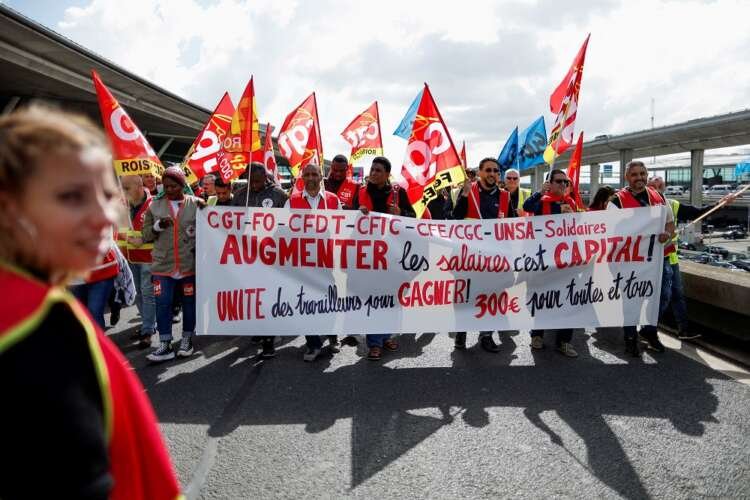
Published by Wanda Rich
Posted on July 26, 2022
2 min readLast updated: February 5, 2026
Add as preferred source on GoogleBy Mark John
(Reuters) – It should surprise no one that the first big pandemic-era display of worker power was in air travel, according to Sharan Burrow, head of the International Trade Union Confederation.
“The aviation sector globally is a prime example of bad employment policy,” Burrow said of an industry whose high-volume, low-cost model has long been criticised for poor working conditions and eroding labour rights.
“People are voting with their feet,” she told Reuters of the reluctance of many aviation workers to return after dismissals or furloughs, a trend which – alongside strikes over pay – caused havoc at European airports last month.
The bigger question now is whether other workers will follow suit and reverse a decades-old decline in industrial action that has seen employers gain the upper hand in labour relations.
Conditions appear ripe for unrest.
COVID-19 exacerbated economic inequalities, with a World Bank study last year showing incomes were worst-hit among the poorest fifth of people globally.
Workers in transport, retail and healthcare – while lauded by governments for their bravery – did low-paid jobs in often unsafe conditions as millions of white-collar workers worked from home.
Compounding the impact of a decade of weak wage growth in rich countries after the 2008/09 recession, inflation now edging into double-digits is worsening the plight of the working poor.
Yet while such grievances are real, trade unions have lost much of the clout they had before the 1980s push for economic liberalisation.
THE FISSURED WORKPLACE
Trade union density – the number of union members as a proportion of employees – has more than halved across developed economies from 33.9% in 1970 to just 15.8% in 2019, figures from the Organisation for Economic Cooperation and Development show.
U.S. Bureau of Labor statistics show a corresponding decline over the same period both in the number of serious U.S. work stoppages and total number of days lost to industrial action.
Inflation is the rate at which the general level of prices for goods and services rises, eroding purchasing power. It is typically measured by the Consumer Price Index (CPI) or Producer Price Index (PPI).
The labor market is the supply and demand for labor, where employers seek to hire workers and individuals seek jobs. It reflects employment levels, wage rates, and job availability in an economy.
Economic growth refers to the increase in the production of goods and services in an economy over a period, usually measured by the rise in Gross Domestic Product (GDP).
Employment opportunities refer to the availability of jobs in the labor market. They are influenced by various factors, including economic conditions, industry growth, and workforce skills.
Explore more articles in the Top Stories category











