Search
00
GBAF Logo
trophy
Top StoriesInterviewsBusinessFinanceBankingTechnologyInvestingTradingVideosAwardsMagazinesHeadlinesTrends

Subscribe to our newsletter

Get the latest news and updates from our team.

Global Banking & Finance Review®

Global Banking & Finance Review® - Subscribe to our newsletter

Company

    GBAF Logo
    • About Us
    • Profile
    • Privacy & Cookie Policy
    • Terms of Use
    • Contact Us
    • Advertising
    • Submit Post
    • Latest News
    • Research Reports
    • Press Release
    • Awards▾
      • About the Awards
      • Awards TimeTable
      • Submit Nominations
      • Testimonials
      • Media Room
      • Award Winners
      • FAQ
    • Magazines▾
      • Global Banking & Finance Review Magazine Issue 79
      • Global Banking & Finance Review Magazine Issue 78
      • Global Banking & Finance Review Magazine Issue 77
      • Global Banking & Finance Review Magazine Issue 76
      • Global Banking & Finance Review Magazine Issue 75
      • Global Banking & Finance Review Magazine Issue 73
      • Global Banking & Finance Review Magazine Issue 71
      • Global Banking & Finance Review Magazine Issue 70
      • Global Banking & Finance Review Magazine Issue 69
      • Global Banking & Finance Review Magazine Issue 66
    Top StoriesInterviewsBusinessFinanceBankingTechnologyInvestingTradingVideosAwardsMagazinesHeadlinesTrends

    Global Banking & Finance Review® is a leading financial portal and online magazine offering News, Analysis, Opinion, Reviews, Interviews & Videos from the world of Banking, Finance, Business, Trading, Technology, Investing, Brokerage, Foreign Exchange, Tax & Legal, Islamic Finance, Asset & Wealth Management.
    Copyright © 2010-2026 GBAF Publications Ltd - All Rights Reserved. | Sitemap | Tags | Developed By eCorpIT

    Editorial & Advertiser disclosure

    Global Banking & Finance Review® is an online platform offering news, analysis, and opinion on the latest trends, developments, and innovations in the banking and finance industry worldwide. The platform covers a diverse range of topics, including banking, insurance, investment, wealth management, fintech, and regulatory issues. The website publishes news, press releases, opinion and advertorials on various financial organizations, products and services which are commissioned from various Companies, Organizations, PR agencies, Bloggers etc. These commissioned articles are commercial in nature. This is not to be considered as financial advice and should be considered only for information purposes. It does not reflect the views or opinion of our website and is not to be considered an endorsement or a recommendation. We cannot guarantee the accuracy or applicability of any information provided with respect to your individual or personal circumstances. Please seek Professional advice from a qualified professional before making any financial decisions. We link to various third-party websites, affiliate sales networks, and to our advertising partners websites. When you view or click on certain links available on our articles, our partners may compensate us for displaying the content to you or make a purchase or fill a form. This will not incur any additional charges to you. To make things simpler for you to identity or distinguish advertised or sponsored articles or links, you may consider all articles or links hosted on our site as a commercial article placement. We will not be responsible for any loss you may suffer as a result of any omission or inaccuracy on the website.

    Home > Top Stories > Analysis-UK crisis forces ‘off kilter’ businesses to halt investment
    Top Stories

    Analysis-UK crisis forces ‘off kilter’ businesses to halt investment

    Published by Jessica Weisman-Pitts

    Posted on October 18, 2022

    5 min read

    Last updated: February 3, 2026

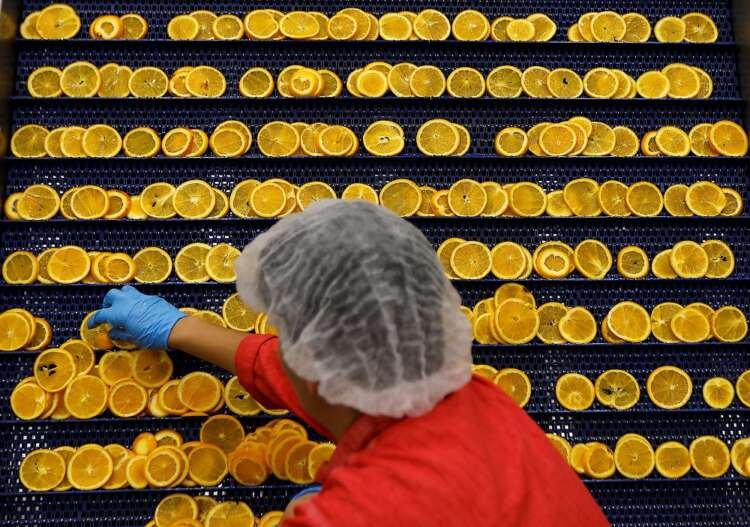
    A worker prepares orange slices for drying at Nim’s Fruit Crisps in Sittingbourne, reflecting the impact of the UK economic crisis on businesses halting investments.
    Worker drying orange slices at Nim’s Fruit Crisps factory amid UK economic crisis - Global Banking & Finance Review
    Why waste money on news and opinion when you can access them for free?

    Take advantage of our newsletter subscription and stay informed on the go!

    Subscribe

    Tags:BrexitUK economybusiness investmentfinancial crisisinterest rates

    By Kate Holton and James Davey

    LONDON (Reuters) – British company owners are pulling investments as a crisis triggered in Westminster pushes up borrowing costs and hits confidence in an economy once seen by businesses as a haven of stability.

    Companies have struggled to navigate a fractious political landscape ever since Britain voted to leave the European Union without a plan. But the fallout from Prime Minister Liz Truss’s now-abandoned mini-budget has taken that to another level.

    In the last month, business leaders have had to contend with radical changes to tax, a collapse in the pound and a surge in borrowing costs that forced the appointment of a new finance minister to reverse the tax cuts and slash spending instead.

    A two-year scheme to help homes and businesses with high energy costs has been cut to six months to save money.

    With Jeremy Hunt taking up the role on Friday, Britain has had four finance ministers in just four months. Prior to the 2016 Brexit vote, Britain had four finance ministers in 23 years, underlining a sense of stability that is now gone.

    “It’s been absolutely ridiculous,” Nimisha Raja told Reuters at her factory producing air dried citrus fruit, vegetables and ingredients. “I have no idea what they’re talking about half the time.”

    Raja sold her home and a coffee shop to start Nim’s Fruit Crisps, based in Kent, south east England, over seven years ago.

    When post-Brexit bureaucracy made the cost of selling to Europe prohibitive, she developed new products for Britain such as citrus slices for gin and vodka drinks. Confronted with a pandemic, she supplied ingredients for subscription boxes.

    But with interest rates rising she is unwilling to borrow again. A survey of top finance directors by Deloitte shows she is not alone – 56% now view credit as expensive, forcing them to adopt defensive strategies of cutting costs and managing cash.

    “If we borrowed a lot of money, we may not be able to pay it back. It’s far too risky at the moment,” said Raja, who employs 22 people and had planned to increase that to 30 over the next 18 months.

    “The mini-budget completely knocked us off kilter because it was supposed to be all about growth, and it was anything but.”

    FROM ONE DISASTER TO THE NEXT

    In central England, Gary Seale is also wondering which way to turn at his Idry business that produces air dryers for the care industry.

    Truss’s promise of tax cuts and deregulation initially led to a surge in international orders after the pound plunged. “We’re thinking this is fantastic, here we go,” he said.

    But when he looked to see if he could combine that income with a 10-year loan to finally launch a new version of his product in Britain, he found borrowing costs had leapt.

    “We just seem to crash from one economic or political disaster into the next,” Seale said.

    Britain’s latest crisis started on Sept. 23 when new prime minister Truss and then-finance minister Kwasi Kwarteng announced 45 billion pounds of unfunded tax cuts to snap the economy out of stagnation.

    The response was brutal: the pound slumped, government borrowing costs surged, lenders pulled mortgage deals and the Bank of England had to intervene to stop some pension funds from going under.

    Truss initially said the market turmoil was linked to international events, before reversing course. That followed earlier U-turns by Truss and her predecessor Boris Johnson on issues such as tackling obesity and windfall taxes.

    John Allan, chairman of Britain’s biggest supermarket Tesco, expressed his frustration in June when he said companies planned years ahead: “Unlike the government, you know, whose view is that having an idea and sticking with it for more than a week constitutes real achievement.”

    Chief executives and chairmen told Reuters that the impact would be felt for years. While Truss had touted low corporation tax as a way to attract business investment, the executives said they wanted stability.

    “IRRELEVANT” TAX CUTS

    “The major factor is does the investment make sense?” advertising boss Martin Sorrell said. “And if you’ve got uncertainty to the degree that you’ve got at the moment, it doesn’t.”

    One executive at a U.S. tech company told Reuters at the recent conference of Truss’s Conservative Party that corporation tax was a “rounding error” for his global business, and that issues like visas were a bigger driver of investment decisions.

    The Institute of Directors trade group said it had not called for corporation tax cuts either.

    Sorrell, who built WPP into the world’s biggest advertising company before creating S4 Capital, said the crisis had come at the worst possible time, just as companies planned budgets.

    “If you’re running a global business, your centres of attention move to those areas of the world where you think there is greater certainty,” he told Reuters.

    One retail boss who asked not to be named said companies would now plan cautiously. He described a general sense of disbelief that a country known for having “fiscal responsibility to the core” had gone so awry.

    British business investment, which flatlined after the 2016 Brexit vote and then fell sharply during the pandemic, was 6% lower in the second quarter of this year than its level of six years ago, in stark contrast to international peers.

    That will weigh on the broader economy, which looks set to tip into recession as energy and food prices rise.

    “Uncertainty is at its maximum and there’s lots of volatility ahead,” Stuart Machin, head of major retailer Marks & Spencer, told investors last week.

    “It’s an everything crisis.”

    (Writing by Kate Holton; Additional reporting by Andrew MacAskill and Andy Bruce; Editing by Catherine Evans)

    Frequently Asked Questions about Analysis-UK crisis forces ‘off kilter’ businesses to halt investment

    1What is borrowing cost?

    Borrowing cost refers to the interest rate or fees that a borrower must pay to obtain a loan. It can vary based on the lender, the borrower's creditworthiness, and prevailing economic conditions.

    2What is business investment?

    Business investment is the allocation of resources, typically capital, into projects or assets that are expected to generate returns over time. This can include purchasing equipment, expanding facilities, or investing in new technologies.

    3What is economic confidence?

    Economic confidence is the degree of optimism that consumers and businesses feel about the overall state of the economy. High confidence typically leads to increased spending and investment.

    4What is interest rate?

    An interest rate is the amount charged by a lender to a borrower for the use of borrowed money, typically expressed as a percentage of the principal amount.

    Previous Top Stories PostMonte dei Paschi’s M&A challenge looms as share sale starts
    Next Top Stories PostUK North Sea firm Ithaca Energy plans London listing
    More from Top Stories

    Explore more articles in the Top Stories category

    Image for Lessons From the Ring and the Deal Table: How Boxing Shapes Steven Nigro’s Approach to Banking and Life
    Lessons From the Ring and the Deal Table: How Boxing Shapes Steven Nigro’s Approach to Banking and Life
    Image for Joe Kiani in 2025: Capital, Conviction, and a Focused Return to Innovation
    Joe Kiani in 2025: Capital, Conviction, and a Focused Return to Innovation
    Image for Marco Robinson – CLOSE THE DEAL AND SUDDENLY GROW RICH
    Marco Robinson – CLOSE THE DEAL AND SUDDENLY GROW RICH
    Image for Digital Tracing: Turning a regulatory obligation into a commercial advantage
    Digital Tracing: Turning a regulatory obligation into a commercial advantage
    Image for Exploring the Role of Blockchain and the Bitcoin Price Today in Education
    Exploring the Role of Blockchain and the Bitcoin Price Today in Education
    Image for Inside the World’s First Collection Industry Conglomerate: PCA Global’s Platform Strategy
    Inside the World’s First Collection Industry Conglomerate: PCA Global’s Platform Strategy
    Image for Chase Buchanan Private Wealth Management Highlights Key Autumn 2025 Budget Takeaways for Expats
    Chase Buchanan Private Wealth Management Highlights Key Autumn 2025 Budget Takeaways for Expats
    Image for PayLaju Strengthens Its Position as Malaysia’s Trusted Interest-Free Sharia-Compliant Loan Provider
    PayLaju Strengthens Its Position as Malaysia’s Trusted Interest-Free Sharia-Compliant Loan Provider
    Image for A Notable Update for Employee Health Benefits:
    A Notable Update for Employee Health Benefits:
    Image for Creating Equity Between Walls: How Mohak Chauhan is Using Engineering, Finance, and Community Vision to Reengineer Affordable Housing
    Creating Equity Between Walls: How Mohak Chauhan is Using Engineering, Finance, and Community Vision to Reengineer Affordable Housing
    Image for Upcoming Book on Real Estate Investing: Harvard Grace Capital Founder Stewart Heath’s Puts Lessons in Print
    Upcoming Book on Real Estate Investing: Harvard Grace Capital Founder Stewart Heath’s Puts Lessons in Print
    Image for ELECTIVA MARKS A LANDMARK FIRST YEAR WITH MAJOR SENIOR APPOINTMENTS AND EXPANSION MILESTONES
    ELECTIVA MARKS A LANDMARK FIRST YEAR WITH MAJOR SENIOR APPOINTMENTS AND EXPANSION MILESTONES
    View All Top Stories Posts