
Top Stories
ANALYSIS-Sri Lanka’s Economic Crisis Exposes Gaps in Renewable Energy Push
Published by Wanda Rich
Posted on April 19, 2022
5 min readLast updated: February 7, 2026
Add as preferred source on Google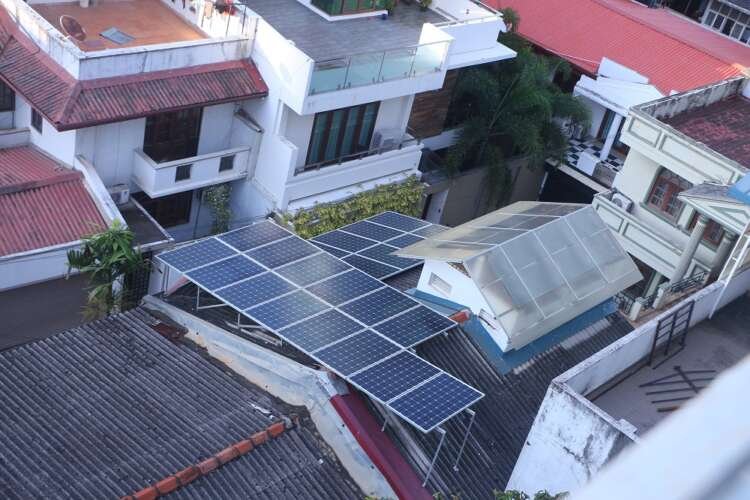
Published by Wanda Rich
Posted on April 19, 2022
5 min readLast updated: February 7, 2026
Add as preferred source on Google• Power cuts, fuel shortages force many to cook on firewood
• Power cuts, fuel shortages force many to cook on firewood
• Crisis highlights delays in shift to clean energy sources
• Tough challenges lie ahead in net-zero shift, analysts say
By Shihar Aneez
COLOMBO, April 19 (Thomson Reuters Foundation) – It is hard to know how much Sri Lankan forest has been cut down as fuel shortages force people to use firewood to cook: inspectors have halted deforestation patrols because they cannot fill up their vehicles.
A deep financial crisis has left Sri Lanka struggling to pay for oil and cooking gas imports for fuel and power generation, threatening to put further pressure on its forests, which cover 17% of the country compared to nearly 40% three decades ago.
“We’re very concerned… There’s a big market emerging with an increasing demand for firewood,” said Jagath Gunawardena, a Colombo-based environmental lawyer, lamenting that the gasoline shortages had disrupted his group’s regular forest patrols.
The fuel and power crunch has also highlighted patchy progress on goals to increase renewable energy use to 70% from the current 20% by 2030, which climate campaigners say could have helped alleviate the current crisis.
Millions of people in the debt-burdened Indian Ocean island nation have been grappling with long queues to buy gasoline and cooking gas, and power cuts of up to 13 hours a day that have stoked growing social unrest.
Long before the crisis struck, the sun-drenched country had laid out plans to ramp up clean energy use, and boost production to make it more accessible and affordable.
“Renewable energy is the most cost-effective source with Sri Lanka having ample sunlight and wind,” Duminda Dissanayake, junior minister for solar, wind and hydro power generation projects development told reporters last month.
He said Sri Lanka aims to become carbon neutral and generate 100% of its power through renewable energy by 2050.
By the end of 2023, it aims to produce 2,000 megawatts – or about 12 times the energy used in New York’s Times Square per year – from solar, and has already scrapped plans for two coal power plants over pollution concerns.
CARBON NEUTRAL CHALLENGE
But a national audit presented in parliament in February found the state-owned utility provider Ceylon Electricity Board (CEB) had failed to prioritise renewable energy, describing it as a violation of national policy and international pledges.
The findings reflect the failure of successive governments to take renewable power projects seriously because they are time-consuming and offer no political incentive, industry analysts and officials said.
“We have seen every power minister either dragging the project approval or wanting the projects to be implemented by their close allies,” a senior government official said on the condition of anonymity for fear of repercussions.
“As a result, most of the planned renewable power plants could not be implemented.”
Dissanayake, the junior minister, denied that cronyism or government foot-dragging were to blame for delays in launching renewable projects.
He cited contradictions in 2014 legislation about renewable energy that need to be amended, and said the country could not yet afford to increase the costs of power generation to cover upfront investments in clean energy.
“We always talk about corruption and misappropriation. But we are not ready to go for expensive power generation,” he said, when asked what had caused projects to fall behind schedule.
But critics of the country’s progress say government authorities have failed to grasp the multiple challenges of going carbon neutral – from technology gaps to protracted tender processes that delay planned launches.
“It takes at least six to seven years to complete a solar or wind power plant through government-approved procurement processes,” said Tilak Siyambalapitiya, a former CEB engineer and international energy expert.
Some of the renewable projects – which would ultimately produce cheaper electricity – cannot be implemented due to gaps in technology and infrastructure, and needed more investment.
“For instance, the country cannot go for several small-scale rooftop solar panels of around 5-kilowatt capacity because we do not have a compatible distribution network to receive the power,” Siyambalapitiya said.
“Also we do not have large-scale batteries to save the renewable energy.”
POWER CUTS AND COCONUTS
Gunawardena, the environmental lawyer, said he thought any forest losses to date would be small, noting that people would fell trees close to their homes, or in plantations before heading into forests as a last resort.
But the situation is becoming increasingly desperate for many of the island’s 22 million people.
When Shanthi Kumar’s family ran out of cooking gas, she started using kerosene oil until supplies of that also dried up, leading her to use an electric cooker.
“But then we started having power cuts,” the 42-year old told the Thomson Reuters Foundation in Western province, where residents said most people had swapped firewood for gas cylinders over the last two decades.
After experimenting with dried coconut husks and shells, and other organic material, she said she reluctantly started cutting down trees “wherever” possible.
“We now try to collect a lot of firewood so that we can manage cooking,” she said.
(Reporting by Shihar Aneez; Editing by Helen Popper and Laurie Goering; Please credit the Thomson Reuters Foundation, the charitable arm of Thomson Reuters, that covers the lives of people around the world who struggle to live freely or fairly. Visit http://news.trust.org)
((annie.banerji@thomsonreuters.com;))
Renewable energy is energy derived from natural processes that are replenished constantly, such as sunlight, wind, rain, tides, waves, and geothermal heat.
A financial crisis is a situation in which the value of financial institutions or assets drops significantly, often leading to a loss of confidence and economic instability.
Renewable energy sources are energy sources that are naturally replenished, including solar, wind, hydro, and biomass, which can help reduce reliance on fossil fuels.
The Ceylon Electricity Board (CEB) is the state-owned utility responsible for electricity generation, transmission, and distribution in Sri Lanka.
Explore more articles in the Top Stories category











