Search
00
GBAF Logo
trophy
Top StoriesInterviewsBusinessFinanceBankingTechnologyInvestingTradingVideosAwardsMagazinesHeadlinesTrends

Subscribe to our newsletter

Get the latest news and updates from our team.

Global Banking and Finance Review

Global Banking & Finance Review

Company

    GBAF Logo
    • About Us
    • Profile
    • Privacy & Cookie Policy
    • Terms of Use
    • Contact Us
    • Advertising
    • Submit Post
    • Latest News
    • Research Reports
    • Press Release
    • Awards▾
      • About the Awards
      • Awards TimeTable
      • Submit Nominations
      • Testimonials
      • Media Room
      • Award Winners
      • FAQ
    • Magazines▾
      • Global Banking & Finance Review Magazine Issue 79
      • Global Banking & Finance Review Magazine Issue 78
      • Global Banking & Finance Review Magazine Issue 77
      • Global Banking & Finance Review Magazine Issue 76
      • Global Banking & Finance Review Magazine Issue 75
      • Global Banking & Finance Review Magazine Issue 73
      • Global Banking & Finance Review Magazine Issue 71
      • Global Banking & Finance Review Magazine Issue 70
      • Global Banking & Finance Review Magazine Issue 69
      • Global Banking & Finance Review Magazine Issue 66
    Top StoriesInterviewsBusinessFinanceBankingTechnologyInvestingTradingVideosAwardsMagazinesHeadlinesTrends

    Global Banking & Finance Review® is a leading financial portal and online magazine offering News, Analysis, Opinion, Reviews, Interviews & Videos from the world of Banking, Finance, Business, Trading, Technology, Investing, Brokerage, Foreign Exchange, Tax & Legal, Islamic Finance, Asset & Wealth Management.
    Copyright © 2010-2025 GBAF Publications Ltd - All Rights Reserved.

    Editorial & Advertiser disclosure

    Global Banking and Finance Review is an online platform offering news, analysis, and opinion on the latest trends, developments, and innovations in the banking and finance industry worldwide. The platform covers a diverse range of topics, including banking, insurance, investment, wealth management, fintech, and regulatory issues. The website publishes news, press releases, opinion and advertorials on various financial organizations, products and services which are commissioned from various Companies, Organizations, PR agencies, Bloggers etc. These commissioned articles are commercial in nature. This is not to be considered as financial advice and should be considered only for information purposes. It does not reflect the views or opinion of our website and is not to be considered an endorsement or a recommendation. We cannot guarantee the accuracy or applicability of any information provided with respect to your individual or personal circumstances. Please seek Professional advice from a qualified professional before making any financial decisions. We link to various third-party websites, affiliate sales networks, and to our advertising partners websites. When you view or click on certain links available on our articles, our partners may compensate us for displaying the content to you or make a purchase or fill a form. This will not incur any additional charges to you. To make things simpler for you to identity or distinguish advertised or sponsored articles or links, you may consider all articles or links hosted on our site as a commercial article placement. We will not be responsible for any loss you may suffer as a result of any omission or inaccuracy on the website.

    Home > Top Stories > Analysis-Europe says goodbye to negative rates – or just ‘au revoir’?
    Top Stories

    Analysis-Europe says goodbye to negative rates – or just ‘au revoir’?

    Analysis-Europe says goodbye to negative rates – or just ‘au revoir’?

    Published by Jessica Weisman-Pitts

    Posted on September 22, 2022

    Featured image for article about Top Stories

    By Mark John and Dhara Ranasinghe

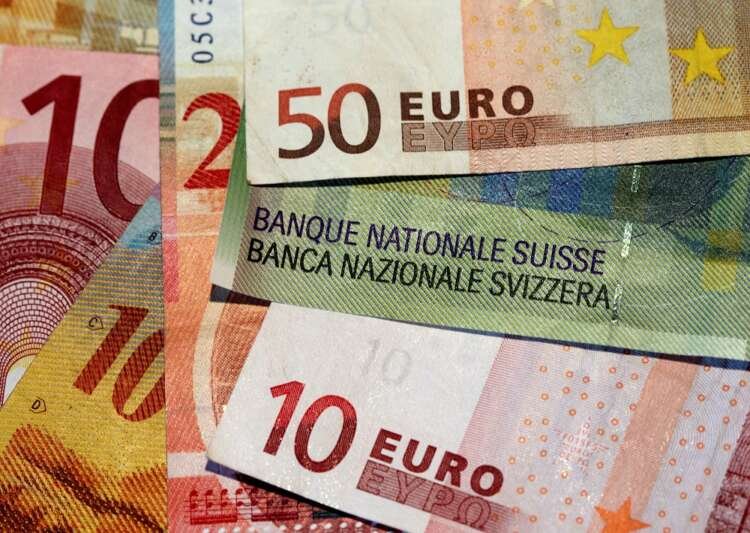
    LONDON (Reuters) – Europe’s decade-long experiment with negative interest rates, which ended on Thursday with the Swiss National Bank’s return to positive territory, showed one thing: they can exist beyond the realms of economic science fiction.

    Launched to revive economies after the 2007/08 financial crisis, the policy flipped standard money wisdom on its head: banks had to pay a fee to park cash with their central banks; some home-owners found mortgages that paid them interest; and rewards for the act of saving all but vanished.

    With the exercise now abandoned in the face of galloping inflation brought on by pandemic and the Ukraine war, doubts linger over its effectiveness and under what circumstances it will ever be used again.

    “I think that probably the bar is going to be higher in the future,” said Claudio Borio, head of the Monetary and Economic Department of the Basel-based Bank of International Settlements which acts as bank to the world’s central banks.

    Rarely does monetary policy generate as much sound and fury as did the recourse in the early 2010s to negative rates by four European central banks and the Bank of Japan – now the only monetary authority still sticking with them.

    With interest rates back then already close to zero, they had run out of conventional ammunition to ward off the threat of outright deflation they feared would choke off the economic recovery. The only way out, they decided, was to go below zero.

    Bank chiefs fumed as the European Central Bank, Swedish Riksbank, Swiss National Bank (SNB) and Denmark’s Nationalbank went negative in moves they said undermined the whole banking business model of being able to make a profit out of lending.

    Local media joined in the criticism, with Swiss newspapers in 2015 calling the moment “Frankenshock” and Germany’s Bild labelling the then ECB chief Mario Draghi “Count Draghila” for “sucking our accounts dry”.

    For sure, those who relied on the return from cash savings clearly suffered during Europe’s period of ultra-low to negative rates – even if they could at least take solace from the fact that low inflation was protecting their initial savings.

    Other side-effects are harder to pick apart.

    Fears of negative rates leading to money-hoarding proved largely unfounded: in Switzerland, for example, the number of 1,000-franc notes in circulation remained the same, suggesting customers were not withdrawing cash to store in a safe at home.

    As one Danish bank vaunted the world’s first negative rate mortgage, it is likely that cheap borrowing added steam to house price spikes across the region. But prices were often being squeezed higher by local factors including tight supply.

    While many other elements have been at play, euro area bank stocks have fallen some 45% since 2014 – despite ECB moves to shield them with exemptions from charges on some deposits and access to ultra-cheap borrowing.

    Yet a report to European Parliament by the Bruegel think tank last year concluded that overall bank sector profits had not been significantly harmed by negative rates, noting that the downside was being offset by gains in asset investments.

    “In the end, they worked the same as normal rate cuts,” said report co-author Gregory Claeys, while acknowledging the impact may have been greater had the experiment gone on for longer.

    NO FUTURE?

    The question of whether negative rates actually achieve their goals is harder to answer given the modest extent of the trial – no one ever went lower than minus 0.75% – and the fact that they have been swept aside by the turmoil of the last two years.

    ECB policy-makers point to data showing that lending in the euro zone was shrinking year after year in the 2010s until negative rates helped turn that into growth by 2016 – even though that growth has never attained its pre-2009 heights.

    Others point to the fact that the negative rate period coincided with the vast quantitive easing with which the ECB and other central banks around the world also boosted demand with trillions of dollars of asset purchases.

    “That was a much bigger deal – much more impactful,” said Brian Coulton, chief economist at Fitch Ratings. “Using your balance sheet aggressively – that is a powerful weapon.”

    Some economists argue negative rates create perverse incentives that ultimately do a disservice to the economy – for example by keeping alive “zombie companies” that by rights should fold, or by removing the impetus for governments to push tough reforms.

    “What is lacking, in Europe, is the focus on structural reforms. Why didn’t they happen in the last 10 years, why didn’t we strengthen productivity growth?” said Societe Generale senior European economist Anatoli Annenkov.

    Burkhard Varnholt, Chief Investment Officer Switzerland, Credit Suisse Switzerland, goes further, saying the message they send about investing in the future was even akin to the nihilism of the “No Future” refrain of the 1977 Sex Pistols’ punk rock track “God Save the Queen”.

    “It’s the central bankers who have taken interest rates to a level where we attach no value to the future,” he said. “Today’s punks wear white shirts, grey suits and a blue tie.”

    As the negative rate era closes, the global pool of assets with negative yield has shrunk to less than $2 trillion from a 2020 peak of some $18 trillion.

    Despite the misgivings, others say the experiment has at least shown policy-makers that rates can go below zero and so is an option for them: witness the fact the Bank of England for a while considered that path as COVID-19 was ravaging the economy.

    Even if the current inflationary bout means it could be a while before Europe’s central bankers need to use negative rates again, it is unlikely they will want to rule them out.

    “They will always be spoken of as something that remains in the toolkit,” said Rohan Khanna, strategist at UBS in London. “I am very doubtful anyone here is ready to say never again for negative rates.”

    (Additional reporting by Marc Jones, Yoruk Bahceli and Vincent Flasseur in London; John Revill in Zurich; Reuters bureaus in Berlin, Madrid, Lisbon and Copenhagen. Editing by Jane Merriman)

    Related Posts
    Chase Buchanan Private Wealth Management Highlights Key Autumn 2025 Budget Takeaways for Expats
    Chase Buchanan Private Wealth Management Highlights Key Autumn 2025 Budget Takeaways for Expats
    PayLaju Strengthens Its Position as Malaysia’s Trusted Interest-Free Sharia-Compliant Loan Provider
    PayLaju Strengthens Its Position as Malaysia’s Trusted Interest-Free Sharia-Compliant Loan Provider
    A Notable Update for Employee Health Benefits:
    A Notable Update for Employee Health Benefits:
    Creating Equity Between Walls: How Mohak Chauhan is Using Engineering, Finance, and Community Vision to Reengineer Affordable Housing
    Creating Equity Between Walls: How Mohak Chauhan is Using Engineering, Finance, and Community Vision to Reengineer Affordable Housing
    Upcoming Book on Real Estate Investing: Harvard Grace Capital Founder Stewart Heath’s Puts Lessons in Print
    Upcoming Book on Real Estate Investing: Harvard Grace Capital Founder Stewart Heath’s Puts Lessons in Print
    ELECTIVA MARKS A LANDMARK FIRST YEAR WITH MAJOR SENIOR APPOINTMENTS AND EXPANSION MILESTONES
    ELECTIVA MARKS A LANDMARK FIRST YEAR WITH MAJOR SENIOR APPOINTMENTS AND EXPANSION MILESTONES
    Hebbia Processes One Billion Pages as Financial Institutions Deploy AI Infrastructure at Unprecedented Scale
    Hebbia Processes One Billion Pages as Financial Institutions Deploy AI Infrastructure at Unprecedented Scale
    Beyond Governance Fatigue: Making ESG Integration Work in Financial Markets
    Beyond Governance Fatigue: Making ESG Integration Work in Financial Markets
    Why I-9 Verification Matters for Financial Institutions: Building a Culture of Compliance and Trust
    Why I-9 Verification Matters for Financial Institutions: Building a Culture of Compliance and Trust
    Curvestone AI partners with The White Rose Finance Group to enhance compliance file reviews
    Curvestone AI partners with The White Rose Finance Group to enhance compliance file reviews
    LinkedIn Influence in 2025: Insights from Stevo Jokic on Building Authority and Trust
    LinkedIn Influence in 2025: Insights from Stevo Jokic on Building Authority and Trust
    Should You Take the Dealer’s Bike Insurance or Buy Online Yourself? Here’s the Real Difference
    Should You Take the Dealer’s Bike Insurance or Buy Online Yourself? Here’s the Real Difference

    Why waste money on news and opinions when you can access them for free?

    Take advantage of our newsletter subscription and stay informed on the go!

    Subscribe

    Previous Top Stories PostFed delivers another big rate hike; Powell vows to ‘keep at it’
    Next Top Stories PostFrench President Macron reaffirms that pensions system reform is necessary

    More from Top Stories

    Explore more articles in the Top Stories category

    ID-Pal Unveils ID-Detect Enhancements to Counter Surge in Digital Manipulation and Deepfakes

    ID-Pal Unveils ID-Detect Enhancements to Counter Surge in Digital Manipulation and Deepfakes

    TRUST TAKES THE LEAD: HALF OF UK SHOPPERS HAVE ABANDONED ONLINE PURCHASES OVER SECURITY CONCERNS

    TRUST TAKES THE LEAD: HALF OF UK SHOPPERS HAVE ABANDONED ONLINE PURCHASES OVER SECURITY CONCERNS

    Why Choose Premium Driver Service in Miami Over Rideshare Apps for Business Travel and Special Events?

    Why Choose Premium Driver Service in Miami Over Rideshare Apps for Business Travel and Special Events?

    Over 30 Million Users Benefit From Ant International’s Bettr Credit Tech Solutions

    Over 30 Million Users Benefit From Ant International’s Bettr Credit Tech Solutions

    Side-Hustle Economics: How Part-Time Service Work Can Strengthen Your Financial Plan

    Side-Hustle Economics: How Part-Time Service Work Can Strengthen Your Financial Plan

    London to Host Major Summit on “New Horizons” for Islamic Economy in the UK

    London to Host Major Summit on “New Horizons” for Islamic Economy in the UK

    BLOXX Launches World’s First Home Equity Subscription, Creating a New Residential Asset Class

    BLOXX Launches World’s First Home Equity Subscription, Creating a New Residential Asset Class

    LiaFi Addresses Gap Between Business Transaction and Savings Accounts

    LiaFi Addresses Gap Between Business Transaction and Savings Accounts

    Ant Group Chairman Eric Jing Outlines Strategy for Inclusive AI, Collaboration on Tokenised Settlement

    Ant Group Chairman Eric Jing Outlines Strategy for Inclusive AI, Collaboration on Tokenised Settlement

    Deeply Cultivating the Syndicated Loan and Cross-Border Financing Fields: Empowering Chinese Banks’ Global Expansion with Professional Excellence

    Deeply Cultivating the Syndicated Loan and Cross-Border Financing Fields: Empowering Chinese Banks’ Global Expansion with Professional Excellence

    Ant International’s Antom Launches AI‑Powered MSME App for Finance and Business Operations

    Ant International’s Antom Launches AI‑Powered MSME App for Finance and Business Operations

    A Gateway for U.S. Capital: Inside Kazakhstan’s Expanding Financial Hub

    A Gateway for U.S. Capital: Inside Kazakhstan’s Expanding Financial Hub

    View All Top Stories Posts