Search
00
GBAF Logo
trophy
Top StoriesInterviewsBusinessFinanceBankingTechnologyInvestingTradingVideosAwardsMagazinesHeadlinesTrends

Subscribe to our newsletter

Get the latest news and updates from our team.

Global Banking and Finance Review

Global Banking & Finance Review

Company

    GBAF Logo
    • About Us
    • Profile
    • Privacy & Cookie Policy
    • Terms of Use
    • Contact Us
    • Advertising
    • Submit Post
    • Latest News
    • Research Reports
    • Press Release
    • Awards▾
      • About the Awards
      • Awards TimeTable
      • Submit Nominations
      • Testimonials
      • Media Room
      • Award Winners
      • FAQ
    • Magazines▾
      • Global Banking & Finance Review Magazine Issue 79
      • Global Banking & Finance Review Magazine Issue 78
      • Global Banking & Finance Review Magazine Issue 77
      • Global Banking & Finance Review Magazine Issue 76
      • Global Banking & Finance Review Magazine Issue 75
      • Global Banking & Finance Review Magazine Issue 73
      • Global Banking & Finance Review Magazine Issue 71
      • Global Banking & Finance Review Magazine Issue 70
      • Global Banking & Finance Review Magazine Issue 69
      • Global Banking & Finance Review Magazine Issue 66
    Top StoriesInterviewsBusinessFinanceBankingTechnologyInvestingTradingVideosAwardsMagazinesHeadlinesTrends

    Global Banking & Finance Review® is a leading financial portal and online magazine offering News, Analysis, Opinion, Reviews, Interviews & Videos from the world of Banking, Finance, Business, Trading, Technology, Investing, Brokerage, Foreign Exchange, Tax & Legal, Islamic Finance, Asset & Wealth Management.
    Copyright © 2010-2025 GBAF Publications Ltd - All Rights Reserved.

    ;
    Editorial & Advertiser disclosure

    Global Banking and Finance Review is an online platform offering news, analysis, and opinion on the latest trends, developments, and innovations in the banking and finance industry worldwide. The platform covers a diverse range of topics, including banking, insurance, investment, wealth management, fintech, and regulatory issues. The website publishes news, press releases, opinion and advertorials on various financial organizations, products and services which are commissioned from various Companies, Organizations, PR agencies, Bloggers etc. These commissioned articles are commercial in nature. This is not to be considered as financial advice and should be considered only for information purposes. It does not reflect the views or opinion of our website and is not to be considered an endorsement or a recommendation. We cannot guarantee the accuracy or applicability of any information provided with respect to your individual or personal circumstances. Please seek Professional advice from a qualified professional before making any financial decisions. We link to various third-party websites, affiliate sales networks, and to our advertising partners websites. When you view or click on certain links available on our articles, our partners may compensate us for displaying the content to you or make a purchase or fill a form. This will not incur any additional charges to you. To make things simpler for you to identity or distinguish advertised or sponsored articles or links, you may consider all articles or links hosted on our site as a commercial article placement. We will not be responsible for any loss you may suffer as a result of any omission or inaccuracy on the website.

    Home > Top Stories > Analysis-An oil shock is coming, but the U.S. may have already paid for it
    Top Stories

    Analysis-An oil shock is coming, but the U.S. may have already paid for it

    Analysis-An oil shock is coming, but the U.S. may have already paid for it

    Published by Wanda Rich

    Posted on March 10, 2022

    Featured image for article about Top Stories

    By Howard Schneider

    WASHINGTON (Reuters) – The gusher of money the U.S. government poured into family bank accounts during the coronavirus pandemic, credited with speeding the rebound from the health crisis, may now help limit the economic damage from Russia’s invasion of Ukraine.

    As analysts have begun parsing what sky-high oil prices and new uncertainty might mean, a common theme has emerged: U.S. consumers may get gouged at the gas pump but will likely be able to maintain much of their expected spending on other goods and services because of the savings accumulated during the last two years thanks to emergency federal programs totaling about $5 trillion since the spring of 2020.

    The war in Ukraine is a shock, they note, but one the United States may have unintentionally insured itself against.

    “Household savings could help consumers maintain spending volumes in the face of related price increases,” JPMorgan economist Daniel Silver wrote this week, noting that each 10% increase in oil prices would cost consumers an additional $23 billion each year.

    Households “have accumulated about $2.6 trillion of ‘excess saving’ in recent years relative to the pre-pandemic trend, which all else equal could be enough to cover even a sustained 50% surge in oil and natural gas prices for many years to come.”

    U.S. consumer price data due to be released later on Thursday is expected to show the pace of annual price increases jumped to 7.9% last month from 7.5% in January. Even that won’t reflect the brunt of commodity price increases in the two weeks since Russia invaded its neighbor.

    The full effect will depend on how long the war lasts, how deeply commodity markets are disrupted, and how forcefully the Federal Reserve responds to inflation that was accelerating for reasons beyond oil prices.

    The United States and its Western allies responded to the Feb. 24 invasion by imposing punishing sanctions on Russia, the world’s largest exporter of oil and oil products combined, adding to the updraft in oil prices. The price of U.S. West Texas Intermediate (WTI) crude briefly hit $130 a barrel, from around $92 before the conflict, and ended at around $110 on Wednesday.

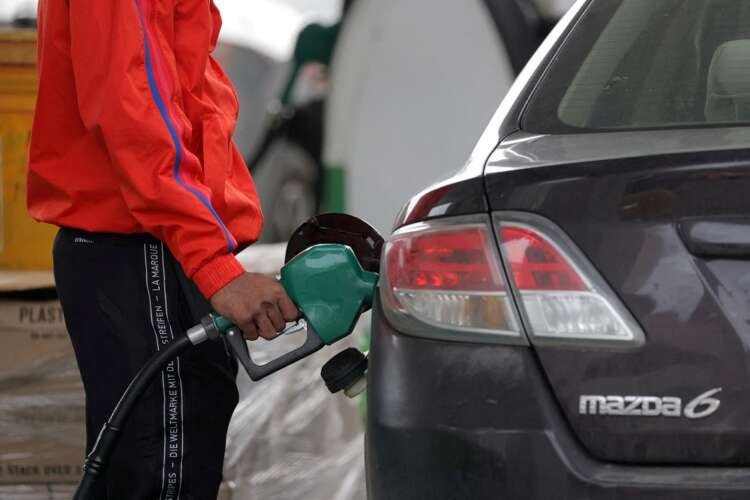
    The average U.S. price for regular unleaded gasoline has hit a record $4.25 a gallon, though that is about $1 a gallon below the inflation-adjusted peak.

    While that indicates inflation likely has further to climb, it’s less clear what it will mean both for the Fed, as it debates how fast to raise interest rates, and for the U.S. economy as it emerges from the pandemic.

    Some prior oil shocks, such as the one in the 1970s, were associated with more persistent inflation that prompted the U.S. central bank to react with aggressive rate increases. Others, such as the brief spike during the Gulf War in the early 1990s, came alongside Fed rate cuts because underlying inflation was expected to ease.

    SIGNS OF SUBSTITUTION, NOT PULLBACK

    The U.S. economy may have some room to give. Growth entering the year was strong, and even if high oil prices slow things, the outcome for the year is still likely to be solid – not the weak growth and rising prices of a true “stagflation.”

    “The U.S. has become less sensitive to energy shocks,” with a steady decline in the share of income spent on energy, Bank of America economists wrote in a note. “With Omicron cases fading, the reopening of the service sector has resumed … Excess savings built up over the last two years can fund this rebound.”

    GRAPHIC: Energy’s share of U.S. consumer spending- https://graphics.reuters.com/UKRAINE-CRISIS/USA-CONSUMPTION/jnvwebrqwvw/chart.png

    Research on past oil shocks offers a sense of what to expect. Even as gas prices rise, fuel consumption and driving tend to remain steady, partly out of necessity – the daily commute, driving on the job, or family chores – as well as choice.

    Household budgets then adapt. One 2008 study of periods when gas prices were high found increased bargain shopping at grocery stores and substitution into cheaper brands.

    One possible bellwether of such a move: Shares of discount retail chain Dollar General Corp have risen about 10% since the Ukraine war began, outpacing the broader market.

    Nik Modi, a tobacco and household products analyst at RBC Capital Markets, said there was already evidence in late February before the invasion that smokers were trading down to cheaper cigarettes, a trend he expects to continue as gas prices rise. Pump prices had risen nearly 30 cents a gallon from the start of the year to when Russia invaded. They’re up another 70 cents since.

    Yet high frequency restaurant and travel data so far shows little evidence of consumers pulling back.

    PANDEMIC BEHAVIOR CHANGES

    Corporate officials who might otherwise expect fallout from higher gas prices said they were hopeful consumer spending will hold up.

    Some studies have found rising gas prices cause families to at least delay larger purchases, but “the effect of that might be somewhat more muted in this environment than maybe it has historically,” David Denton, the chief financial officer of home improvement chain Lowe’s Cos Inc’s, said at the UBS Global Consumer and Retail conference on Wednesday.

    “In the past, when gas prices have gone up, demand in this sector has kind of gone down a little bit,” Denton said, but working from home in particular may have insulated consumers who previously commuted to work.

    Other pandemic dynamics may also play out. Public transit use remains depressed but could be an acceptable option for former riders as COVID-19 infections decrease. Credit card balances are lower, giving financial space to consumers intent on spending now that social life has resumed more fully.

    In addition, economists and officials have noted that higher oil prices now have some potential upside in the United States, with the hit to consumers offset by rising employment and investment in domestic energy production.

    “Oil prices would need to rise much further from here to seriously threaten the consumer recovery,” wrote Michael Pearce, a senior U.S. economist for Capital Economics. “For the broader economy, any hit to consumption should be mostly offset by greater investment in shale production.”

    Pearce said there may even be some unintended benefits for the Fed. If rising gas prices do curb consumer demand for some goods and services, it could ease inflation by bringing demand closer in line with available supply.

    Rate hikes in part work by discouraging consumption, and the oil shock may accomplish some of that job for the Fed, which is widely expected to raise borrowing costs at the end of its policy meeting next week.

    “To the extent this means domestic demand is weaker, we should be seeing less upward pressure on wages and services prices,” Pearce said.

    (Reporting by Howard Schneider; Additional reporting by Siddharth Cavale in Bangalore; and Jessica DiNapoli in New York; Editing by Dan Burns and Paul Simao)

    Related Posts
    Chase Buchanan Private Wealth Management Highlights Key Autumn 2025 Budget Takeaways for Expats
    Chase Buchanan Private Wealth Management Highlights Key Autumn 2025 Budget Takeaways for Expats
    PayLaju Strengthens Its Position as Malaysia’s Trusted Interest-Free Sharia-Compliant Loan Provider
    PayLaju Strengthens Its Position as Malaysia’s Trusted Interest-Free Sharia-Compliant Loan Provider
    A Notable Update for Employee Health Benefits:
    A Notable Update for Employee Health Benefits:
    Creating Equity Between Walls: How Mohak Chauhan is Using Engineering, Finance, and Community Vision to Reengineer Affordable Housing
    Creating Equity Between Walls: How Mohak Chauhan is Using Engineering, Finance, and Community Vision to Reengineer Affordable Housing
    Upcoming Book on Real Estate Investing: Harvard Grace Capital Founder Stewart Heath’s Puts Lessons in Print
    Upcoming Book on Real Estate Investing: Harvard Grace Capital Founder Stewart Heath’s Puts Lessons in Print
    ELECTIVA MARKS A LANDMARK FIRST YEAR WITH MAJOR SENIOR APPOINTMENTS AND EXPANSION MILESTONES
    ELECTIVA MARKS A LANDMARK FIRST YEAR WITH MAJOR SENIOR APPOINTMENTS AND EXPANSION MILESTONES
    Hebbia Processes One Billion Pages as Financial Institutions Deploy AI Infrastructure at Unprecedented Scale
    Hebbia Processes One Billion Pages as Financial Institutions Deploy AI Infrastructure at Unprecedented Scale
    Beyond Governance Fatigue: Making ESG Integration Work in Financial Markets
    Beyond Governance Fatigue: Making ESG Integration Work in Financial Markets
    Why I-9 Verification Matters for Financial Institutions: Building a Culture of Compliance and Trust
    Why I-9 Verification Matters for Financial Institutions: Building a Culture of Compliance and Trust
    Curvestone AI partners with The White Rose Finance Group to enhance compliance file reviews
    Curvestone AI partners with The White Rose Finance Group to enhance compliance file reviews
    LinkedIn Influence in 2025: Insights from Stevo Jokic on Building Authority and Trust
    LinkedIn Influence in 2025: Insights from Stevo Jokic on Building Authority and Trust
    Should You Take the Dealer’s Bike Insurance or Buy Online Yourself? Here’s the Real Difference
    Should You Take the Dealer’s Bike Insurance or Buy Online Yourself? Here’s the Real Difference

    Why waste money on news and opinions when you can access them for free?

    Take advantage of our newsletter subscription and stay informed on the go!

    Subscribe

    More from Top Stories

    Explore more articles in the Top Stories category

    ID-Pal Unveils ID-Detect Enhancements to Counter Surge in Digital Manipulation and Deepfakes

    ID-Pal Unveils ID-Detect Enhancements to Counter Surge in Digital Manipulation and Deepfakes

    TRUST TAKES THE LEAD: HALF OF UK SHOPPERS HAVE ABANDONED ONLINE PURCHASES OVER SECURITY CONCERNS

    TRUST TAKES THE LEAD: HALF OF UK SHOPPERS HAVE ABANDONED ONLINE PURCHASES OVER SECURITY CONCERNS

    Why Choose Premium Driver Service in Miami Over Rideshare Apps for Business Travel and Special Events?

    Why Choose Premium Driver Service in Miami Over Rideshare Apps for Business Travel and Special Events?

    Over 30 Million Users Benefit From Ant International’s Bettr Credit Tech Solutions

    Over 30 Million Users Benefit From Ant International’s Bettr Credit Tech Solutions

    Side-Hustle Economics: How Part-Time Service Work Can Strengthen Your Financial Plan

    Side-Hustle Economics: How Part-Time Service Work Can Strengthen Your Financial Plan

    London to Host Major Summit on “New Horizons” for Islamic Economy in the UK

    London to Host Major Summit on “New Horizons” for Islamic Economy in the UK

    BLOXX Launches World’s First Home Equity Subscription, Creating a New Residential Asset Class

    BLOXX Launches World’s First Home Equity Subscription, Creating a New Residential Asset Class

    LiaFi Addresses Gap Between Business Transaction and Savings Accounts

    LiaFi Addresses Gap Between Business Transaction and Savings Accounts

    Ant Group Chairman Eric Jing Outlines Strategy for Inclusive AI, Collaboration on Tokenised Settlement

    Ant Group Chairman Eric Jing Outlines Strategy for Inclusive AI, Collaboration on Tokenised Settlement

    Deeply Cultivating the Syndicated Loan and Cross-Border Financing Fields: Empowering Chinese Banks’ Global Expansion with Professional Excellence

    Deeply Cultivating the Syndicated Loan and Cross-Border Financing Fields: Empowering Chinese Banks’ Global Expansion with Professional Excellence

    Ant International’s Antom Launches AI‑Powered MSME App for Finance and Business Operations

    Ant International’s Antom Launches AI‑Powered MSME App for Finance and Business Operations

    A Gateway for U.S. Capital: Inside Kazakhstan’s Expanding Financial Hub

    A Gateway for U.S. Capital: Inside Kazakhstan’s Expanding Financial Hub

    View All Top Stories Posts
    Previous Top Stories PostExclusive-China’s regulators check risks to futures brokers from nickel positions
    Next Top Stories PostNuclear war? Russia’s Lavrov says: I don’t believe so