Search
00
GBAF Logo
trophy
Top StoriesInterviewsBusinessFinanceBankingTechnologyInvestingTradingVideosAwardsMagazinesHeadlinesTrends

Subscribe to our newsletter

Get the latest news and updates from our team.

Global Banking & Finance Review®

Global Banking & Finance Review® - Subscribe to our newsletter

Company

    GBAF Logo
    • About Us
    • Profile
    • Privacy & Cookie Policy
    • Terms of Use
    • Contact Us
    • Advertising
    • Submit Post
    • Latest News
    • Research Reports
    • Press Release
    • Awards▾
      • About the Awards
      • Awards TimeTable
      • Submit Nominations
      • Testimonials
      • Media Room
      • Award Winners
      • FAQ
    • Magazines▾
      • Global Banking & Finance Review Magazine Issue 79
      • Global Banking & Finance Review Magazine Issue 78
      • Global Banking & Finance Review Magazine Issue 77
      • Global Banking & Finance Review Magazine Issue 76
      • Global Banking & Finance Review Magazine Issue 75
      • Global Banking & Finance Review Magazine Issue 73
      • Global Banking & Finance Review Magazine Issue 71
      • Global Banking & Finance Review Magazine Issue 70
      • Global Banking & Finance Review Magazine Issue 69
      • Global Banking & Finance Review Magazine Issue 66
    Top StoriesInterviewsBusinessFinanceBankingTechnologyInvestingTradingVideosAwardsMagazinesHeadlinesTrends

    Global Banking & Finance Review® is a leading financial portal and online magazine offering News, Analysis, Opinion, Reviews, Interviews & Videos from the world of Banking, Finance, Business, Trading, Technology, Investing, Brokerage, Foreign Exchange, Tax & Legal, Islamic Finance, Asset & Wealth Management.
    Copyright © 2010-2026 GBAF Publications Ltd - All Rights Reserved. | Sitemap | Tags | Developed By eCorpIT

    Editorial & Advertiser disclosure

    Global Banking & Finance Review® is an online platform offering news, analysis, and opinion on the latest trends, developments, and innovations in the banking and finance industry worldwide. The platform covers a diverse range of topics, including banking, insurance, investment, wealth management, fintech, and regulatory issues. The website publishes news, press releases, opinion and advertorials on various financial organizations, products and services which are commissioned from various Companies, Organizations, PR agencies, Bloggers etc. These commissioned articles are commercial in nature. This is not to be considered as financial advice and should be considered only for information purposes. It does not reflect the views or opinion of our website and is not to be considered an endorsement or a recommendation. We cannot guarantee the accuracy or applicability of any information provided with respect to your individual or personal circumstances. Please seek Professional advice from a qualified professional before making any financial decisions. We link to various third-party websites, affiliate sales networks, and to our advertising partners websites. When you view or click on certain links available on our articles, our partners may compensate us for displaying the content to you or make a purchase or fill a form. This will not incur any additional charges to you. To make things simpler for you to identity or distinguish advertised or sponsored articles or links, you may consider all articles or links hosted on our site as a commercial article placement. We will not be responsible for any loss you may suffer as a result of any omission or inaccuracy on the website.

    Home > Headlines > Exclusive-U.S. exempts security funds from aid freeze — but little for humanitarian programs
    Headlines

    Exclusive-U.S. exempts security funds from aid freeze — but little for humanitarian programs

    Published by Global Banking & Finance Review®

    Posted on February 21, 2025

    6 min read

    Last updated: January 26, 2026

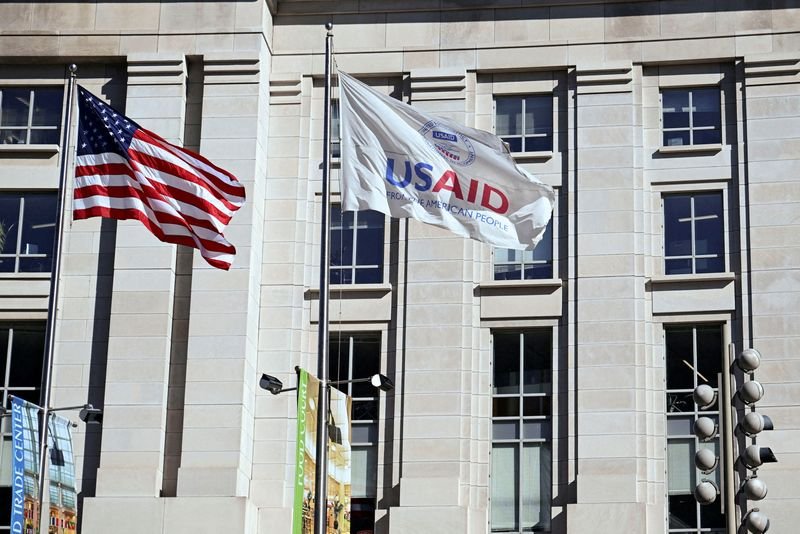
    This image illustrates the U.S. government's exemption of security funds from a foreign aid freeze, highlighting the limited humanitarian support. The article discusses the implications of these funding decisions on global humanitarian programs.
    U.S. government financial aid freeze and security funding overview - Global Banking & Finance Review
    Why waste money on news and opinion when you can access them for free?

    Take advantage of our newsletter subscription and stay informed on the go!

    Subscribe

    Tags:humanitarian aidfinancial managementGovernment funding

    Quick Summary

    The U.S. released $5.3 billion in aid, prioritizing security over humanitarian programs. Limited exemptions were granted for humanitarian aid amid Trump's aid freeze.

    U.S. Releases Security Funds Amid Aid Freeze, Limited Humanitarian Support

    By Jonathan Landay and Simon Lewis

    WASHINGTON (Reuters) - The Trump administration released $5.3 billion in previously frozen foreign aid, mostly for security and counternarcotics programs, according to a list of exemptions reviewed by Reuters that included only limited humanitarian relief.

    President Donald Trump ordered a 90-day pause on foreign aid shortly after taking office on January 20, halting funding for everything from programs that fight starvation and deadly diseases to providing shelters for millions of displaced people across the globe.

    The freeze sparked a scramble by U.S. officials and humanitarian organizations for exemptions to keep programs going. Secretary of State Marco Rubio, who has said all foreign assistance must align with Trump’s “America First” priorities, issued waivers in late January on military aid to Israel and Egypt, the top U.S. allies in the Middle East, and for life-saving humanitarian aid, including food. The waivers meant those funds should have been allowed to be spent.

    Current and former U.S. officials and aid organizations, however, say few humanitarian aid waivers have been approved.

    Reuters obtained a list of 243 further exceptions approved as of February 13 totaling $5.3 billion. The list provides the most comprehensive accounting of exempted funds since Trump ordered the aid freeze and reflects the White House’s desire to cut aid for programs it doesn't consider vital to U.S. national security. 

    The list identifies programs that will be funded and the U.S. government office managing them.

    The vast majority of released funds -- more than $4.1 billion -- were for programs administered by the U.S. State Department's Bureau of Political-Military affairs, which oversees arms sales and military assistance to other countries and groups. Other exemptions were in line with Trump’s immigration crackdown and efforts to halt the flow of illicit narcotics into the U.S., including the deadly opioid fentanyl.

    More than half of the programs that will be allowed to go forward are run by the State Department’s Bureau of International Narcotics and Law Enforcement Affairs, or INL, and are aimed at helping fight drug trafficking and illicit migration to the U.S., according to the list.

    Those exemptions were worth $293 million and included funds for databases to track migrants, identify possible terrorists and share biometric information.

    A State Department spokesperson did not respond to a request for comment.

    Reuters could not determine if some exemptions had been granted but were not on the list.

    Trump has long railed against foreign aid, which has averaged less than 2% of total federal spending for the past 20 years, according to the nonpartisan Committee for a Responsible Federal Budget. Trump has described the U.S. “foreign aid industry” as “in many cases antithetical to American values.”

    Billionaire Elon Musk’s Department of Government Efficiency has led an effort to gut the United States Agency for International Development, the main delivery mechanism for American foreign assistance and a critical tool of U.S. "soft power" for winning influence abroad.

    In contrast to security-related programs, USAID programs received less than $100 million in exemptions, according to the list. That compares to roughly $40 billion in USAID programs administered annually before the freeze.

    Exempted USAID programs included $78 million for non-food humanitarian assistance in Gaza, which has been devastated by war. A separate $56 million was released for the International Committee of the Red Cross related to the ceasefire deal between Israel and Hamas, the list showed.

    The list did not include specific exemptions for some of the world's worst humanitarian crises, including Sudan, Syria, Ukraine, Myanmar and Afghanistan, which means funds for those places appeared to remain stopped.

    Security exemptions included $870 million for programs in Taiwan, $336 million for modernizing Philippine security forces and more than $21.5 million for body armor and armored vehicles for Ukraine's national police and border guards, the list showed.

    The biggest non-security exemption was $500 million in funding for PEPFAR, the flagship U.S. program fighting HIV/AIDS, which mainly funds healthcare services in Africa and is credited with saving millions of lives. That compares with PEPFAR’s annual budget in 2024 of $6.5 billion. PEPFAR is administered by the State Department's global health bureau. 

    “DYSFUNCTIONAL”

    A current USAID employee, speaking on condition of anonymity, described the process for requesting exemptions as "very dysfunctional" and said the agency’s remaining staff have sought clarity on what criteria are being used. Rubio has said the Trump administration reached out to USAID missions overseas to identify and designate programs that will be exempted.

    J. Brian Atwood, USAID's administrator from 1993 to 1999, said reducing foreign aid to a narrow set of exemptions was shortsighted. "When people are starving or feeling desperate, they are going to become a security problem eventually,” he said. “They’ll migrate or become an immigration problem, or they will be more inclined to move to terrorism.”

    The foreign aid that was paused by Trump had previously been approved by Congress, which controls the federal budget under the U.S. Constitution. As a candidate and as president, Trump has said he opposes foreign aid for "countries that hate us" and would prefer to instead spend the money at home. 

    The exemptions in the list were granted before a federal judge last week ordered the Trump administration to restore funding for foreign aid contracts and awards that were in place before January 20. Reuters was unable to establish what exemptions, if any, had been granted since February 13.

    Many of the unfrozen programs reflect Trump’s focus on drug trafficking, including funds supporting fentanyl interdiction operations by Mexican security units and efforts to combat transnational criminal organizations. Trump’s aid freeze has thrown a wrench into those efforts, however.

    Reuters reported last week that the pause halted anti-narcotics programs funded by the INL Bureau in Mexico that for years had been working to curb the flow of the synthetic opioid into the United States.

    More than $64 million was released to support Haitian police and a U.N.-approved international security force that is helping Haiti’s government fight escalating gang violence that has displaced more than one million people.

    The money covers supplies of small arms, ammunition, drones, night vision goggles, vehicles and other support for the force, according to the list. The force is led by Kenya and includes personnel from Jamaica, Belize, the Bahamas, Guatemala and El Salvador.

    The Bureau of International Security and Nonproliferation, focused on preventing the spread of nuclear weapons and other weapons of mass destruction, received 17 exemptions worth more than $30.4 million, the list showed.

    Also released was $397 million for a U.S.-backed program in nuclear-armed Pakistan that a congressional aide said monitored Islamabad's use of U.S.-made F-16 fighter jets to ensure they are employed for counterterrorism operations and not against rival India. 

    Some of the released funds were for small expenditures — including $604 for Musk's Starlink satellite internet system to run biometrics registration programs in the Darien Gap, a treacherous 60-mile route linking South and Central America used by U.S.-bound illegal migrants.

    (Additional reporting by Andy Sullivan; Editing by Don Durfee and Jason Szep)

    Key Takeaways

    • •U.S. released $5.3 billion in aid exemptions.
    • •Majority of funds directed to security programs.
    • •Limited exemptions for humanitarian aid.
    • •Trump's 'America First' policy influences aid decisions.
    • •USAID programs received minimal exemptions.

    Frequently Asked Questions about Exclusive-U.S. exempts security funds from aid freeze — but little for humanitarian programs

    1What is the main topic?

    The article discusses U.S. aid exemptions focusing on security over humanitarian programs amid a broader aid freeze.

    2Why were security funds prioritized?

    Security funds align with Trump's 'America First' policy, focusing on national security and counternarcotics efforts.

    3How much aid was released for humanitarian programs?

    Less than $100 million in exemptions were granted for humanitarian programs, compared to $5.3 billion overall.

    More from Headlines

    Explore more articles in the Headlines category

    Image for Norway police open investigation into ex-prime minister Jagland over Epstein files
    Norway police open investigation into ex-prime minister Jagland over Epstein files
    Image for Danone recalls batches of infant formula in Austria, Germany
    Danone recalls batches of infant formula in Austria, Germany
    Image for Italian police to get new arrest powers after Turin riot
    Italian police to get new arrest powers after Turin riot
    Image for US, China opt out of joint declaration on AI use in military
    US, China opt out of joint declaration on AI use in military
    Image for Trump says US retains right to 'militarily secure' Chagos airbase
    Trump says US retains right to 'militarily secure' Chagos airbase
    Image for European corporate outlook improves, but earnings overall expected to fall
    European corporate outlook improves, but earnings overall expected to fall
    Image for Trump endorses Hungary's Orban for re-election ahead of April poll
    Trump endorses Hungary's Orban for re-election ahead of April poll
    Image for Environmental groups sue EU commission over Portugal's lithium mine
    Environmental groups sue EU commission over Portugal's lithium mine
    Image for Slovak prosecutor ends probe over fighter jets, air defence systems donated to Ukraine
    Slovak prosecutor ends probe over fighter jets, air defence systems donated to Ukraine
    Image for Olympics-No credible threats to Milano Cortina Games, U.S. security official says
    Olympics-No credible threats to Milano Cortina Games, U.S. security official says
    Image for Elton John's husband accuses Daily Mail of homophobia in UK privacy trial
    Elton John's husband accuses Daily Mail of homophobia in UK privacy trial
    Image for World Economic Forum investigates its CEO over Epstein links
    World Economic Forum investigates its CEO over Epstein links
    View All Headlines Posts
    Previous Headlines PostSwedish police apprehend three men near Israeli embassy
    Next Headlines PostMan who stabbed novelist Salman Rushdie guilty of attempted murder