
Headlines
Explainer-How Does Space Travel Affect Astronaut Health?
Published by Global Banking & Finance Review®
Posted on February 20, 2025
6 min readLast updated: February 27, 2026
Add as preferred source on Google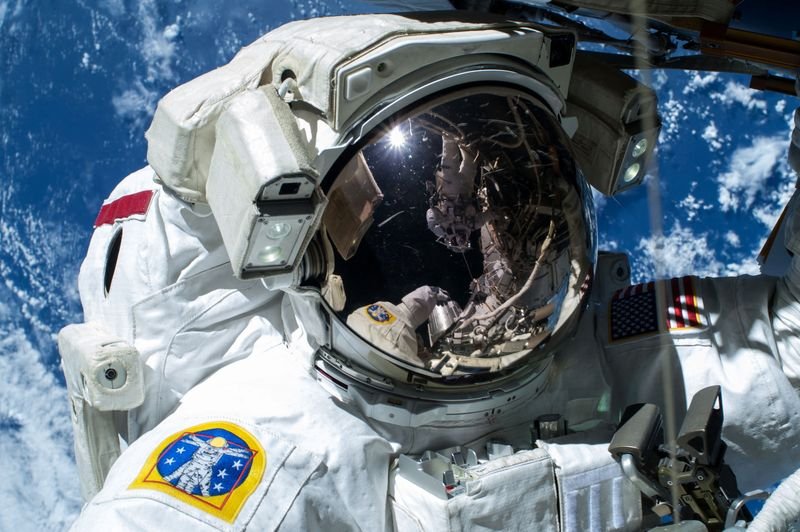
Published by Global Banking & Finance Review®
Posted on February 20, 2025
6 min readLast updated: February 27, 2026
Add as preferred source on GoogleSpace travel impacts astronaut health through microgravity, radiation, and psychological stress, with recovery dependent on mission duration.
By Will Dunham
WASHINGTON (Reuters) - The human body was not built for spaceflight, with its microgravity conditions, exposure to high-energy radiation and other issues. As a result, trekking beyond the Earth's confines causes many physiological changes that affect an astronaut's health.
Here is an explanation of some of the effects on human health caused by space travel.
WHY IS SPACE TRAVEL TOUGH ON THE HUMAN BODY?
The human body evolved over millions of years to function optimally in Earth's environment, which includes its gravity, atmospheric composition and relatively low levels of radiation.
Space travel exposes people to quite a different environment, posing a range of physiological and psychological challenges, especially with prolonged exposure, according to Afshin Beheshti, director of the Center for Space Biomedicine at the University of Pittsburgh.
As researchers seek new countermeasures to protect space travelers, more data is needed on astronauts with varying health backgrounds and undertaking different kinds of missions in order to map out personalized risk profiles and mitigation strategies, according to Chris Mason, a professor of physiology and biophysics at Weill Cornell Medicine in New York.
WHAT ARE THE HAZARDS OF SPACE RADIATION?
Unlike on Earth, where the atmosphere and planetary magnetic field provide a shield from space radiation, astronauts are exposed to high-energy radiation permeating the cosmos. This can lead to DNA damage, increased cancer risk, neurodegenerative effects, cardiovascular issues and immune system dysregulation.
Earth's magnetosphere - the region of space dominated by the planetary magnetic field - provides some protection for astronauts in missions in low-Earth orbit. But astronauts traveling beyond that - such as on missions to the moon or Mars - would experience much higher radiation doses.
WHAT DOES MICROGRAVITY DO?
Gravity plays a critical role in regulating bodily functions. Its absence triggers widespread physiological adaptations, according to Beheshti.
Without gravity, bodily fluids shift upward, leading to facial swelling and increased intracranial pressure, which can affect vision. The lack of mechanical loading on bones and muscles associated with the downward pull of gravity leads to bone density loss and muscle atrophy.
In addition, the cardiovascular system undergoes major changes, including difficulty regulating blood pressure upon return to Earth. Prolonged exposure to microgravity conditions also affects vestibular function - the inner ear's ability to sense movement and orientation. That can cause balance and coordination issues.
HOW ABOUT CONFINEMENT AND PSYCHOLOGICAL STRESS?
Long-duration space missions require astronauts to live in confined and isolated environments with limited social interaction and exposure to natural stimuli. This, according to Beheshti, can lead to psychological stress, sleep disturbances, cognitive performance declines and mood disorders.
The effects of prolonged isolation and close-quarters living among astronauts - during stints aboard space stations or longer future missions to destinations like Mars - could aggravate interpersonal conflicts, further impacting mental well-being and mission performance.
WHAT HAPPENS AFTER RETURNING TO EARTH?
How astronauts recover after returning to Earth depends in large part on mission duration. For short-duration missions of a few days in low-Earth orbit, about 95% of the biological damage sustained appears to be reversed upon return.
For astronauts who spend months aboard the International Space Station, or ISS, recovery appears proportional to their time in space. Many physiological systems gradually return to normal. But some issues persist. One example is Spaceflight-Associated Neuro-Ocular Syndrome (SANS), linked to vision impairment due to microgravity-induced fluid shifts and changes in intracranial pressure affecting the eyes. Research suggests that dysfunction in subcellular structures called mitochondria plays a role in SANS. Some astronauts experience lasting impairment that may require corrective lenses.
Questions remain about the effects of long-duration deep-space missions in which astronauts would experience much higher levels of space radiation and prolonged microgravity. Without effective countermeasures, recovery could be problematic. Researchers are actively developing mitochondrial-based countermeasures to mitigate space-induced damage.
WHERE ARE THE GAPS IN WHAT WE KNOW?
There are still gaps in the understanding of how spaceflight impacts human health. Relatively little is known about how it affects lung function. While it is known that space radiation elevates cancer risk, accelerates aging and induces cellular damage, the precise biological mechanisms remain elusive. Research has shown that mitochondria play a central role in spaceflight-induced health effects. The precise mechanisms of mitochondrial adaptation and dysfunction in space remain an area of active study.
Scientists also lack a comprehensive understanding of how microgravity, radiation exposure and isolation impact cognitive function, mental health and neuroplasticity - the brain's ability to change and adapt - over long durations.
HOW ABOUT HAVING BABIES IN SPACE?
One significant knowledge gap is how spaceflight affects human reproduction and fetal development, according to Beheshti. Limited studies have been conducted on reproductive health in space, mostly involving animals such as mice. The complete implications for human fertility, embryonic development and long-term space habitation spanning generations remain unknown. This is especially important as humankind considers future space colonization efforts.
WHAT HAS RECENT RESEARCH SHOWN?
Research published in 2024 detailed changes in the brain, heart, muscles, kidneys and skin, immune regulation and stress levels and a breakdown in the activity of mitochondria among crew members who participated in SpaceX's three-day Inspiration4 mission in 2021 - the first all-civilian team to orbit Earth.
Another study published in 2024 showed that astronauts are more likely to experience headaches in space than previously known. It involved 24 astronauts who traveled aboard the ISS for up to 26 weeks. All but two reported headaches.
A study published in 2023 found that astronauts who traveled on the ISS or NASA space shuttles on missions lasting at least six months experienced expansion of the cerebral ventricles - spaces in the middle of the brain containing cerebrospinal fluid.
Research published in 2022 documented bone loss in 17 ISS astronauts in missions averaging about 5-1/2 months. A year after returning to Earth, the astronauts on average exhibited 2.1% reduced bone mineral density of the tibia - one of the bones of the lower leg - and 1.3% reduced bone strength. Nine did not recover bone mineral density after the spaceflight.
(Reporting by Will Dunham, Editing by Rosalba O'Brien)
The article discusses the health effects of space travel on astronauts, including physiological and psychological challenges.
Microgravity causes fluid shifts, bone density loss, and muscle atrophy, affecting vision and cardiovascular health.
Space radiation can damage DNA, increase cancer risk, and cause cardiovascular and neurodegenerative issues.
Explore more articles in the Headlines category