Headlines
In Russia, Dozens of Dissenters Are Held as Psychiatric Patients
Published by Global Banking & Finance Review®
Posted on February 20, 2025
9 min readLast updated: January 26, 2026
Add as preferred source on Google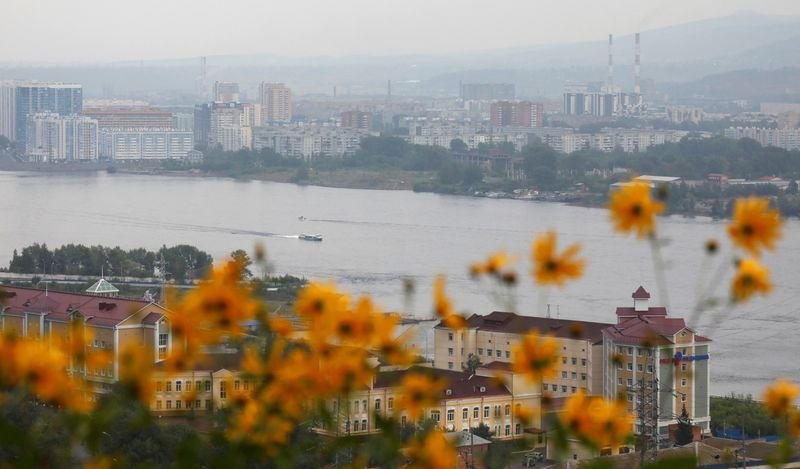
Published by Global Banking & Finance Review®
Posted on February 20, 2025
9 min readLast updated: January 26, 2026
Add as preferred source on GoogleRussians face psychiatric treatment for political dissent, echoing Soviet-era practices. Cases have risen since the Ukraine war began.
By Mark Trevelyan and Lucy Papachristou
LONDON (Reuters) - Dozens of Russians are being subjected to compulsory psychiatric treatment because of their political views, according to lawyers and human rights groups - a trend they say has gathered pace since the start of the war in Ukraine.
The practice carries echoes of a method of control used widely in the Soviet Union and known as "punitive psychiatry", even if the current scale falls far short of that seen from the late 1960s until the early 1980s.
For this story, Reuters analysed data from an international expert and two Russian human rights groups, interviewed three lawyers and reviewed case materials of two female activists sent by court order to undergo psychiatric assessments at a Siberian hospital.
The women, whose accounts are reported here in detail for the first time, were released after a few weeks but described the experience as a scarring ordeal.
Yekaterina Fatyanova, 37, was interned on April 28 last year at the KKPND No.1 psychiatric hospital in her home city of Krasnoyarsk after being accused of discrediting the Russian armed forces by publishing an article in a small opposition newspaper she ran in her spare time. She was not the author of the piece, which argued the war in Ukraine was driven by imperialist motives.
While in hospital she was subjected to painful, degrading and unnecessary procedures including a gynaecological examination, she wrote in letters of complaint to authorities, reviewed by Reuters.
Fatyanova was discharged from the hospital on May 27 after doctors determined, in a document seen by Reuters, that she had no mental disorders or diseases.
"I believe that the real purpose of placing me there was moral suppression and isolation from society, possibly as a punishment for my active civic position," she said.
Robert van Voren, a Dutch professor and human rights campaigner who has spent decades studying what he describes as the political abuse of psychiatry in Russia, said he had documented around 23 such cases a year since 2022, when the full-scale invasion of Ukraine began, up from an annual average of around 5 between 2015 and 2021.
Russia's justice ministry, human rights commissioner and the Kremlin did not reply to requests for comment about the alleged use of psychiatry for political purposes. The Kremlin says it does not discuss individual cases that pass through the criminal justice system, as these are a matter for the courts.
Hospital KKPND No.1 did not respond to a request for comment.
"DISTURBING" SCALE
In the Soviet era, thousands of dissenters were hospitalised for political reasons, based on the premise that only someone mentally ill would oppose the Communist state. Among the best known cases were those of dissident Vladimir Bukovsky and Nobel prize-winning poet Joseph Brodsky.
While far below that scale, the current trend is nonetheless "disturbing," van Voren said in an interview. Reuters has previously reported a revival of other Soviet-era practices during the Ukraine war, including citizen denunciations of suspected dissidents.
In many other parts of the world, the use of compulsory psychiatric treatment has been in decline and generally confined to violent criminal cases, said Dainius Pūras, a Lithuanian psychiatrist who served as the U.N. Special Rapporteur on the right to health.
Pūras said an erosion of democratic reforms in Russia had a "detrimental impact on Russian psychiatry," cautioning that Russia's use of state-appointed psychiatrists in court cases likely leads to decisions that serve the interests of national authorities.
In Russia, compulsory treatment "is now again used for political purposes, like it was in the time of the Soviet Union," he said.
Russian rights group Memorial has identified 48 people it says are currently undergoing such treatment in politically motivated cases. Of those, 46 are psychiatric inpatients and two are receiving out-patient treatment while in prison.
The most common charges against them related to criticism of the war. Thirteen of the people had been prosecuted under censorship laws passed shortly after Russia's invasion, the rights group said.
According to Memorial, the youngest person subjected to compulsory psychiatric treatment for war protests turned 20 in hospital last week. He was investigated as a teenager in 2023 for seeking permission to organise an anti-war rally, and a court ordered his hospitalisation in February last year.
Anastasia Pilipenko, a lawyer who has represented people placed under compulsory psychiatric treatment, told Reuters she did not consider "risky behaviour in the form of public anti-war statements to be a sign of mental disorder."
Pilipenko does not represent any of the people in this story.
Hospitalisations represent a small fraction of overall arrests and jailings for political crimes, including speaking out against the war. Just over 20,000 people have been arrested for expressing an anti-war position since the full-scale invasion began, according to Russian rights group OVD-Info. Some 1,155 people have been criminally charged.
For those admitted as psychiatric patients, additional trauma stems from the open-ended nature of their detention and the fact that their sanity is being called into question, van Voren said.
"It challenges the value of what you think because it is dubbed mental illness. And that has a very debilitating effect."
Memorial said the person hospitalised the longest in a politically motivated case is Albert Gurdjian, interned since 2017 after allegedly posting online that justice officials were an organised crime group and that it would be good to "blast the yacht" of a businessman close to President Vladimir Putin.
Reuters was unable to reach Gurdjian for comment.
"PUNITIVE PSYCHIATRY"
Fatyanova, the Krasnoyarsk journalist, said in her complaints that she was taken to the KKPND No.1 hospital by officers of the FSB security service, and that she was pressured to sign admission forms authorising treatment and procedures without her informed and voluntary consent.
While there, she said she had to resign from her main job at a management company because it declined to give her leave. She had also been fired from a previous job at a transport company in December 2023 after the FSB started investigating her, she said in her complaints.
She said patients were sometimes denied daily walks, given mouldy bread and frequently disturbed by female screams from another floor of the building.
The health ministry wrote back, dismissing Fatyanova's complaints. However, the regional health inspectorate said in a letter dated October 1 that it had warned the hospital to obtain informed consent from patients.
In December, Fatyanova was sentenced for the newspaper article to two years' forced labour, a form of punishment where convicts have to live in a hostel and perform mostly unskilled tasks such as picking up trash or clearing snow. It has yet to come into force, pending appeals, she said.
While in hospital, she met Olga Suvorova, 56, a prolific campaigner on social and environmental issues who told Reuters she too had been subjected to invasive and unnecessary tests there even though, unlike Fatyanova, she refused to sign a consent form.
"This is punitive psychiatry," Suvorova said in a telephone interview. "The aim of this whole thing is to defame me, belittle my contribution ... and to slander me and make people no longer trust me."
The case documents show Suvorova's internment stemmed from a criminal investigation alleging she falsely accused a police officer of assault in October 2023. Suvorova says the officer manhandled her. She supported her complaint with a medical report showing bruising that required her to wear a sling for two weeks.
In December 2023, Suvorova was arrested in the false accusation case at Krasnoyarsk airport after returning from a meeting in Moscow with Yekaterina Duntsova, an opposition politician who was seeking to run against Putin in an election.
Refusing to admit wrongdoing, Suvorova was sent by order of an investigator for two out-patient psychiatric assessments. In a report, a doctor said she showed signs of "mixed personality disorder" including impulsive behaviour and a "fixation on the desire to help other people".
For further investigation, a court in May sent Suvorova to KKPND No.1 as an inpatient, the documents reviewed by Reuters showed.
Suvorova said it was only after complaining about her treatment that she was discharged after three weeks, with a medical document stating she had not been found to be suffering any psychiatric disorder.
Suvorova acknowledged that during two court appearances, in 2021 and 2024, she publicly cut her arm, drawing blood. She said she did not seriously injure herself on either occasion, and had acted in order to highlight injustices.
"I choose methods that can draw attention," she said. "If there were real grounds to suspect that I had a psychiatric illness, I would definitely not have got out of hospital."
ORPHAN RIGHTS
Ingvar Gorlanov, a 26-year-old from Siberia whose parents died when he was a child, was first sent to a psychiatric institution in 2019 when he staged a one-man picket outside the presidential administration in Moscow, demanding a meeting with Putin about the rights of orphans, according to his lawyer, Alexei Pryanishnikov
Police detained Gorlanov and took him to a hospital. A few days later, a court ruled in favour of compulsory treatment.
Since then, Gorlanov has been sent to two other psychiatric hospitals after repeated arrests, Pryanishnikov told Reuters. He is on a federal list of "terrorists and extremists," charged with offences including inciting hatred and insulting a police officer.
Pryanishnikov said his client was a normal person with a "heightened sense of justice" who presents no danger to himself or others and should be receiving therapy rather than in-patient treatment and anti-psychotic drugs.
Reuters has communicated sporadically via text with Gorlanov, interned at a psychiatric facility in his hometown, Novokuznetsk, since July 15. He said he was allowed access to his phone for 10 minutes at weekends. As of early February, Gorlanov said he was still a patient there.
Asked what motivated him to keep protesting, Gorlanov replied: "The opportunity to contribute to changing policy in the country for the better."
(Reporting by Lucy Papachristou and Mark Trevelyan; Editing by Frank Jack Daniel)
The article discusses the use of compulsory psychiatric treatment in Russia for political dissenters, echoing Soviet-era practices.
The number of cases has increased since the full-scale invasion of Ukraine began in 2022.
Human rights groups report that dozens of Russians are undergoing politically motivated psychiatric treatment.
Explore more articles in the Headlines category