
Finance
Worldpay’s 6 Key Trends Shaping the Global Payments Landscape
Published by Wanda Rich
Posted on March 28, 2025
6 min readLast updated: January 24, 2026
Add as preferred source on Google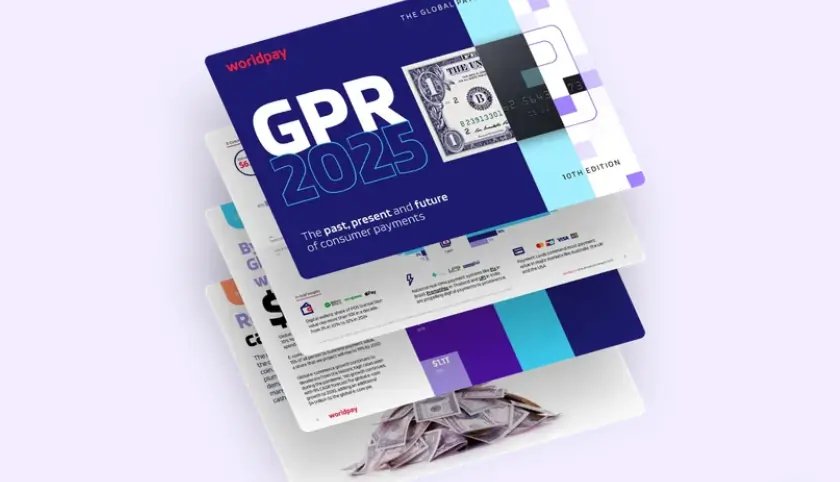
Published by Wanda Rich
Posted on March 28, 2025
6 min readLast updated: January 24, 2026
Add as preferred source on GoogleOur daily habits are changing, driven by rapid technological advancements and evolving consumer preferences.
Our daily habits are changing, driven by rapid technological advancements and evolving consumer preferences. Worldpay’s 2025 Global Payments Report outlines six key trends that are not just shaping, but fundamentally redefining how we transact. From the dominance of digital payments to the enduring relevance of cash, these trends paint a vivid picture of the future of money movement.
One of the world’s top talent management experts Abhijit Bhaduri sees this impacting more than just commerce and becoming central to how organizations will look at talent.“With digital wallets expected to dominate transactions, demand for blockchain developers, cybersecurity experts, and payment infrastructure engineers is skyrocketing,” said Bhaduri. “Skills in real-time payments, embedded finance, and fraud detection AI are becoming essential. AI-driven fraud prevention, personalized financial services, and automation are transforming payments. So careers in machine learning, risk modeling, and behavioral analytics will see continued growth.”
“The rise of ‘frictionless payments’ means businesses need multiple disciplinary teams that have behavioral economists, UX designers, and fintech product managers who work together to grow as digital spending habits grow.”
1. Digital Payments Flip the Script: The Rise of a Cashless Economy
Gone are the days when cash and cards were the undisputed kings of commerce. Over the past decade, digital payments – encompassing wallets, account-to-account (A2A) transfers, Buy Now, Pay Later (BNPL) options, and cryptocurrencies – have surged, eclipsing traditional methods. In 2014, digital payments accounted for 34% of e-commerce value; by 2024, this figure had nearly doubled to 66%. Mobile e-commerce has seen an even more dramatic leap, tripling to 57% of global e-commerce value. This shift isn't just about convenience; it's about a fundamental transformation in how transactions occur. As Worldpay’s James Fry, Head of Enterprise Product, notes, "We’ve reached a tipping point where digital payments no longer complement cash and cards—they’re leading the future of transactions." The emergence of innovations like FedNow, Paze, and Wero further underscores this transition, signaling a future where digital reigns supreme.
2. There’s an App for That: How Mobile Became the Heart of Payments
The smartphone has evolved from a communication device to a powerful financial tool. It's now the central hub for consumer payments, revolutionizing in-store, online, and in-app transactions. Mobile's share of global e-commerce has skyrocketed from 19% in 2014 to 57% in 2024. By 2030, an estimated 53% of in-person shopping will be transacted via mobile devices. This isn't just about mobile wallets; it's about an entire ecosystem where BNPL, A2A payments, and other digital solutions thrive in a mobile-first world. As Venkat Ramanathan, Director of Payment Product (Payrix) at Worldpay, observes, "For merchants, mobile commerce isn’t just an option—it’s the new standard for customer engagement." The potential rise of wearables, biometric payments, and embedded commerce further cements the smartphone's pivotal role in the future of payments.
3. Fintechs Drive Innovation: The Competitive Edge in Payments
Fintech companies are at the forefront of this revolution, driving innovation through digital wallets, BNPL, and alternative payment models. Companies like Klarna, Apple, and Mercado Libre are reshaping consumer finance, forcing traditional players to evolve or risk becoming obsolete. Digital wallet payments soared from $1.6 trillion in 2014 to $15.7 trillion in 2024, while BNPL e-commerce value skyrocketed from $2.3 billion to $342 billion in the same period. Fintechs are setting the pace, with tech leaders like Google, Apple, and PayPal demonstrating best practices that others must follow. Sunny Thakkar, Senior Director of Product Management, Fraud & Authentication at Worldpay, aptly states, "The payments landscape is now a battleground for innovation, where fintechs are setting the pace, and incumbents must evolve to compete."
Becky Frost, founder and CEO of Frost Communications, has built a career in communications and analyst relations for leading financial services and FinTech firms, from global firms like Experian to banking software provider MeridianLink. Over the last decade, she's seen a shift in consumer expectations.
"When it comes to managing their finances, studies show that consumers expect the same digital options for their important financial decisions as they would in other aspects of their lives. From buying a car to getting a mortgage to everyday banking, they expect speed, convenience, and security from their banking and financial services providers, making managing their financial lives another thing they can do from their phones."
4. Payments in Real Time: The Instant Future of Money Movement
Real-time payments (RTP) are transforming financial ecosystems, with governments, fintechs, and banks driving A2A growth globally. Instant payments are no longer a futuristic concept; they are the present reality. In Brazil, A2A payments surged from $1 billion in 2014 to $35 billion in 2024, and global A2A value is forecasted to reach $3.8 trillion by 2030. Government initiatives like UPI in India, Pix in Brazil, and FedNow in the USA are reshaping financial infrastructure. Anatole Baboukhian, Global Head of Government Affairs & ESG at Worldpay, emphasizes, "Real-time payments are more than a convenience—they're becoming a necessity for financial efficiency and inclusion." RTP's potential impact on cross-border payments and business transactions is immense, promising a future of near-instantaneous money movement.
5. Cards Are as Relevant as Ever: The Evolving Role of Plastic
Despite the rise of fintech and digital payments, cards remain a dominant force. This is echoed in Equifax’s 2025 State of Consumer Finances. They are evolving, not disappearing. An impressive 56% of digital wallets are funded by cards, and cards are projected to account for $32.5 trillion in global consumer payments by 2030. Innovation in the card space, such as Click to Pay, Visa Flexible Credential, and Mastercard’s shift to tokenization, is ensuring their continued relevance. Banks are also launching digital wallets like Paze to retain market share. Gabriel de Montessus, President of Global Enterprise at Worldpay, notes, "Cards are no longer just plastic—they’re the digital backbone of global commerce." Cards are adapting to the digital age, seamlessly integrating with digital wallets and embracing advanced security measures.
6. Resistance to the Cashless Society: Why Cash Still Matters
While the shift towards digital is undeniable, cash still holds a significant place. Its share of point-of-sale (POS) payments has declined from 44% in 2014 to 15% in 2024, but it remains a preferred method in many regions. Markets like Colombia, Japan, and Nigeria still heavily rely on cash due to cultural and economic factors. Governments are also introducing regulations to protect cash access, acknowledging its importance for financial inclusion and consumer choice. Cash addresses privacy concerns, ensures access for those without digital means, and remains necessary for offline transactions. The potential role of central bank digital currencies (CBDCs) as a bridge between physical and digital money is also being explored. As a Worldpay Thought Leader notes, "Cash’s persistence shows that a truly inclusive payments landscape must accommodate all preferences—digital and physical."
The global payments landscape is dynamic and multifaceted. While digital payments and fintech innovations are driving rapid change, the enduring relevance of cards and cash highlights the need for a balanced and inclusive approach. The 2025 Global Payments Report offers valuable insights into these trends, providing a roadmap for navigating the future of payments.
A cashless economy is one where financial transactions are conducted electronically, reducing the reliance on physical cash. This includes methods like credit cards, mobile payments, and digital wallets.
Fintech innovations refer to technological advancements in the financial services sector that improve and automate the delivery of financial services, such as mobile banking apps and blockchain technology.
Real-time payments are transactions that are processed instantly, allowing funds to be transferred and made available immediately, enhancing efficiency in financial transactions.
Buy Now, Pay Later (BNPL) is a payment option that allows consumers to make purchases and pay for them over time, often without interest, making it easier to manage cash flow.
Explore more articles in the Finance category
