Search
00
GBAF Logo
trophy
Top StoriesInterviewsBusinessFinanceBankingTechnologyInvestingTradingVideosAwardsMagazinesHeadlinesTrends

Subscribe to our newsletter

Get the latest news and updates from our team.

Global Banking and Finance Review

Global Banking & Finance Review

Company

    GBAF Logo
    • About Us
    • Profile
    • Privacy & Cookie Policy
    • Terms of Use
    • Contact Us
    • Advertising
    • Submit Post
    • Latest News
    • Research Reports
    • Press Release
    • Awards▾
      • About the Awards
      • Awards TimeTable
      • Submit Nominations
      • Testimonials
      • Media Room
      • Award Winners
      • FAQ
    • Magazines▾
      • Global Banking & Finance Review Magazine Issue 79
      • Global Banking & Finance Review Magazine Issue 78
      • Global Banking & Finance Review Magazine Issue 77
      • Global Banking & Finance Review Magazine Issue 76
      • Global Banking & Finance Review Magazine Issue 75
      • Global Banking & Finance Review Magazine Issue 73
      • Global Banking & Finance Review Magazine Issue 71
      • Global Banking & Finance Review Magazine Issue 70
      • Global Banking & Finance Review Magazine Issue 69
      • Global Banking & Finance Review Magazine Issue 66
    Top StoriesInterviewsBusinessFinanceBankingTechnologyInvestingTradingVideosAwardsMagazinesHeadlinesTrends

    Global Banking & Finance Review® is a leading financial portal and online magazine offering News, Analysis, Opinion, Reviews, Interviews & Videos from the world of Banking, Finance, Business, Trading, Technology, Investing, Brokerage, Foreign Exchange, Tax & Legal, Islamic Finance, Asset & Wealth Management.
    Copyright © 2010-2025 GBAF Publications Ltd - All Rights Reserved.

    Editorial & Advertiser disclosure

    Global Banking and Finance Review is an online platform offering news, analysis, and opinion on the latest trends, developments, and innovations in the banking and finance industry worldwide. The platform covers a diverse range of topics, including banking, insurance, investment, wealth management, fintech, and regulatory issues. The website publishes news, press releases, opinion and advertorials on various financial organizations, products and services which are commissioned from various Companies, Organizations, PR agencies, Bloggers etc. These commissioned articles are commercial in nature. This is not to be considered as financial advice and should be considered only for information purposes. It does not reflect the views or opinion of our website and is not to be considered an endorsement or a recommendation. We cannot guarantee the accuracy or applicability of any information provided with respect to your individual or personal circumstances. Please seek Professional advice from a qualified professional before making any financial decisions. We link to various third-party websites, affiliate sales networks, and to our advertising partners websites. When you view or click on certain links available on our articles, our partners may compensate us for displaying the content to you or make a purchase or fill a form. This will not incur any additional charges to you. To make things simpler for you to identity or distinguish advertised or sponsored articles or links, you may consider all articles or links hosted on our site as a commercial article placement. We will not be responsible for any loss you may suffer as a result of any omission or inaccuracy on the website.

    Home > Investing > Why demand for impact investing is already outstripping supply
    Investing

    Why demand for impact investing is already outstripping supply

    Why demand for impact investing is already outstripping supply

    Published by Gbaf News

    Posted on May 29, 2019

    Featured image for article about Investing
    Tags:Environmental problemsimpact investment opportunitiesSocial responsibilityTraditional philanthropy

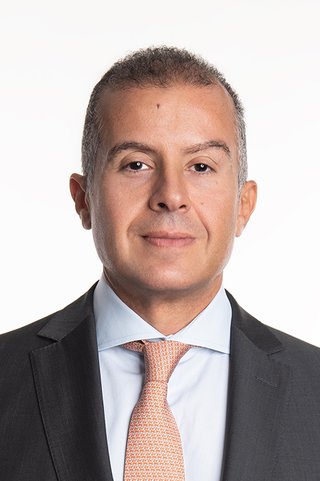
    By David Newman, COO and co-founder of Delio Wealth

    David Newman, COO and co-founder of Delio Wealth

    David Newman, COO and co-founder of Delio Wealth

    Traditionally, the primary focus for investments has been the financial return. However, recently the focus has shifted to a different type of reward, ones rooted in creating a social or environmental benefit. Impact investing puts investor capital to work directly in organisations, companies or projects whose core mission is to generate financial return alongside a measurable social impact, and it is joining the mainstream.

    According to the Global Impact Investing Network[i], the market for impact capital, currently sized at $60 billion, could grow to $2 trillion over the next decade.  It is a way of addressing some of society’s most pressing issues without sacrificing on return. And with high-net-worth (HNW) investors being increasingly motivated by emotional and philanthropic factors, it is no wonder that impact investing is seeing such a surge in interest.

    Impact investments are made across the globe in a diverse range of sectors and using various financial instruments. Whether the investment is in developing economies, sustainable farming, reforming healthcare and education, micro financing, climate change or one of the many other socially responsible causes, the key is that the investors are able to see a measurable impact in return for the money they’ve put in.  Impact investment has attracted a wide variety of investors from fund managers and individual investors to NGOs and religious institutions. The level of involvement in these investments can vary but in general we are seeing a trend towards more investors wanting to be active and hands on with their wealth; impact investing provides a great avenue in which to do this.

    As philanthropy and the importance of corporate social responsibly (CSR) is ever apparent in business, impact investing addresses a challenge associated with traditional philanthropy – the reliance on temporary or limited grants and donations. These one-off donations, unlike impact investing, have no continuous capital impact. Impact investing is a much more sustainable and long-term form of philanthropy that provides ongoing capital.  It gives entrepreneurial investors the opportunity to use their passion or expertise as well as their money to really get stuck into a project where they can see the tangible impact of their efforts, both socially and financially. It harnesses the efficiency and discipline of private capital markets to address the root causes of social and environmental problems and this prospect excites many of today’s high-net-worth investors.

    Social impact funds and direct investing are both options within impact investing. Social impact funds bring the benefit of an experienced manager to guide you through the process. They have direct responsibility for managing and monitoring the opportunity. Funds also allow for cases to be singular or multiple. On the other hand, direct investments allow the individual to have greater control and say to impact the sector they want, in the way they want. It is a more hands-on way of impact investing that allows investors to have a more tangible impact. Preferences will depend on the particular investor and the level of involvement they desire.

    Within impact investing, there are a range of expectations with regard to the level of return. Some investors intentionally invest for below-market-rate returns, others pursue competitive market-rate returns. It really is specific to the individual and their strategic goals. However, whatever the goals, impact measurement is central to the practice of impact investing and the growth of this market. Measurement legitimises the practice, mobilises greater capital and increases the transparency and accountability for the impact delivered.  Of course, in practice this can be quite complicated and that’s why it is essential that a strong measurement impact framework is in place from the off-set and is adapted over time. There are IRIS standards and GIIRS ratings in place but there is still no agreed minimal data that should be collected by impact funds. It is up to the individual firm, project, asset manager or investor therefore to ensure there is sufficient data collected to be able to measure the real impact of the specific investment.

    There are a number of reasons for the rise of impact investing. Social responsibility is becoming more and more important in today’s society. Consumers are increasingly seeking more sustainable products and the costs of renewable energy are plummeting.  Therefore, the ability to generate a strong financial return from impact investing is higher. Women and millennials are leading the way for impact investing. According to a United States Treasury survey[ii], millennials are investing in organisations that prioritise the greater good more than any previous generation. They invest in ways that match their lifestyles and beliefs and are happier knowing the money that passes through their hands is being used for something positive. As we are amidst the greatest intergenerational wealth transfer ever known, this group of investors is ever growing and so impact investing is only likely to continue to increase in popularity.

    Interestingly, while the demand has grown to be strong for investments with social impact, it is already outstripping supply. Although the number of potential investment opportunities has increased in recent years, there is a shortage of high-quality investment opportunities with track records in this field and a lack of appropriate capital across the risk/return spectrum.  Technology could play a role in solving this problem. Technology such as the use of online platforms can increase access to opportunities by overcoming geographic and jurisdictional boundaries. It can improve transparency and track record information which will then naturally progress over time. Ensuring that there is a high level of reporting and monitoring is essential.  An improvement in pre- and post-investment support is also necessary to ensure that projects are investment ready. Overcoming this challenge will help boost the continued growth of impact investing.

    It is likely that demand for impact investment opportunities will continue to rise and, looking ahead, it’s important that there is a development of strong opportunities across the different impact themes. We need greater transparency and metrics so we can understand the impact these investments are actually having, this will encourage further investment in these projects. Insightful reporting is key. Investors should also not underestimate the importance of finding a wealth manager or advisor who understands the impact field. Impact investing is very specific to the objectives and preferences of the individual investor and can be fairly complex so it is important that the managers and funds fit the specific financial impact goals. There has been great progress in impact investing and with this comes the potential to make a real positive change in the world by addressing some of the most pressing social and environmental issues.

    [i]https://thegiin.org/assets/2016%20GIIN%20Annual%20Impact%20Investor%20Survey_Web.pdf

    [ii]Forbes. Forbes Magazine, n.d. Web. 27 Apr. 2017.

    Related Posts
     Millennials Aren’t Ignoring Retirement. They’re Rebuilding It.
    Millennials Aren’t Ignoring Retirement. They’re Rebuilding It.
    BridgeWise Launches FixedWise, the First AI Solution Bringing Granular Bond Intelligence to the European Market
    BridgeWise Launches FixedWise, the First AI Solution Bringing Granular Bond Intelligence to the European Market
    Why Financial Advisors Are Rethinking Gold Allocations
    Why Financial Advisors Are Rethinking Gold Allocations
    From Opaque to Investable: Yaniv Bertele's Blueprint for Transparent Alternatives
    From Opaque to Investable: Yaniv Bertele's Blueprint for Transparent Alternatives
    Private Equity Needs AI Advocates
    Private Equity Needs AI Advocates
    Understanding the Global Impact of Rising Medical Insurance Premiums on the Middle Class
    Understanding the Global Impact of Rising Medical Insurance Premiums on the Middle Class
    The New Model Driving Creative Investment in University Innovation
    The New Model Driving Creative Investment in University Innovation
    The return of tangible assets in modern portfolios
    The return of tangible assets in modern portfolios
    Retro Bikes And Insurance: What You Should Know?
    Retro Bikes And Insurance: What You Should Know?
    Top Stocks Powering the AI Boom in 2025
    Top Stocks Powering the AI Boom in 2025
    How often should you update your estate plan? The events that demand a refresh
    How often should you update your estate plan? The events that demand a refresh
    Top 5 Mutual Funds in the UAE: Performance, Features, and How to Invest
    Top 5 Mutual Funds in the UAE: Performance, Features, and How to Invest

    Why waste money on news and opinions when you can access them for free?

    Take advantage of our newsletter subscription and stay informed on the go!

    Subscribe

    Previous Investing PostHow can private investors support property developers?
    Next Investing PostChina capital controls hit UK capital investment

    More from Investing

    Explore more articles in the Investing category
    How One Investor Learned to Find Value Through a Wider Lens

    How One Investor Learned to Find Value Through a Wider Lens

    Freedom Holding Corp’s Global Rise: Why Institutional Investors Are Betting Big

    Freedom Holding Corp’s Global Rise: Why Institutional Investors Are Betting Big

    Pro Visionary Helps Australians Strengthen Their Financial Resilience Through Licensed Wealth Strategies

    Pro Visionary Helps Australians Strengthen Their Financial Resilience Through Licensed Wealth Strategies

    How ZenInvestor Is Breaking Down Barriers to Financial Literacy and Empowering Everyday Investors Nationwide

    How ZenInvestor Is Breaking Down Barriers to Financial Literacy and Empowering Everyday Investors Nationwide

    Edward L. Shugrue III on Returning to the Office: A Cultural Shift and Investment Opportunity

    Edward L. Shugrue III on Returning to the Office: A Cultural Shift and Investment Opportunity

    How Private Capital Can Build Public Good

    How Private Capital Can Build Public Good

    Private Equity Has a Major Speed and Capacity Problem

    Private Equity Has a Major Speed and Capacity Problem

    Navigating AI Investing Tools: Wealth Management Disruption Ahead

    Navigating AI Investing Tools: Wealth Management Disruption Ahead

    MTF Trading Explained: What It Is, How It Works, and Key Benefits

    MTF Trading Explained: What It Is, How It Works, and Key Benefits

    Private Equity Has Trust Issues With AI

    Private Equity Has Trust Issues With AI

    Merifund Capital Management on FTSE 100 Gains

    Merifund Capital Management on FTSE 100 Gains

    Sycamine Capital Management sets outlook on Japan equities

    Sycamine Capital Management sets outlook on Japan equities

    View All Investing Posts