Search
00
GBAF Logo
trophy
Top StoriesInterviewsBusinessFinanceBankingTechnologyInvestingTradingVideosAwardsMagazinesHeadlinesTrends

Subscribe to our newsletter

Get the latest news and updates from our team.

Global Banking & Finance Review®

Global Banking & Finance Review® - Subscribe to our newsletter

Company

    GBAF Logo
    • About Us
    • Profile
    • Privacy & Cookie Policy
    • Terms of Use
    • Contact Us
    • Advertising
    • Submit Post
    • Latest News
    • Research Reports
    • Press Release
    • Awards▾
      • About the Awards
      • Awards TimeTable
      • Submit Nominations
      • Testimonials
      • Media Room
      • Award Winners
      • FAQ
    • Magazines▾
      • Global Banking & Finance Review Magazine Issue 79
      • Global Banking & Finance Review Magazine Issue 78
      • Global Banking & Finance Review Magazine Issue 77
      • Global Banking & Finance Review Magazine Issue 76
      • Global Banking & Finance Review Magazine Issue 75
      • Global Banking & Finance Review Magazine Issue 73
      • Global Banking & Finance Review Magazine Issue 71
      • Global Banking & Finance Review Magazine Issue 70
      • Global Banking & Finance Review Magazine Issue 69
      • Global Banking & Finance Review Magazine Issue 66
    Top StoriesInterviewsBusinessFinanceBankingTechnologyInvestingTradingVideosAwardsMagazinesHeadlinesTrends

    Global Banking & Finance Review® is a leading financial portal and online magazine offering News, Analysis, Opinion, Reviews, Interviews & Videos from the world of Banking, Finance, Business, Trading, Technology, Investing, Brokerage, Foreign Exchange, Tax & Legal, Islamic Finance, Asset & Wealth Management.
    Copyright © 2010-2026 GBAF Publications Ltd - All Rights Reserved. | Sitemap | Tags | Developed By eCorpIT

    Editorial & Advertiser disclosure

    Global Banking & Finance Review® is an online platform offering news, analysis, and opinion on the latest trends, developments, and innovations in the banking and finance industry worldwide. The platform covers a diverse range of topics, including banking, insurance, investment, wealth management, fintech, and regulatory issues. The website publishes news, press releases, opinion and advertorials on various financial organizations, products and services which are commissioned from various Companies, Organizations, PR agencies, Bloggers etc. These commissioned articles are commercial in nature. This is not to be considered as financial advice and should be considered only for information purposes. It does not reflect the views or opinion of our website and is not to be considered an endorsement or a recommendation. We cannot guarantee the accuracy or applicability of any information provided with respect to your individual or personal circumstances. Please seek Professional advice from a qualified professional before making any financial decisions. We link to various third-party websites, affiliate sales networks, and to our advertising partners websites. When you view or click on certain links available on our articles, our partners may compensate us for displaying the content to you or make a purchase or fill a form. This will not incur any additional charges to you. To make things simpler for you to identity or distinguish advertised or sponsored articles or links, you may consider all articles or links hosted on our site as a commercial article placement. We will not be responsible for any loss you may suffer as a result of any omission or inaccuracy on the website.

    Home > Finance > What are the barriers to a cashless UK?
    Finance

    What are the barriers to a cashless UK?

    Published by Gbaf News

    Posted on June 26, 2019

    5 min read

    Last updated: January 21, 2026

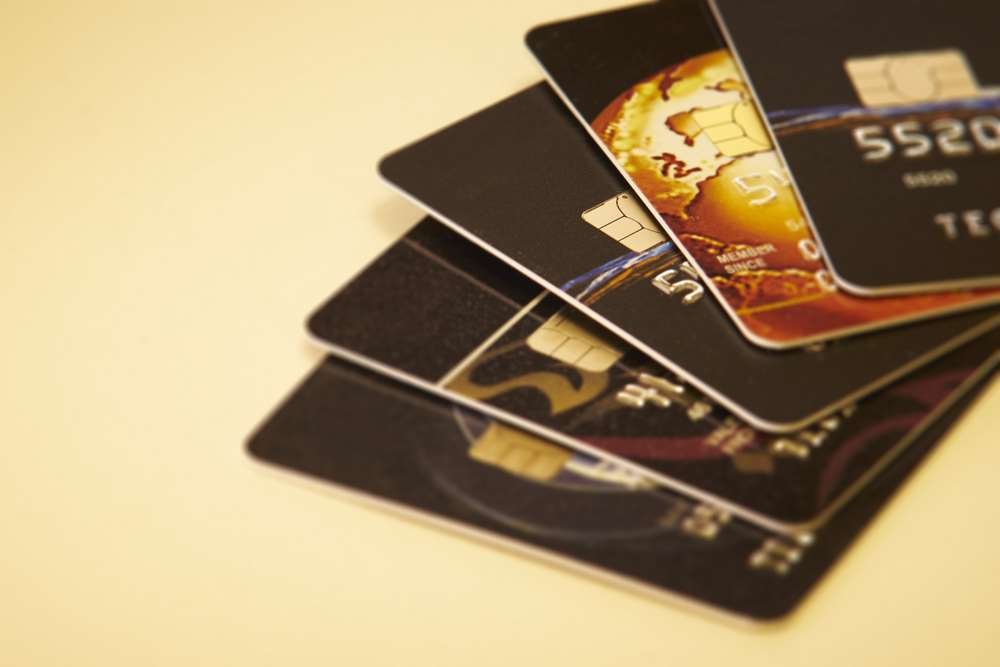
    This image illustrates the key barriers to a cashless UK, including trust in technology and accessibility challenges for vulnerable groups. It highlights the ongoing reliance on cash among certain demographics, emphasizing the need for inclusive financial solutions.
    Barriers to a cashless society in the UK, highlighting trust and accessibility issues - Global Banking & Finance Review
    Why waste money on news and opinion when you can access them for free?

    Take advantage of our newsletter subscription and stay informed on the go!

    Subscribe

    By David Orme, Senior Vice President at IDEX Biometrics 

    In many ways, the UK is progressing towards becoming a cashless society. Despite this, there is a range of barriers threatening to undermine the UK’s ability to fully embrace this transition. From a lack of trust in new technology to a sentimental connection to existing payment methods, these barriers must be both identified and overcome if the UK is to operate in the modern climate.

    The latest Access to Cash review[1] revealed debit cards are now the most popular payment method in the country. But the decline of cash payments is not good news for all of us. Around 8,000,000 UK adults — 17% of the population — would struggle to cope in a cashless society[2]. Many of these are from vulnerable groups: the poor, those with physical and/or mental health challenges and people without bank accounts are all disproportionately likely to rely on cash.

    While the UK as a whole has been rated among the nations most ready to go cashless3, some residents are clearly readier than others. As things stand, a cashless UK would exclude a large number of people.

    So, what are the greatest barriers to the UK’s cashless society and how can they best be tackled?

    Who relies on cash?

    With almost 500 UK cash machines being removed from service each month[3], cash is getting harder to find. Disadvantaged groups are more likely to rely on cash and some, such as those who do not have a bank account, have little choice but to use cash for everything. In 2017, people in the UK made more than 13 billion cash payments1. The choice seems clear: either ensure the continued availability of cash or make it easy for all members of society to go cashless.

    Other countries have tackled this. For instance, Sweden has positioned itself as the front-runner to becoming a truly cashless society. In fact, four out of five purchases in Sweden are made electronically, and Sweden’s central bank, Riksbanken, estimates that between 2012 and 2020, cash in circulation will have declined by 20–50 per cent[4]. What can the UK learn from Sweden? Although Sweden experienced similar reservations to the notion of a transformation into a fully cashless nation from certain groups that are dependent on traditional currency, Riksbanken also emphasised that the answer lies in making sure that cash services are still provided. This would suggest that the ideal payment balance lies in offering people freedom, even if physical currency becomes rarer.

    Furthermore, the Indian government has pushed the cashless agenda to tackle corruption and crime, and to draw in millions who currently live at the margins of society[5]. One element of this is Aadhaar, a digital identity/authentication that relies on fingerprint biometrics[6]. When linked with bank accounts or other methods, Aadhaar lets users authenticate payments, regardless of their literacy, income or access to formal banking.

    A similar use of fingerprint biometric payment smart cards could overcome several of the problems we see in the UK. For example the fool-proof authentication built into biometric pre-paid cards could help those currently unbanked to build a credit rating, and gain access to products and services previously beyond reach.

    Facilitating choice

    When asked why they use cash at all, UK residents give a range of answers. These include convenience, trust and choice issues1. People like having a choice of payment and for that reason (as well as several others) the complete demise of all physical currency in the UK is still several years away. Even those who are happy to use cashless payments like to have cash as a back-up, while those who generally favour other forms of digital payment (PayPal, mobile wallets, etc.) have cards for the same reason.

    Ensuring trust in card payments is very important for consumers, banks and merchants alike. As such, where cash payments are currently preferred for convenience, the obvious response is to make card payments as easy and trusted as possible.

    Where trust is a problem, this is often because consumers don’t trust banks, the internet or the infrastructure needed to make cashless payments work1. This has a certain situational irony, because cashless payments are actually far more traceable than cash. Yet some consumers remain wary: they need to be reassured that card payments are secure.

    Here, biometrics are useful once more. While a signature can be forged and an online account hacked, a fingerprint is virtually impossible to replicate. What is more, consumers are used to seeing biometrics used in places where security is paramount, such as airports; they trust biometrics as a gold standard.

    Cards with built-in biometric authentication help customers to overcome trust issues around digital payment. They are also, therefore, likely to help financial organisations who wish to draw in the sceptical consumer by reassuring them.

    How soon?

    The Access to Cash review concludes that cash is unlikely to disappear from the UK completely, and that there are important reasons to keep it in circulation. However, it seems reasonable, given recent trends, to believe the use of cash will continue to fall and the use of alternatives, specifically payment cards, will rise.

    It seems likely that the UK will ultimately become mostly, as opposed to completely, cashless, but preparation is key and the transition must be well supported. Rural areas must be sure they are able to access electronic money transactions, for example.

    Fingerprint biometric smart cards are safer and more accessible, allowing even those without formal banking identities to make cashless payments securely and reassuring the most nervous banking clients. After all, many UK schools already give pupils (who are of course, largely ‘unbanked’) biometric cards with which to pay for their school lunches — it looks as though that’s a lesson we could all do with learning.

    More from Finance

    Explore more articles in the Finance category

    Image for Hungary's opposition Tisza promises wealth tax, euro adoption in election programme
    Hungary's opposition Tisza promises wealth tax, euro adoption in election programme
    Image for Farmers report 'catastrophic' damage to crops as Storm Marta hits Spain and Portugal
    Farmers report 'catastrophic' damage to crops as Storm Marta hits Spain and Portugal
    Image for If US attacks, Iran says it will strike US bases in the region
    If US attacks, Iran says it will strike US bases in the region
    Image for Olympics-Biathlon-Winter Games bring tourism boost to biathlon hotbed of northern Italy
    Olympics-Biathlon-Winter Games bring tourism boost to biathlon hotbed of northern Italy
    Image for Analysis-Bitcoin loses Trump-era gains as crypto market volatility signals uncertainty
    Analysis-Bitcoin loses Trump-era gains as crypto market volatility signals uncertainty
    Image for NatWest closes in on $3.4 billion takeover of wealth manager Evelyn, Sky News reports
    NatWest closes in on $3.4 billion takeover of wealth manager Evelyn, Sky News reports
    Image for Stellantis-backed ACC drops plans for Italian, German gigafactories, union says
    Stellantis-backed ACC drops plans for Italian, German gigafactories, union says
    Image for US pushes Russia and Ukraine to end war by summer, Zelenskiy says
    US pushes Russia and Ukraine to end war by summer, Zelenskiy says
    Image for Russia launches massive attack on Ukraine's energy system, Zelenskiy says
    Russia launches massive attack on Ukraine's energy system, Zelenskiy says
    Image for Russia launched 400 drones, 40 missiles to hit Ukraine's energy sector, Zelenskiy says
    Russia launched 400 drones, 40 missiles to hit Ukraine's energy sector, Zelenskiy says
    Image for The Kyiv family, with its pets and pigs, defying Russia and the cold
    The Kyiv family, with its pets and pigs, defying Russia and the cold
    Image for Two Polish airports reopen after NATO jets activated over Russian strikes on Ukraine
    Two Polish airports reopen after NATO jets activated over Russian strikes on Ukraine
    View All Finance Posts
    Previous Finance PostDo You Know What Your Tax Code Means?
    Next Finance PostRise of the Indies: How independent restaurants are keeping ahead of the competition with flexible funding