Investing
UK Stocks Close Lower, Hit by Wall St Selloff on Inflation Data
Published by Jessica Weisman-Pitts
Posted on September 13, 2022
2 min readLast updated: February 4, 2026
Add as preferred source on Google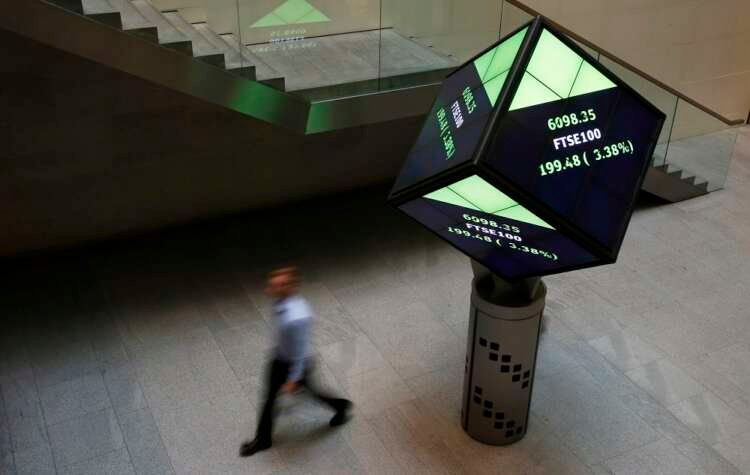
Published by Jessica Weisman-Pitts
Posted on September 13, 2022
2 min readLast updated: February 4, 2026
Add as preferred source on GoogleBy Bansari Mayur Kamdar, Johann M Cherian and Aniruddha Ghosh
By Bansari Mayur Kamdar, Johann M Cherian and Aniruddha Ghosh
(Reuters) -UK’s main equity indexes fell on Tuesday, echoing weak sentiment on Wall Street, as hotter-than-expected U.S. inflation data raised fears of larger interest rate increases to offset surging prices.
The blue-chip FTSE 100 dropped 1.2% to snap a three-session gaining streak, while the domestically focussed FTSE 250 index slid 1.8%.
The indexes had already been on shaky ground after data on Tuesday signalled a weakening UK job market even as the unemployment rate fell to its lowest since 1974.
The selloff gathered momentum in afternoon trading, with Wall Street’s main indexes plunging over 3% as data showed U.S consumer prices unexpectedly rose in August, giving cover for the Federal Reserve to deliver another hefty rate hike next Wednesday.
“The weaker pound has given a bit of support to the FTSE 100, but the higher bond yields and weaker global growth that typically result from tighter Fed policy are a difficult mix for UK equities too,” said Oliver Allen, market economist at Capital Economics.
Homebuilders were among the worst performers on the day, down 3.6% amid worries over affordability and weakness in labour market.
“Given the sensitivity of housing markets to higher interest rates, it makes some sense that homebuilders’ shares have underperformed,” Allen added.
The British central bank raised interest rates the most since 1995 last month. It is expected to increase them again on Sept. 22, with traders placing an 86% chance of a 75 basis-point hike. [IRPR]
Ocado Group and Marks & Spencer fell 14.6% and 3.8%, respectively, after their joint venture Ocado Retail downgraded its full-year outlook, saying customers are trying to navigate the cost of living crisis by buying fewer products or cheaper items. [FTNMX551020]
Retailers were also a weak spot on Tuesday, falling 3.5%.
Grocery inflation hit 12.4% in the four weeks to Sept. 4, another record, adding 571 pounds ($670) to the average annual grocery bill, according to market researcher Kantar.
(Reporting by Johann M Cherian, Bansari Mayur Kamdar and Aniruddha Ghosh in Bengaluru; Editing by Sriraj Kalluvila and Bernadete Baum)
Inflation is the rate at which the general level of prices for goods and services rises, eroding purchasing power. It is typically measured by the Consumer Price Index (CPI) or the Producer Price Index (PPI).
The FTSE 100 is an index that represents the 100 largest companies listed on the London Stock Exchange by market capitalization. It is often used as a gauge of the UK stock market's performance.
Interest rates are the cost of borrowing money or the return on savings, expressed as a percentage. They are influenced by central bank policies and economic conditions.
A blue-chip stock is a share in a well-established company with a history of stable earnings and reliable performance. These companies are typically leaders in their industry.
Explore more articles in the Investing category