Search
00
GBAF Logo
trophy
Top StoriesInterviewsBusinessFinanceBankingTechnologyInvestingTradingVideosAwardsMagazinesHeadlinesTrends

Subscribe to our newsletter

Get the latest news and updates from our team.

Global Banking and Finance Review

Global Banking and Finance Review - Subscribe to our newsletter

Company

    GBAF Logo
    • About Us
    • Profile
    • Privacy & Cookie Policy
    • Terms of Use
    • Contact Us
    • Advertising
    • Submit Post
    • Latest News
    • Research Reports
    • Press Release
    • Awards▾
      • About the Awards
      • Awards TimeTable
      • Submit Nominations
      • Testimonials
      • Media Room
      • Award Winners
      • FAQ
    • Magazines▾
      • Global Banking & Finance Review Magazine Issue 79
      • Global Banking & Finance Review Magazine Issue 78
      • Global Banking & Finance Review Magazine Issue 77
      • Global Banking & Finance Review Magazine Issue 76
      • Global Banking & Finance Review Magazine Issue 75
      • Global Banking & Finance Review Magazine Issue 73
      • Global Banking & Finance Review Magazine Issue 71
      • Global Banking & Finance Review Magazine Issue 70
      • Global Banking & Finance Review Magazine Issue 69
      • Global Banking & Finance Review Magazine Issue 66
    Top StoriesInterviewsBusinessFinanceBankingTechnologyInvestingTradingVideosAwardsMagazinesHeadlinesTrends

    Global Banking & Finance Review® is a leading financial portal and online magazine offering News, Analysis, Opinion, Reviews, Interviews & Videos from the world of Banking, Finance, Business, Trading, Technology, Investing, Brokerage, Foreign Exchange, Tax & Legal, Islamic Finance, Asset & Wealth Management.
    Copyright © 2010-2026 GBAF Publications Ltd - All Rights Reserved. | Sitemap | Tags | Developed By eCorpIT

    Editorial & Advertiser disclosure

    Global Banking and Finance Review is an online platform offering news, analysis, and opinion on the latest trends, developments, and innovations in the banking and finance industry worldwide. The platform covers a diverse range of topics, including banking, insurance, investment, wealth management, fintech, and regulatory issues. The website publishes news, press releases, opinion and advertorials on various financial organizations, products and services which are commissioned from various Companies, Organizations, PR agencies, Bloggers etc. These commissioned articles are commercial in nature. This is not to be considered as financial advice and should be considered only for information purposes. It does not reflect the views or opinion of our website and is not to be considered an endorsement or a recommendation. We cannot guarantee the accuracy or applicability of any information provided with respect to your individual or personal circumstances. Please seek Professional advice from a qualified professional before making any financial decisions. We link to various third-party websites, affiliate sales networks, and to our advertising partners websites. When you view or click on certain links available on our articles, our partners may compensate us for displaying the content to you or make a purchase or fill a form. This will not incur any additional charges to you. To make things simpler for you to identity or distinguish advertised or sponsored articles or links, you may consider all articles or links hosted on our site as a commercial article placement. We will not be responsible for any loss you may suffer as a result of any omission or inaccuracy on the website.

    Home > Finance > Strictly Come Inflation: The Fed, ECB and BoE’s delicate dance
    Finance

    Strictly Come Inflation: The Fed, ECB and BoE’s delicate dance

    Published by Jessica Weisman-Pitts

    Posted on October 26, 2022

    4 min read

    Last updated: February 3, 2026

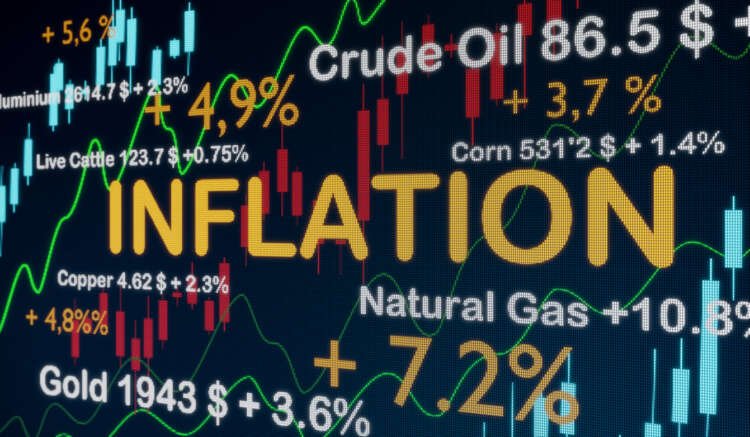
    The image displays key commodities like crude oil, wheat, and gold, highlighting their price changes amidst rising inflation. This visual representation connects to the article's analysis of central banks' strategies in managing inflation.
    Inflation trends with financial data on commodities and rates - Global Banking & Finance Review
    Why waste money on news and opinion when you can access them for free?

    Take advantage of our newsletter subscription and stay informed on the go!

    Subscribe

    Tags:monetary policyunemployment ratesGDPfinancial markets

    By David Storm, Chief Investment Officer at RBC Wealth Management

    The strain on financial markets caused by rate hikes – Should central banks slow down?

    Central banks are playing catch up with inflation and when you do anything at high speed, the potential for accidents increases. Financial markets have also been racing to catch up, with many seriously doubting the commitment of central banks until the Jackson Hole summit made it very clear that financial conditions would be tightening. This high velocity race meant volatility in rates has been very high and it naturally spills over into other asset markets. We are now at a stage where market pricing of rate hikes has caught up and looks closer to fair value. Central banks might have some room to slow down, but the Fed cannot be seen to ‘pivot’ until there is clear evidence of progress on inflation. Other central banks will likely blink first and pause before the Fed.

    Taming inflation without compromising people’s living standards – How are the Fed, ECB and BoE facing this challenge?

    Each of the banks faces a slightly different inflation problem. For the Fed, the focus is on the labour market, where the numbers of jobs available versus the number of people looking for work remains high and sticky wage inflation is running around 5.5% as a result. The aim is really to reduce wage inflation without triggering a significant increase in unemployment, however many models are pointing to an unemployment rate of 5-6% to deliver the required slowdown. For the ECB, this is less of a problem as the labour market is not as tight. In the UK however, unemployment is at the lowest level since 1974 and UK wage inflation is running at the same 5.5% level as the US; the BoE does have to tighten, but there are definite constraints on how far they can go.

    The risk of the BoE of triggering an uptick in mortgage defaults if it lifts to market expectations of ~5.5% – How far could house prices fall if rates reach that level?

    Exactly this. The BoE is walking a tightrope where, at the current trajectory of interest rate rises, around two million UK households would see their mortgage costs double within the next 12 months. As housing costs represent around 40% of wages in the South East, this could put most of these mortgages into default. If this happened, we estimate that house prices could decline by 30-40%. This is not desirable outcome for the BoE and we think acts as a ceiling on just how high UK interest rates can go.

    Investors leave equities to rush into fixed income to capitalise on higher rates – A damaging effect on GDP?

    This is an ongoing risk in the US in particular, where households built up record levels of equity holdings through the pandemic and subsequent recovery. Flows of course have an immediate market impact, as opposed to an impact on the real economy. So, although rotation into high quality fixed income paying 5% yield is interesting, in the first instance we think the bigger risk is that households use equities as a cash machine to maintain current levels of spending.

    Suffering short-term pain now to not suffer continued rounds of inflation in the future – Is it worth it?

    2% inflation is probably not the final destination for central banks, and we expect their messaging to evolve and indicate that they will tolerate a higher level of inflation in future. The problem is where we are now with headline inflation in the 8-10% range and core inflation in the 6% range. Short term pain to reduce inflation from those heights is worth it and central bankers everywhere are telling us that they are willing to inflict pain now to ensure we do not suffer continued rounds of inflation in the future.

    Frequently Asked Questions about Strictly Come Inflation: The Fed, ECB and BoE’s delicate dance

    1What is inflation?

    Inflation is the rate at which the general level of prices for goods and services rises, eroding purchasing power. Central banks attempt to limit inflation to maintain economic stability.

    2What is monetary policy?

    Monetary policy refers to the actions taken by a country's central bank to control the money supply and interest rates to achieve macroeconomic objectives such as controlling inflation, consumption, growth, and liquidity.

    3What is GDP?

    Gross Domestic Product (GDP) is the total monetary value of all goods and services produced within a country's borders in a specific time period, used as a broad measure of overall economic activity.

    4What are rate hikes?

    Rate hikes refer to increases in interest rates set by a central bank, aimed at controlling inflation and stabilizing the economy by making borrowing more expensive.

    More from Finance

    Explore more articles in the Finance category

    Image for Pandora sees 2026 organic revenue growth at -1% to 2%
    Pandora sees 2026 organic revenue growth at -1% to 2%
    Image for Telegram's Durov says proposed Spanish social media restrictions seek to censor critics
    Telegram's Durov says proposed Spanish social media restrictions seek to censor critics
    Image for Dip-buyers go missing as software selloff slams stocks
    Dip-buyers go missing as software selloff slams stocks
    Image for Europe's anti-money laundering body set to be fully operational in 2028
    Europe's anti-money laundering body set to be fully operational in 2028
    Image for Dental sector may steady in 2026, but full recovery remains distant, analysts say
    Dental sector may steady in 2026, but full recovery remains distant, analysts say
    Image for Rio Tinto seeks leadership roles in Glencore merger talks, FT says
    Rio Tinto seeks leadership roles in Glencore merger talks, FT says
    Image for Exclusive-EU rethinks climate diplomacy after bruising COP30 summit, document shows
    Exclusive-EU rethinks climate diplomacy after bruising COP30 summit, document shows
    Image for SAS in talks with Boeing and Airbus on widebody order, Bloomberg News reports
    SAS in talks with Boeing and Airbus on widebody order, Bloomberg News reports
    Image for Automakers back Trump plan to roll back fuel economy rules, but seek changes
    Automakers back Trump plan to roll back fuel economy rules, but seek changes
    Image for Serbia seeks EU gas deals as it reduces Russian supplies, says President Vucic
    Serbia seeks EU gas deals as it reduces Russian supplies, says President Vucic
    Image for Germany's Merz heads to Saudi, Gulf in quest for new partners
    Germany's Merz heads to Saudi, Gulf in quest for new partners
    Image for Stellantis faces Peugeot model delays due to battery plant issues, Bloomberg News reports
    Stellantis faces Peugeot model delays due to battery plant issues, Bloomberg News reports
    View All Finance Posts
    Previous Finance PostStatement from the ECB following policy meeting
    Next Finance PostYoung Greeks priced out as inflation, rents soar