Search
00
GBAF Logo
trophy
Top StoriesInterviewsBusinessFinanceBankingTechnologyInvestingTradingVideosAwardsMagazinesHeadlinesTrends

Subscribe to our newsletter

Get the latest news and updates from our team.

Global Banking & Finance Review®

Global Banking & Finance Review® - Subscribe to our newsletter

Company

    GBAF Logo
    • About Us
    • Profile
    • Privacy & Cookie Policy
    • Terms of Use
    • Contact Us
    • Advertising
    • Submit Post
    • Latest News
    • Research Reports
    • Press Release
    • Awards▾
      • About the Awards
      • Awards TimeTable
      • Submit Nominations
      • Testimonials
      • Media Room
      • Award Winners
      • FAQ
    • Magazines▾
      • Global Banking & Finance Review Magazine Issue 79
      • Global Banking & Finance Review Magazine Issue 78
      • Global Banking & Finance Review Magazine Issue 77
      • Global Banking & Finance Review Magazine Issue 76
      • Global Banking & Finance Review Magazine Issue 75
      • Global Banking & Finance Review Magazine Issue 73
      • Global Banking & Finance Review Magazine Issue 71
      • Global Banking & Finance Review Magazine Issue 70
      • Global Banking & Finance Review Magazine Issue 69
      • Global Banking & Finance Review Magazine Issue 66
    Top StoriesInterviewsBusinessFinanceBankingTechnologyInvestingTradingVideosAwardsMagazinesHeadlinesTrends

    Global Banking & Finance Review® is a leading financial portal and online magazine offering News, Analysis, Opinion, Reviews, Interviews & Videos from the world of Banking, Finance, Business, Trading, Technology, Investing, Brokerage, Foreign Exchange, Tax & Legal, Islamic Finance, Asset & Wealth Management.
    Copyright © 2010-2026 GBAF Publications Ltd - All Rights Reserved. | Sitemap | Tags | Developed By eCorpIT

    Editorial & Advertiser disclosure

    Global Banking & Finance Review® is an online platform offering news, analysis, and opinion on the latest trends, developments, and innovations in the banking and finance industry worldwide. The platform covers a diverse range of topics, including banking, insurance, investment, wealth management, fintech, and regulatory issues. The website publishes news, press releases, opinion and advertorials on various financial organizations, products and services which are commissioned from various Companies, Organizations, PR agencies, Bloggers etc. These commissioned articles are commercial in nature. This is not to be considered as financial advice and should be considered only for information purposes. It does not reflect the views or opinion of our website and is not to be considered an endorsement or a recommendation. We cannot guarantee the accuracy or applicability of any information provided with respect to your individual or personal circumstances. Please seek Professional advice from a qualified professional before making any financial decisions. We link to various third-party websites, affiliate sales networks, and to our advertising partners websites. When you view or click on certain links available on our articles, our partners may compensate us for displaying the content to you or make a purchase or fill a form. This will not incur any additional charges to you. To make things simpler for you to identity or distinguish advertised or sponsored articles or links, you may consider all articles or links hosted on our site as a commercial article placement. We will not be responsible for any loss you may suffer as a result of any omission or inaccuracy on the website.

    Home > Investing > Stocks and oil tumble as recession fears mount
    Investing

    Stocks and oil tumble as recession fears mount

    Published by Wanda Rich

    Posted on June 22, 2022

    4 min read

    Last updated: February 6, 2026

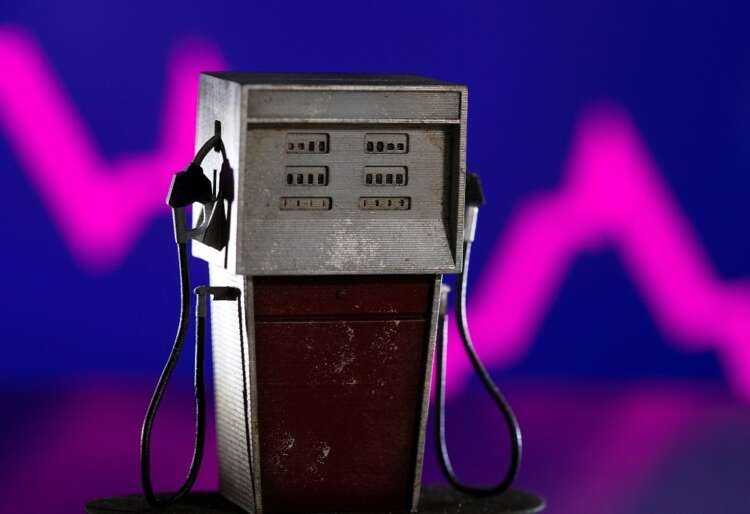
    This image features a model of a petrol pump alongside a graph showing declining stock prices, symbolizing the impact of recession fears on investments. It aligns with the article's analysis of market reactions to rising interest rates and economic uncertainty.
    Model of a petrol pump with a declining stock graph, illustrating recession fears - Global Banking & Finance Review
    Why waste money on news and opinion when you can access them for free?

    Take advantage of our newsletter subscription and stay informed on the go!

    Subscribe

    Tags:interest ratesglobal economyfinancial markets

    By Marc Jones

    LONDON (Reuters) – World stock markets and oil prices hit the skids on Wednesday as the persistent palpitations about rising interest rates and recessions struck again, while the Japanese yen hit a fresh 24-year low against a seemingly unstoppable U.S. dollar.

    The enthusiasm that had given Wall Street its best day in over a month on Tuesday was suddenly gone as Europe opened 1.5% lower and Brent crude prices plunged 4% [.EU][O/R] following what had also been a downbeat Asian session. [.T][.SS]

    Fired-up dollar bulls weren’t taking any prisoners either on bets that the head of the Federal Reserve, Jay Powell, will reiterate to Washington later the need to jack up U.S. rates hard and fast.

    As well as compounding the yen’s woes, it knocked the euro down 0.3%, Norway’s oil-sensitive crown slumped 1.3% and Britain’s pound dropped 0.7% as data confirmed inflation there is now running at a 40-year high of 9.1%.

    “It is remarkable how quickly the market has turned again after that little squeeze up in sentiment yesterday,” said Saxo Bank FX strategist John Hardy.

    “The commodity market seems to be calling a (global) recession,” he added. “And the dollar is pivoting to strength as a safe-haven”.

    Those recession worries were also showing in the bond markets where U.S. and German government bond yields fell as traders sought out traditional safe harbours.

    The yield on benchmark U.S. 10-year Treasuries fell to 3.233% while Germany’s 10-year yield dropped 7 basis points (bps) to 1.692%, having hit its highest since January 2014 at 1.928% last week.

    But the spreads between Germany and highly-indebted Italy widened again. Its foreign minister Luigi Di Maio said he was leaving the 5-Star Movement to form a new parliamentary group backing the government, a move that threatens to bring fresh instability to Prime Minister Mario Draghi’s coalition.[GVD/EUR]

    Overnight, MSCI’s broadest index of Asia-Pacific shares outside Japan slumped 2.3% to close to a five-week low. Heavyweight Hong Kong-listed tech firms plunged over 4% although Tokyo’s Nikkei managed to keep its losses to just 0.4%. [.T]

    Investors are continuing to assess how worried they need to be about central banks potentially pushing the world economy into recession as they attempt to curb red hot inflation with interest rate increases.

    The main U.S. share benchmarks rose 2% overnight on the possibility the economic outlook might not be as dire as thought during trade last week when the S&P 500 logged its biggest weekly percentage decline since March 2020. [.N]

    But the lift in Wall Street sentiment didn’t look set to last either with S&P 500 and Nasdaq futures both down nearly 1% on Wednesday.

    “I think that this recent post-holiday bear market rally is a reflection of the uncertainty that investors have regarding whether we have seen the peak of inflation and Fed hawkishness or not – I think we’re close,” said Invesco global market strategist for Asia Pacific David Chao.

    U.S. Federal Reserve chair Jerome Powell is due to start his testimony to Congress on Wednesday with investors looking for further clues about whether another 75-basis-point rate hike is on the cards in July.

    Economists polled by Reuters expect the Fed will deliver a 75-basis-point interest rate hike next month, followed by a half-percentage-point rise in September, and won’t scale back to quarter-percentage-point moves until November at the earliest.

    Most other global central banks are in a similar situation, apart from the Bank of Japan, which last week pledged to maintain its policy of ultra-low interest rates. In contrast, the Czech central bank was expected to hike its rates by an eyewatering 125 bps later with inflation there well into double figures.

    That gap between low interest rates in Japan and rising U.S. rates has weighed on the yen, which hit a new 24-year low of 136.71 per dollar in Asian trading, before drifting firmer to 136.20.

    Minutes from the Bank of Japan’s April policy meeting released Wednesday showed the central bank’s concerns over the impact the plummeting currency could have on the country’s business environment.

    The other big move was in commodity markets. The 4% slump in oil prices came amid the recession concerns and with U.S. President Joe Biden expected on Wednesday to call for a temporary suspension of the 18.4-cents a gallon federal tax on gasoline, a source briefed on the plan told Reuters. [O/R]

    Brent dropped $5 to $109.79 a barrel, while U.S. crude fell 5.9% or $5.37 to $104.15.

    “The latest in a long line of attempts to temper surging prices at the pumps is having the desired effect. Yet whether this knee-jerk reaction will stand the test of time is by no means guaranteed,” said PVM’s Stephen Brennock, pointing to an expected summer demand surge.

    (Additional reporting by Sam Byford in Tokyo and Shadia Nasralla in Bengaluru)

    Frequently Asked Questions about Stocks and oil tumble as recession fears mount

    1What is inflation?

    Inflation is the rate at which the general level of prices for goods and services rises, eroding purchasing power. It is typically measured annually.

    2What are interest rates?

    Interest rates are the amount charged by lenders to borrowers for the use of money, expressed as a percentage of the principal.

    3What is a recession?

    A recession is a significant decline in economic activity across the economy, lasting longer than a few months, typically visible in GDP, income, employment, and production.

    4What is a bond yield?

    A bond yield is the return an investor realizes on a bond, expressed as a percentage of its current market price or face value.

    5What is currency depreciation?

    Currency depreciation refers to a decrease in the value of a currency in relation to other currencies, often due to economic factors.

    More from Investing

    Explore more articles in the Investing category

    Image for Understanding the Factors Shaping Bitcoin’s Current Market Conditions
    Understanding the Factors Shaping Bitcoin’s Current Market Conditions
    Image for Understanding Investment Management Consulting Services in the U.S. Market
    Understanding Investment Management Consulting Services in the U.S. Market
    Image for The Role of DST Sponsors and Service Providers in Delaware Statutory Trusts
    The Role of DST Sponsors and Service Providers in Delaware Statutory Trusts
    Image for Understanding Self-Directed IRA Structures and Platform Models
    Understanding Self-Directed IRA Structures and Platform Models
    Image for 1031 Exchanges and Delaware Statutory Trusts: What Investors Need to Know
    1031 Exchanges and Delaware Statutory Trusts: What Investors Need to Know
    Image for Excellence in Innovation – Strategic Investment & Economic Transformation Egypt 2025
    Excellence in Innovation – Strategic Investment & Economic Transformation Egypt 2025
    Image for What Is the Average Pension Pot in the UK? (By Age)
    What Is the Average Pension Pot in the UK? (By Age)
    Image for From Money Printing to Market Surge: The Macro Forces Driving Crypto in 2026
    From Money Printing to Market Surge: The Macro Forces Driving Crypto in 2026
    Image for  Millennials Aren’t Ignoring Retirement. They’re Rebuilding It.
    Millennials Aren’t Ignoring Retirement. They’re Rebuilding It.
    Image for BridgeWise Launches FixedWise, the First AI Solution Bringing Granular Bond Intelligence to the European Market
    BridgeWise Launches FixedWise, the First AI Solution Bringing Granular Bond Intelligence to the European Market
    Image for Why Financial Advisors Are Rethinking Gold Allocations
    Why Financial Advisors Are Rethinking Gold Allocations
    Image for From Opaque to Investable: Yaniv Bertele's Blueprint for Transparent Alternatives
    From Opaque to Investable: Yaniv Bertele's Blueprint for Transparent Alternatives
    View All Investing Posts
    Previous Investing PostOil slumps over 6% as Biden set to cut fuel costs for drivers
    Next Investing PostEuropean stocks resume selloff on sliding commodities, inflation worries