Search
00
GBAF Logo
trophy
Top StoriesInterviewsBusinessFinanceBankingTechnologyInvestingTradingVideosAwardsMagazinesHeadlinesTrends

Subscribe to our newsletter

Get the latest news and updates from our team.

Global Banking and Finance Review

Global Banking & Finance Review

Company

    GBAF Logo
    • About Us
    • Profile
    • Privacy & Cookie Policy
    • Terms of Use
    • Contact Us
    • Advertising
    • Submit Post
    • Latest News
    • Research Reports
    • Press Release
    • Awards▾
      • About the Awards
      • Awards TimeTable
      • Submit Nominations
      • Testimonials
      • Media Room
      • Award Winners
      • FAQ
    • Magazines▾
      • Global Banking & Finance Review Magazine Issue 79
      • Global Banking & Finance Review Magazine Issue 78
      • Global Banking & Finance Review Magazine Issue 77
      • Global Banking & Finance Review Magazine Issue 76
      • Global Banking & Finance Review Magazine Issue 75
      • Global Banking & Finance Review Magazine Issue 73
      • Global Banking & Finance Review Magazine Issue 71
      • Global Banking & Finance Review Magazine Issue 70
      • Global Banking & Finance Review Magazine Issue 69
      • Global Banking & Finance Review Magazine Issue 66
    Top StoriesInterviewsBusinessFinanceBankingTechnologyInvestingTradingVideosAwardsMagazinesHeadlinesTrends

    Global Banking & Finance Review® is a leading financial portal and online magazine offering News, Analysis, Opinion, Reviews, Interviews & Videos from the world of Banking, Finance, Business, Trading, Technology, Investing, Brokerage, Foreign Exchange, Tax & Legal, Islamic Finance, Asset & Wealth Management.
    Copyright © 2010-2025 GBAF Publications Ltd - All Rights Reserved.

    Editorial & Advertiser disclosure

    Global Banking and Finance Review is an online platform offering news, analysis, and opinion on the latest trends, developments, and innovations in the banking and finance industry worldwide. The platform covers a diverse range of topics, including banking, insurance, investment, wealth management, fintech, and regulatory issues. The website publishes news, press releases, opinion and advertorials on various financial organizations, products and services which are commissioned from various Companies, Organizations, PR agencies, Bloggers etc. These commissioned articles are commercial in nature. This is not to be considered as financial advice and should be considered only for information purposes. It does not reflect the views or opinion of our website and is not to be considered an endorsement or a recommendation. We cannot guarantee the accuracy or applicability of any information provided with respect to your individual or personal circumstances. Please seek Professional advice from a qualified professional before making any financial decisions. We link to various third-party websites, affiliate sales networks, and to our advertising partners websites. When you view or click on certain links available on our articles, our partners may compensate us for displaying the content to you or make a purchase or fill a form. This will not incur any additional charges to you. To make things simpler for you to identity or distinguish advertised or sponsored articles or links, you may consider all articles or links hosted on our site as a commercial article placement. We will not be responsible for any loss you may suffer as a result of any omission or inaccuracy on the website.

    Home > Finance > How real-time payments are shaping the future of the payments Industry
    Finance

    How real-time payments are shaping the future of the payments Industry

    How real-time payments are shaping the future of the payments Industry

    Published by Jessica Weisman-Pitts

    Posted on February 1, 2023

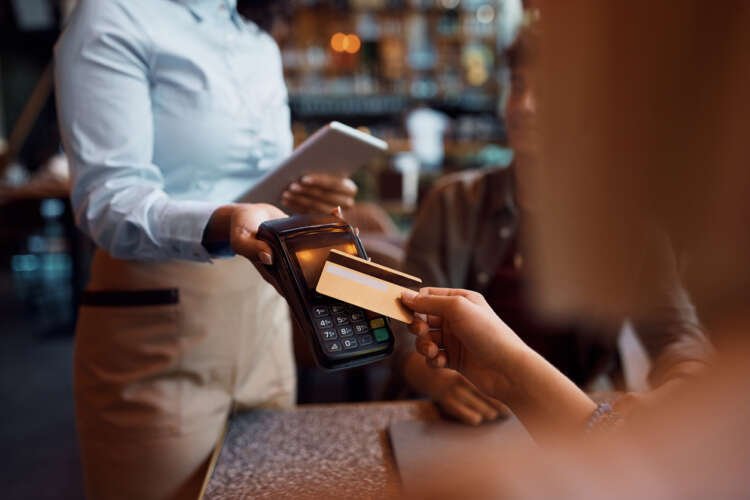
    Featured image for article about Finance

    By Lissele Pratt, Co-Founder at Capitalixe

    Real-time payments are revolutionising the way we think about money and its movement. They are no longer a futuristic concept but a reality shaping the future of the payments industry as we know it. The ability to transfer funds and make payments instantly, with near real-time confirmation, has the potential to greatly benefit consumers, businesses and the economy as a whole.

    So we’re exploring the technology behind real-time payments, their advantages, and the challenges that must be overcome to realise their potential fully. We’ll also look at how real-time payments are being used today and what the future holds for this innovative payment method. Let’s dive in!

    How Real-Time Payments Work

    Real-time payments, also known as immediate payments, are electronic payments that are processed and settled in near real time. This means that funds are transferred and made available to the recipient within seconds or minutes, as opposed to traditional payment methods such as ACH or wire transfers which can take several days to clear. The technology behind real-time payments is based on a combination of real-time gross settlement (RTGS) systems, messaging protocols, and interbank networks.

    The market for real-time payments is expected to grow significantly in the coming years. According to a recent report, the global real-time payments market size was valued at $13.8 billion in 2021, and is projected to reach $123 billion by 2031, growing at a CAGR of 24.5% from 2022 to 2031. This growth is driven by increasing demand for faster and more efficient payment methods, as well as the rise of digital technologies and the shift towards cashless societies.

    Advantages of Real-Time Payments

    Real-time payments offer a number of advantages over traditional payment methods. One of the most significant advantages is the immediate funds availability. With real-time payments, funds are transferred and made available to the recipient within seconds or minutes, allowing faster and more efficient transactions. This can be particularly beneficial for businesses, as it allows them to access funds and make payments more quickly, improving their cash flow and helping them to better manage their finances. According to a survey conducted by ACI Worldwide, 77% of merchants worldwide are expecting real-time payments to replace physical payment cards, as it is becoming more and more popular globally. In fact, in 2015, only 14 countries had the capability to enable real-time payments, but today, 56 nations have enabled this function.

    Another advantage of real-time payments is increased security. Because these payments are processed and settled in near real-time, there is less opportunity for fraud or errors to occur. Additionally, real-time payments can be authenticated and authorised using various methods, such as biometrics or one-time passwords, providing an added layer of security.

    Real-time payments also provide an improved customer experience. With the ability to make payments and transfer funds instantly, customers can complete transactions more quickly and efficiently. Additionally, the ability to receive real-time notifications of payment confirmations can give customers peace of mind and greater control over their financial transactions.

    Real-World Applications of Real-Time Payments

    Real-time payments are being used in various industries and businesses today, and their use is likely to expand in the future. Some examples of industries currently using or planning to use real-time payments include:

    • Retail: Retail businesses can use real-time payments to process transactions more quickly and efficiently, improving the customer experience and reducing the risk of fraud.
    • Banking and finance: Financial institutions are using real-time payments to improve their own internal processes, such as the settlement of securities transactions, and to offer new services to customers, such as real-time account-to-account transfers.
    • Government: Governments are using real-time payments to improve the delivery of public services, such as the disbursement of welfare payments and the collection of taxes.

    These are just a few examples of the many ways in which real-time payments are being used today. As the technology and infrastructure behind real-time payments continue to evolve, the possibilities for future uses and implications for the broader economy will likely expand.

    Building the Future of Real-Time Payments

    As real-time payments continue to gain popularity and widespread adoption, industries and businesses need to consider ways to further improve and expand the technology and infrastructure behind it. Some considerations for building the future of real-time payments include:

    • Investing in better infrastructure: As the demand for real-time payments continues to grow, it’s important for financial institutions and other organisations to invest in the necessary infrastructure to support the increased volume of transactions. This includes upgrading systems and networks to handle the high speeds and low latency required for real-time payments.
    • Developing new technologies: The technology behind real-time payments is still evolving, and new innovations such as blockchain and artificial intelligence (AI) could further enhance the speed, security, and efficiency of these payments.
    • Improving interoperability: To fully realise the potential of real-time payments, it’s important to ensure that different systems and networks can communicate and work together seamlessly. This includes developing standards and protocols to facilitate real-time payments across different countries and currencies.
    • Compliance with regulations: As with any financial service, real-time payments must comply with local and international regulations, including data protection and anti-money laundering laws. Financial institutions and businesses must ensure that they meet these requirements and keep up with any updates or changes.

    Building the future of real-time payments requires a holistic approach that takes into account the various factors that will impact its growth and development. By investing in better infrastructure, developing new technologies, improving interoperability, enhancing customer experience, and complying with regulations, industries and businesses can help to ensure that real-time payments will continue to evolve and deliver new opportunities for the broader economy.

    Final Thoughts

    Real-time payments are changing the face of the payments industry in a big way. They offer a more efficient and secure way of conducting transactions, which greatly improves the customer experience and enables businesses to better manage their finances.

    The technology behind real-time payments is still developing, but it is showing enormous potential for future growth and expansion. As more and more countries are embracing real-time payments, it is becoming increasingly crucial for businesses and financial institutions to stay ahead of the curve. The future of the payments industry looks promising with real-time payments playing a vital role in it.

    About Author:

    As Co-Founder at Capitalixe, Lissele Pratt helps international companies access the latest financial technology, payments, and banking services globally.

    With 7+ years of experience in the financial services industry and her global perspective, the entrepreneurial-minded Lissele is a recognised expert in financial technology, business development, and relationship management.

    She has a proven track record in developing and executing successful sales strategies and building and maintaining key relationships with clients, prospects, partners, and other stakeholders..

    Related Posts
    Roche CEO points to higher future drug prices in Switzerland after US deal
    Roche CEO points to higher future drug prices in Switzerland after US deal
    US intercepts oil tanker off Venezuelan coast, officials say
    US intercepts oil tanker off Venezuelan coast, officials say
    Escalating Russian airstrikes aim to cut Ukraine off from sea, Zelenskiy says
    Escalating Russian airstrikes aim to cut Ukraine off from sea, Zelenskiy says
    Stellantis CEO says investments at risk in Europe after EU auto package
    Stellantis CEO says investments at risk in Europe after EU auto package
    Italy's TIM wins 1 billion euro court payout, eyes savings share conversion
    Italy's TIM wins 1 billion euro court payout, eyes savings share conversion
    Bangladesh holds state funeral for slain youth leader amid tight security
    Bangladesh holds state funeral for slain youth leader amid tight security
    Ukraine says it hit Russian oil rig, patrol ship in Caspian Sea
    Ukraine says it hit Russian oil rig, patrol ship in Caspian Sea
    EU Council backs digital euro with both online and offline functionality
    EU Council backs digital euro with both online and offline functionality
    IMF welcomes EU's 90 billion euro loan to Ukraine, more work to be done
    IMF welcomes EU's 90 billion euro loan to Ukraine, more work to be done
    Euro zone consumer confidence falls to -14.6 in December
    Euro zone consumer confidence falls to -14.6 in December
    Musk wins appeal that restores 2018 Tesla pay deal now worth about $139 billion
    Musk wins appeal that restores 2018 Tesla pay deal now worth about $139 billion
    UK children's author David Walliams dropped by publisher after harassment allegations
    UK children's author David Walliams dropped by publisher after harassment allegations

    Why waste money on news and opinions when you can access them for free?

    Take advantage of our newsletter subscription and stay informed on the go!

    Subscribe

    More from Finance

    Explore more articles in the Finance category

    Germany removes dividend ban for Uniper, paving way for IPO

    Germany removes dividend ban for Uniper, paving way for IPO

    Golden Goose gets new majority owner as China's HSG buys stake from Permira

    Golden Goose gets new majority owner as China's HSG buys stake from Permira

    Rubio says not concerned about escalation with Russia over Venezuela

    Rubio says not concerned about escalation with Russia over Venezuela

    ECB's Escriva expects monetary policy to remain steady

    ECB's Escriva expects monetary policy to remain steady

    French government to appeal court ruling on Shein

    French government to appeal court ruling on Shein

    Russian central bank governor Nabiullina speaks after rate cut

    Russian central bank governor Nabiullina speaks after rate cut

    Strategy and bitcoin-buying firms face wider exclusion from stock indexes

    Strategy and bitcoin-buying firms face wider exclusion from stock indexes

    Carnival Corp sees strong annual profit, resumes dividend as bookings rise

    Carnival Corp sees strong annual profit, resumes dividend as bookings rise

    London's FTSE 100 climbs as miners, defence outperform in data-heavy week

    London's FTSE 100 climbs as miners, defence outperform in data-heavy week

    Italy sells digital payment unit PagoPA to Poste, state mint for up to 500 million euros

    Italy sells digital payment unit PagoPA to Poste, state mint for up to 500 million euros

    Court in Brazil's Minas Gerais slaps down Nestle copyright lawsuit

    Court in Brazil's Minas Gerais slaps down Nestle copyright lawsuit

    German court jails man for drugging, raping wife, posting assaults online

    German court jails man for drugging, raping wife, posting assaults online

    View All Finance Posts
    Previous Finance PostA holistic future – How can the pensions sector keep pace with widespread digitisation whilst serving the client’s needs
    Next Finance PostThe Many Lessons Crypto Can Learn from Fintech