Search
00
GBAF Logo
trophy
Top StoriesInterviewsBusinessFinanceBankingTechnologyInvestingTradingVideosAwardsMagazinesHeadlinesTrends

Subscribe to our newsletter

Get the latest news and updates from our team.

Global Banking & Finance Review®

Global Banking & Finance Review® - Subscribe to our newsletter

Company

    GBAF Logo
    • About Us
    • Profile
    • Privacy & Cookie Policy
    • Terms of Use
    • Contact Us
    • Advertising
    • Submit Post
    • Latest News
    • Research Reports
    • Press Release
    • Awards▾
      • About the Awards
      • Awards TimeTable
      • Submit Nominations
      • Testimonials
      • Media Room
      • Award Winners
      • FAQ
    • Magazines▾
      • Global Banking & Finance Review Magazine Issue 79
      • Global Banking & Finance Review Magazine Issue 78
      • Global Banking & Finance Review Magazine Issue 77
      • Global Banking & Finance Review Magazine Issue 76
      • Global Banking & Finance Review Magazine Issue 75
      • Global Banking & Finance Review Magazine Issue 73
      • Global Banking & Finance Review Magazine Issue 71
      • Global Banking & Finance Review Magazine Issue 70
      • Global Banking & Finance Review Magazine Issue 69
      • Global Banking & Finance Review Magazine Issue 66
    Top StoriesInterviewsBusinessFinanceBankingTechnologyInvestingTradingVideosAwardsMagazinesHeadlinesTrends

    Global Banking & Finance Review® is a leading financial portal and online magazine offering News, Analysis, Opinion, Reviews, Interviews & Videos from the world of Banking, Finance, Business, Trading, Technology, Investing, Brokerage, Foreign Exchange, Tax & Legal, Islamic Finance, Asset & Wealth Management.
    Copyright © 2010-2026 GBAF Publications Ltd - All Rights Reserved. | Sitemap | Tags | Developed By eCorpIT

    Editorial & Advertiser disclosure

    Global Banking & Finance Review® is an online platform offering news, analysis, and opinion on the latest trends, developments, and innovations in the banking and finance industry worldwide. The platform covers a diverse range of topics, including banking, insurance, investment, wealth management, fintech, and regulatory issues. The website publishes news, press releases, opinion and advertorials on various financial organizations, products and services which are commissioned from various Companies, Organizations, PR agencies, Bloggers etc. These commissioned articles are commercial in nature. This is not to be considered as financial advice and should be considered only for information purposes. It does not reflect the views or opinion of our website and is not to be considered an endorsement or a recommendation. We cannot guarantee the accuracy or applicability of any information provided with respect to your individual or personal circumstances. Please seek Professional advice from a qualified professional before making any financial decisions. We link to various third-party websites, affiliate sales networks, and to our advertising partners websites. When you view or click on certain links available on our articles, our partners may compensate us for displaying the content to you or make a purchase or fill a form. This will not incur any additional charges to you. To make things simpler for you to identity or distinguish advertised or sponsored articles or links, you may consider all articles or links hosted on our site as a commercial article placement. We will not be responsible for any loss you may suffer as a result of any omission or inaccuracy on the website.

    Home > Interviews > GLOBAL RESOURCES REVEALS WHAT US SMALL BUSINESSES SHOULD KNOW ABOUT THE AFFORDABLE CARE ACT
    Interviews

    GLOBAL RESOURCES REVEALS WHAT US SMALL BUSINESSES SHOULD KNOW ABOUT THE AFFORDABLE CARE ACT

    Published by Gbaf News

    Posted on October 28, 2013

    5 min read

    Last updated: January 22, 2026

    The image illustrates the rouble's steady performance near 60 against the dollar, reflecting market trends amidst stock index declines. It captures key financial indicators relevant to the Russian economy.
    Rouble value stability analysis in relation to US dollar trends - Global Banking & Finance Review
    Why waste money on news and opinion when you can access them for free?

    Take advantage of our newsletter subscription and stay informed on the go!

    Subscribe

    Director of Business Development Elizabeth Fullington, CPA, JD at Global Resources, addresses common myths.

    Q: Can the 50 employee rule (the mandate that all businesses with 50 or more employees provide health insurance) be avoided by splitting a business into multiple corporations?
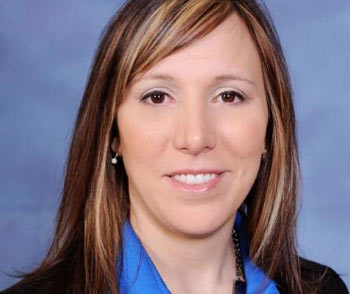
    Elizabeth Fullington

    Elizabeth Fullington

    Fullington: Under the Internal Revenue Code and Treasury regulations, all employees of related companies will be considered in determining whether any company has exceeded the 50-employee rule. Thus, splitting a company into multiple, smaller companies will not help a business in avoiding the mandate. Even worse, reliance on this myth exposes business owners to crippling penalties and taxes.

    Q: Should a business use the strategy of only employing part-time employees to avoid the 50 employee rule?

    Fullington: Another myth is that businesses can avoid the mandate by reducing current employees to part-time, hire more part-time workers, or classify employees as ‘independent contractors.’

    Part-time employees are considered in determining whether the 50 employee rule is satisfied. Using independent contractors to avoid the mandate is problematic as the IRS aggressively audits worker classification. It is impossible to reclassify current employees as independent contractors without a drastic change in their compensation, oversight, and status. There are also no mitigating safe harbors from the penalties imposed by the Act for past employment misclassifications (unlike those from past payroll tax assessments).

    Rather than relying on misguided strategies to avoid the mandate, a business owner should strive to reduce health care costs by providing tax advantaged benefit plans that comply with the mandate.

    Q: How are employees determined to be full-time or part-time?

    Fullington: For purposes of the Affordable Care Act, both full-time and part-time employees are used to determine the 50 employee threshold:

    • Full-Time (Employees working at least 30 hours per week in any month) – Counted as one full-time employee.
    • Part-Time – Calculated by taking the hours worked by all part-time employees in a month, divided by 120, and rounded down to the nearest whole number.
    • Seasonal – Not counted for those working up to 120 days in a year.

    Example: A company has 40 full-time and 10 part-time workers. The total part-time hours per month are 1,150. Under the Act, the company has 49 full-time equivalent employees (40 full-time employees, and 9 full-time equivalents).

    Q: How likely is the Act to hinder small businesses?

    Fullington: When the media says that “Obamacare, or the Act, has been delayed,” they are referencing the health care compliance portion. It is important for business owners to realize that new taxes are in place, currently, such as the 3.8% Medicare Contribution Tax on passive income and a new .9% Medicare Excise Tax.

    A misguided owner may face a much higher tax burden than anticipated, which could impact cash flow and the ability to make purchases, expand the business, make payroll, or even take on a new project.

    Director of Business Development Elizabeth Fullington, CPA, JD at Global Resources, addresses common myths.

    Q: Can the 50 employee rule (the mandate that all businesses with 50 or more employees provide health insurance) be avoided by splitting a business into multiple corporations?

    Elizabeth Fullington

    Elizabeth Fullington

    Fullington: Under the Internal Revenue Code and Treasury regulations, all employees of related companies will be considered in determining whether any company has exceeded the 50-employee rule. Thus, splitting a company into multiple, smaller companies will not help a business in avoiding the mandate. Even worse, reliance on this myth exposes business owners to crippling penalties and taxes.

    Q: Should a business use the strategy of only employing part-time employees to avoid the 50 employee rule?

    Fullington: Another myth is that businesses can avoid the mandate by reducing current employees to part-time, hire more part-time workers, or classify employees as ‘independent contractors.’

    Part-time employees are considered in determining whether the 50 employee rule is satisfied. Using independent contractors to avoid the mandate is problematic as the IRS aggressively audits worker classification. It is impossible to reclassify current employees as independent contractors without a drastic change in their compensation, oversight, and status. There are also no mitigating safe harbors from the penalties imposed by the Act for past employment misclassifications (unlike those from past payroll tax assessments).

    Rather than relying on misguided strategies to avoid the mandate, a business owner should strive to reduce health care costs by providing tax advantaged benefit plans that comply with the mandate.

    Q: How are employees determined to be full-time or part-time?

    Fullington: For purposes of the Affordable Care Act, both full-time and part-time employees are used to determine the 50 employee threshold:

    • Full-Time (Employees working at least 30 hours per week in any month) – Counted as one full-time employee.
    • Part-Time – Calculated by taking the hours worked by all part-time employees in a month, divided by 120, and rounded down to the nearest whole number.
    • Seasonal – Not counted for those working up to 120 days in a year.

    Example: A company has 40 full-time and 10 part-time workers. The total part-time hours per month are 1,150. Under the Act, the company has 49 full-time equivalent employees (40 full-time employees, and 9 full-time equivalents).

    Q: How likely is the Act to hinder small businesses?

    Fullington: When the media says that “Obamacare, or the Act, has been delayed,” they are referencing the health care compliance portion. It is important for business owners to realize that new taxes are in place, currently, such as the 3.8% Medicare Contribution Tax on passive income and a new .9% Medicare Excise Tax.

    A misguided owner may face a much higher tax burden than anticipated, which could impact cash flow and the ability to make purchases, expand the business, make payroll, or even take on a new project.

    More from Interviews

    Explore more articles in the Interviews category

    Image for What 2025 Taught Fintech Product Teams and What 2026 Could  Bring: Insights from Industry Expert Raunaq Malik
    What 2025 Taught Fintech Product Teams and What 2026 Could Bring: Insights from Industry Expert Raunaq Malik
    Image for iFAST Global Bank Emerges as a New Strong Player in UK Business Banking Space – Q&A with Steve Chu
    iFAST Global Bank Emerges as a New Strong Player in UK Business Banking Space – Q&A with Steve Chu
    Image for Building Trust in Private Banking: A Conversation with Jonathan Hass
    Building Trust in Private Banking: A Conversation with Jonathan Hass
    Image for Lumana: How AI Is transforming video surveillance in banking
    Lumana: How AI Is transforming video surveillance in banking
    Image for Marco Santos Reflects on His First Year as GFT’s Global CEO and Charts the Company’s AI-Driven Future
    Marco Santos Reflects on His First Year as GFT’s Global CEO and Charts the Company’s AI-Driven Future
    Image for Shadow AI in banking: What financial institutions must know now
    Shadow AI in banking: What financial institutions must know now
    Image for How to Future-Proof Products in a Fast-Moving Tech Landscape—Q&A With Sri Phani Teja Perumalla
    How to Future-Proof Products in a Fast-Moving Tech Landscape—Q&A With Sri Phani Teja Perumalla
    Image for Bank Earnings: Q&A with Daniela Sabin Hathorn of Capital.com
    Bank Earnings: Q&A with Daniela Sabin Hathorn of Capital.com
    Image for Negotiation as an EBITDA Engine: Alex Adamo on Turning Deals into Strategic Assets
    Negotiation as an EBITDA Engine: Alex Adamo on Turning Deals into Strategic Assets
    Image for Branded Residences and the Rise of Destination Investments: A New Asset Class for Global Capital
    Branded Residences and the Rise of Destination Investments: A New Asset Class for Global Capital
    Image for Banca Mifel and Finacle: A Partnership Powering Mexico’s Digital Banking Future
    Banca Mifel and Finacle: A Partnership Powering Mexico’s Digital Banking Future
    Image for Broadstreet Global: How a Greenville-based Private Equity Firm is Scaling Southern Hospitality with Iconic Hotel Brands
    Broadstreet Global: How a Greenville-based Private Equity Firm is Scaling Southern Hospitality with Iconic Hotel Brands
    View All Interviews Posts
    Previous Interviews PostVLADIMIR PADANIN, BANK ZENIT: EACH BANK WILL FOCUS ON WHAT IT DOES BEST
    Next Interviews PostQ&A WITH DMITRY RANNEV, CEO GKFX ECN (RUSSIA)