Search
00
GBAF Logo
trophy
Top StoriesInterviewsBusinessFinanceBankingTechnologyInvestingTradingVideosAwardsMagazinesHeadlinesTrends

Subscribe to our newsletter

Get the latest news and updates from our team.

Global Banking & Finance Review®

Global Banking & Finance Review® - Subscribe to our newsletter

Company

    GBAF Logo
    • About Us
    • Profile
    • Privacy & Cookie Policy
    • Terms of Use
    • Contact Us
    • Advertising
    • Submit Post
    • Latest News
    • Research Reports
    • Press Release
    • Awards▾
      • About the Awards
      • Awards TimeTable
      • Submit Nominations
      • Testimonials
      • Media Room
      • Award Winners
      • FAQ
    • Magazines▾
      • Global Banking & Finance Review Magazine Issue 79
      • Global Banking & Finance Review Magazine Issue 78
      • Global Banking & Finance Review Magazine Issue 77
      • Global Banking & Finance Review Magazine Issue 76
      • Global Banking & Finance Review Magazine Issue 75
      • Global Banking & Finance Review Magazine Issue 73
      • Global Banking & Finance Review Magazine Issue 71
      • Global Banking & Finance Review Magazine Issue 70
      • Global Banking & Finance Review Magazine Issue 69
      • Global Banking & Finance Review Magazine Issue 66
    Top StoriesInterviewsBusinessFinanceBankingTechnologyInvestingTradingVideosAwardsMagazinesHeadlinesTrends

    Global Banking & Finance Review® is a leading financial portal and online magazine offering News, Analysis, Opinion, Reviews, Interviews & Videos from the world of Banking, Finance, Business, Trading, Technology, Investing, Brokerage, Foreign Exchange, Tax & Legal, Islamic Finance, Asset & Wealth Management.
    Copyright © 2010-2026 GBAF Publications Ltd - All Rights Reserved. | Sitemap | Tags | Developed By eCorpIT

    Editorial & Advertiser disclosure

    Global Banking & Finance Review® is an online platform offering news, analysis, and opinion on the latest trends, developments, and innovations in the banking and finance industry worldwide. The platform covers a diverse range of topics, including banking, insurance, investment, wealth management, fintech, and regulatory issues. The website publishes news, press releases, opinion and advertorials on various financial organizations, products and services which are commissioned from various Companies, Organizations, PR agencies, Bloggers etc. These commissioned articles are commercial in nature. This is not to be considered as financial advice and should be considered only for information purposes. It does not reflect the views or opinion of our website and is not to be considered an endorsement or a recommendation. We cannot guarantee the accuracy or applicability of any information provided with respect to your individual or personal circumstances. Please seek Professional advice from a qualified professional before making any financial decisions. We link to various third-party websites, affiliate sales networks, and to our advertising partners websites. When you view or click on certain links available on our articles, our partners may compensate us for displaying the content to you or make a purchase or fill a form. This will not incur any additional charges to you. To make things simpler for you to identity or distinguish advertised or sponsored articles or links, you may consider all articles or links hosted on our site as a commercial article placement. We will not be responsible for any loss you may suffer as a result of any omission or inaccuracy on the website.

    Home > Finance > From the end of cash to generational spending habits – the key factors driving a new era of alternative payment methods
    Finance

    From the end of cash to generational spending habits – the key factors driving a new era of alternative payment methods

    Published by linker 5

    Posted on October 9, 2020

    4 min read

    Last updated: January 21, 2026

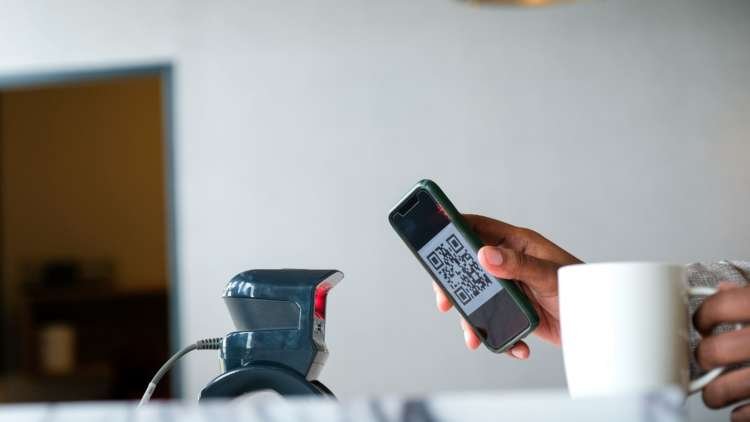
    An informative graphic showcasing various alternative payment methods such as mobile payments, e-wallets, and bank transfers, highlighting the shift in consumer behavior towards digital finance solutions.
    Illustration of alternative payment methods like e-wallets and mobile payments - Global Banking & Finance Review
    Why waste money on news and opinion when you can access them for free?

    Take advantage of our newsletter subscription and stay informed on the go!

    Subscribe

    By James Booth, VP Head of Partnerships, EMEA at PPRO

    Thanks to evolving consumer shopping behaviour, the rate of alternative payment adoption is continuing to move at lightspeed. Following the nation-wide lockdown earlier this year, the shift to online shopping continues to accelerate, and with it the use of alternative payment methods (APMs), such as mobile payments, bank transfers, pay later schemes and e-wallets.

    Just this month, Klarna, a payment provider operating on a buy now, pay later concept, was crowned one of Europe’s biggest private owned financial technology providers – with nine million consumers in Britain having used the service, and 90 million users worldwide.

    UK consumers are more inclined than ever to try a range of different payment methods, such as Klarna, to provide a more convenient payment experience. In the UK, any payment method other than cash and credit or debit cards is viewed as an alternative payment method. However, across the globe, these forms of payment are considered “local” payment methods due to their broad adoption.

    With over 450 significant local payment methods in use across the globe, merchants who sell cross-border are learning it is no longer adequate to simply offer only credit or debit card payments to consumers.

    From an increasing use of PayPal to bank transfers and mobile wallets (Apple and Google Pay), consumers now have more choice of payment methods than ever before.

    So, what is influencing the adoption of alternative payment methods amongst UK consumers? Who is leading the charge? And, what does the future hold as we enter a new era of APMs?

    Younger generations are driving adoption

    With Generation Z growing up with social media and smartphones, it’s no surprise that there’s a buzz about new payment methods in the news and on social media, which is a critical driving force for APM adoption. According to statistics, 31% of Generation Z consider this the biggest motivation to try new payment methods, whilst for Millennials, 37% said that merchant acceptance is their main driver.

    It seems confidence in these methods is being predominantly led by younger generations in the UK. According to PPRO’s recent survey, 42% of millennials (born between 1980-1993) and 35% of Generation Z (born between 1994-2001) feel confident using, or have used, either a bank transfer or e-wallets as methods of payment. And, with 33% of Generation Z increasing online spending since the beginning of the pandemic, they are a force not to be underestimated.

    Reaching new levels of convenience

    Whilst younger generations have been early APM adopters in the UK – increased convenience and security remain a key driver across all age groups. In fact, when choosing to use a payment method, security was favoured over reputable brand image, with over half (59%) of UK consumers believing it to be the most important factor when choosing a payment method.

    More consumers shopping online has encouraged a rise in fraud – and as a result, consumers are growing increasingly concerned for the safety of their transactions. Strong Customer Authentication (SCA) – as required by the Payment Services Directive (PSD2) – is just one regulation coming into force to combat fraud. Ensuring compliance with multi-factor authentication will be vital to reassure customers as they continue to shop online, and support future confidence in APMs.

    But, merchants should be warned; demonstrating security and providing a simple, easy checkout are a delicate balance. A major element of frictionless payment experience is making sure the checkout page has the right payment mix for the region and target age group. With more than one in two (50%) global online shoppers making purchases on foreign websites, and the fact that 54% of European cross-border e-shoppers are millennials, payment preferences will only continue to become more pivotal to attract shoppers from across the globe.

    The future of APMs and e-commerce growth

    It is safe to say the explosive growth in e-commerce and cross-border payments across the globe has really set the stage for the expansion of APMs this year. And, with further growth ahead, APMs are quickly becoming not-so-alternative.

    We are moving away from traditional shopping practices and today, buyers no longer want to be restricted by traditional payment methods, such as cards and cash. Retailers who choose to ignore the payment preferences risk losing 44% of UK customers. Merchants who offer a variety of payment methods that appeal to all ages, cultures, and regions will be able to widen their offering to a more extensive customer-base.

    The opportunity for merchants offering APMs is huge and is a necessity for every merchant seeking to grow their business – certainly domestically and especially across borders.

    More from Finance

    Explore more articles in the Finance category

    Image for Namibia's energy ministry blasts TotalEnergies, Petrobras for not following procedure
    Namibia's energy ministry blasts TotalEnergies, Petrobras for not following procedure
    Image for Czech prime minister in favour of social media ban for under-15s
    Czech prime minister in favour of social media ban for under-15s
    Image for Analysis-Investors chase cheaper, smaller companies as risk aversion hits tech sector
    Analysis-Investors chase cheaper, smaller companies as risk aversion hits tech sector
    Image for Julius Baer CEO calls for Swiss public register of rogue bankers to protect reputation
    Julius Baer CEO calls for Swiss public register of rogue bankers to protect reputation
    Image for Ukraine imposes sanctions on foreign suppliers of components for Russian missiles
    Ukraine imposes sanctions on foreign suppliers of components for Russian missiles
    Image for UBS banked Ghislaine Maxwell for years, moving her money after Epstein's arrest
    UBS banked Ghislaine Maxwell for years, moving her money after Epstein's arrest
    Image for Indian refiners avoid Russian oil in push for US trade deal
    Indian refiners avoid Russian oil in push for US trade deal
    Image for Japan's Takaichi set for landslide election win, exit poll shows
    Japan's Takaichi set for landslide election win, exit poll shows
    Image for Rugby-Ford shines as England overwhelm dismal Wales
    Rugby-Ford shines as England overwhelm dismal Wales
    Image for Greenland foreign minister says US talks are positive but the outcome remains uncertain
    Greenland foreign minister says US talks are positive but the outcome remains uncertain
    Image for Hungary's opposition Tisza promises wealth tax, euro adoption in election programme
    Hungary's opposition Tisza promises wealth tax, euro adoption in election programme
    Image for Farmers report 'catastrophic damage to crops as Storm Marta hits Spain and Portugal
    Farmers report 'catastrophic damage to crops as Storm Marta hits Spain and Portugal
    View All Finance Posts
    Previous Finance PostMoving towards a cashless society
    Next Finance PostShifting liability for fraud from merchants to customers in contact centres