Search
00
GBAF Logo
trophy
Top StoriesInterviewsBusinessFinanceBankingTechnologyInvestingTradingVideosAwardsMagazinesHeadlinesTrends

Subscribe to our newsletter

Get the latest news and updates from our team.

Global Banking & Finance Review®

Global Banking & Finance Review® - Subscribe to our newsletter

Company

    GBAF Logo
    • About Us
    • Profile
    • Privacy & Cookie Policy
    • Terms of Use
    • Contact Us
    • Advertising
    • Submit Post
    • Latest News
    • Research Reports
    • Press Release
    • Awards▾
      • About the Awards
      • Awards TimeTable
      • Submit Nominations
      • Testimonials
      • Media Room
      • Award Winners
      • FAQ
    • Magazines▾
      • Global Banking & Finance Review Magazine Issue 79
      • Global Banking & Finance Review Magazine Issue 78
      • Global Banking & Finance Review Magazine Issue 77
      • Global Banking & Finance Review Magazine Issue 76
      • Global Banking & Finance Review Magazine Issue 75
      • Global Banking & Finance Review Magazine Issue 73
      • Global Banking & Finance Review Magazine Issue 71
      • Global Banking & Finance Review Magazine Issue 70
      • Global Banking & Finance Review Magazine Issue 69
      • Global Banking & Finance Review Magazine Issue 66
    Top StoriesInterviewsBusinessFinanceBankingTechnologyInvestingTradingVideosAwardsMagazinesHeadlinesTrends

    Global Banking & Finance Review® is a leading financial portal and online magazine offering News, Analysis, Opinion, Reviews, Interviews & Videos from the world of Banking, Finance, Business, Trading, Technology, Investing, Brokerage, Foreign Exchange, Tax & Legal, Islamic Finance, Asset & Wealth Management.
    Copyright © 2010-2026 GBAF Publications Ltd - All Rights Reserved. | Sitemap | Tags | Developed By eCorpIT

    Editorial & Advertiser disclosure

    Global Banking & Finance Review® is an online platform offering news, analysis, and opinion on the latest trends, developments, and innovations in the banking and finance industry worldwide. The platform covers a diverse range of topics, including banking, insurance, investment, wealth management, fintech, and regulatory issues. The website publishes news, press releases, opinion and advertorials on various financial organizations, products and services which are commissioned from various Companies, Organizations, PR agencies, Bloggers etc. These commissioned articles are commercial in nature. This is not to be considered as financial advice and should be considered only for information purposes. It does not reflect the views or opinion of our website and is not to be considered an endorsement or a recommendation. We cannot guarantee the accuracy or applicability of any information provided with respect to your individual or personal circumstances. Please seek Professional advice from a qualified professional before making any financial decisions. We link to various third-party websites, affiliate sales networks, and to our advertising partners websites. When you view or click on certain links available on our articles, our partners may compensate us for displaying the content to you or make a purchase or fill a form. This will not incur any additional charges to you. To make things simpler for you to identity or distinguish advertised or sponsored articles or links, you may consider all articles or links hosted on our site as a commercial article placement. We will not be responsible for any loss you may suffer as a result of any omission or inaccuracy on the website.

    Home > Finance > Five things shaping Britain’s financial rulebooks after Brexit
    Finance

    Five things shaping Britain’s financial rulebooks after Brexit

    Published by linker 5

    Posted on February 25, 2021

    4 min read

    Last updated: January 21, 2026

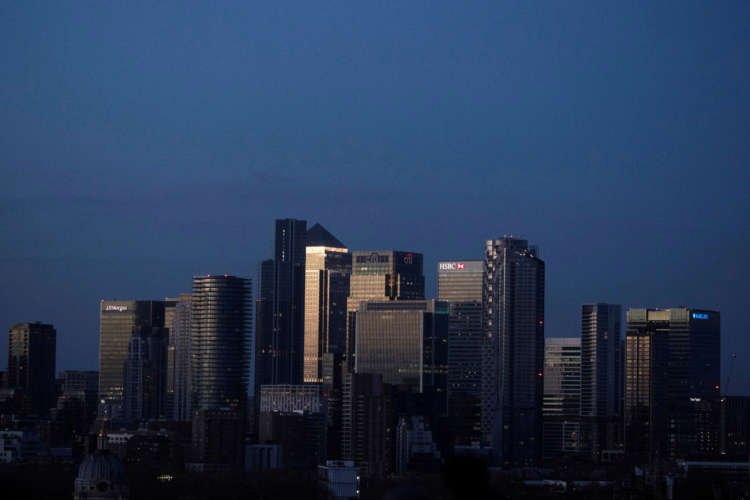
    The image showcases Canary Wharf, a key financial district in London. It highlights the ongoing changes in Britain's finance rules post-Brexit, as the UK aims to maintain its competitive edge in the global finance sector.
    Skyline of Canary Wharf in London, symbolizing UK's finance sector post-Brexit - Global Banking & Finance Review
    Why waste money on news and opinion when you can access them for free?

    Take advantage of our newsletter subscription and stay informed on the go!

    Subscribe

    By Huw Jones

    LONDON (Reuters) – Britain is conducting a review of its financial rulebooks and policies to see how it can keep its 130 billion pound ($184 billion) finance sector competitive after Brexit left it largely cut off from the European Union.

    The government is due to issue papers in the coming days outlining its approach to financial technology (fintech) and capital markets, while further down the line it’s expected to propose changes to the funds and insurance sectors.

    Here are five things set to shape the City of London financial hub following its loss of access to the EU:

    BIG BANG DEBATE

    Britain’s finance ministry is reviewing financial regulation and insurance capital rules, with minister Rishi Sunak raising the prospect of a “Big Bang 2.0” to maintain the City’s competitiveness, a reference to liberalisation of trading in the 1980s.

    But it’s unclear how far any deregulation could go given that Britain says it won’t undermine global standards.

    UK Finance, a banking body, wants a formal remit for regulators to ditch rules that put them at a competitive disadvantage globally. Insurers want cuts in capital requirements to free up cash for green and long term investments.

    But the Bank of England says the City must not become an “anything goes” financial centre, and that insurers hold the right amount of capital.

    Cross-border firms want to avoid Britain diverging from international norms as this would add to compliance costs.

    City veterans say Britain should focus on allowing firms to hire globally, and ensuring that regulators respond nimbly and proportionately to crypto-assets, sustainable finance, long-term investing and restructurings after COVID-19.

    COPYING NEW YORK

    London has fallen behind New York in attracting company flotations and a government-backed review of listing rules is likely to recommend allowing “dual class” shares and a lower “free float”, perhaps for a limited period.

    Dual class shares are stocks in the same company with different voting rights, while “free float” refers to the proportion of a company’s shares that are publicly available.

    The potential changes could attract more tech and fintech companies whose founders typically want to retain a large degree of control.

    It could also recommend making it easier for special purpose acquisition companies (SPACs) – businesses that raise money on stock markets to buy other companies – an area in which New York has also dominated, with Amsterdam catching up fast.

    UK asset managers warn that strong corporate governance standards could be diluted by tinkering with listing rules.

    BEYOND SANDBOXES

    Britain is home to one of the world’s biggest innovative fintech sectors, its “sandboxes” – which allow fintech firms to test new products on real consumers under regulatory supervision – copied across the world. But Brexit means Britain has to work harder to attract and retain fintechs as they will no longer have direct access to the world’s biggest trading area.

    A government-backed review to buttress the sector is due to report back on Friday with recommendations that could include cutting red tape for fintechs that want to recruit staff from across the world, and make listing in Britain more attractive.

    Other ideas could include helping fledgling fintech navigate government departments and regulators more easily, along with ways of boosting funding for start-ups.

    FUNDS ARE THE FUTURE

    Britain is reviewing how to make itself a more competitive place for listing investment funds, a core tool for bringing fresh capital into markets.

    UK-based asset managers run many funds listed in the EU, but this global system of cross-border management known as delegation could be tightened up by the bloc.

    Having more funds listed in Britain would also mean that the shares they hold would be traded in London. Billions of euros in trading euro shares have left the UK for Amsterdam since Brexit due to the bloc’s restrictions on where funds can trade shares.

    THINK GLOBAL

    As the City will get only limited access at best to the EU, industry officials say it makes more sense to focus on getting better access to other markets like Singapore, Hong Kong, Japan and the United States, while at the same time keeping the UK financial market open to the world, including the EU.

    Negotiations between Britain and Switzerland for a “mutual recognition” deal in financial rules is the way to go, industry officials say. Better global access would also keep the City ahead of EU centres like Amsterdam, Paris and Frankfurt.

    ($1 = 0.7056 pounds)

    (Reporting by Huw Jones. Editing by Mark Potter)

    More from Finance

    Explore more articles in the Finance category

    Image for Russia launches massive attack on Ukraine's energy system, Zelenskiy says
    Russia launches massive attack on Ukraine's energy system, Zelenskiy says
    Image for Russia launched 400 drones, 40 missiles to hit Ukraine's energy sector, Zelenskiy says
    Russia launched 400 drones, 40 missiles to hit Ukraine's energy sector, Zelenskiy says
    Image for The Kyiv family, with its pets and pigs, defying Russia and the cold
    The Kyiv family, with its pets and pigs, defying Russia and the cold
    Image for Two Polish airports reopen after NATO jets activated over Russian strikes on Ukraine
    Two Polish airports reopen after NATO jets activated over Russian strikes on Ukraine
    Image for French miner Eramet's finance chief steps aside temporarily, days after CEO ouster
    French miner Eramet's finance chief steps aside temporarily, days after CEO ouster
    Image for Ukraine's Zelenskiy calls for faster action on air defence, repairs to grid
    Ukraine's Zelenskiy calls for faster action on air defence, repairs to grid
    Image for Goldman Sachs teams up with Anthropic to automate banking tasks with AI agents, CNBC reports
    Goldman Sachs teams up with Anthropic to automate banking tasks with AI agents, CNBC reports
    Image for Analysis-Hims' $49 weight-loss pill rattles investor case for cash-pay obesity market
    Analysis-Hims' $49 weight-loss pill rattles investor case for cash-pay obesity market
    Image for Analysis-Glencore to focus on short-term disposals as Rio deal remains elusive
    Analysis-Glencore to focus on short-term disposals as Rio deal remains elusive
    Image for Belgium's Agomab Therapeutics valued at $716 million as shares fall in Nasdaq debut
    Belgium's Agomab Therapeutics valued at $716 million as shares fall in Nasdaq debut
    Image for Big Tech's quarter in four charts: AI splurge and cloud growth
    Big Tech's quarter in four charts: AI splurge and cloud growth
    Image for EU hikes tariffs on Chinese ceramics to 79% to counter dumping 
    EU hikes tariffs on Chinese ceramics to 79% to counter dumping 
    View All Finance Posts
    Previous Finance PostLondon could lose out to New York under draft EU finance deal – document
    Next Finance PostHow the Brexit Agreement Failed the Financial Services Sector