Investing
Factbox-IPOs Stage Fall Comeback in Europe
Published by Jessica Weisman-Pitts
Posted on October 28, 2024
3 min readLast updated: January 29, 2026
Add as preferred source on Google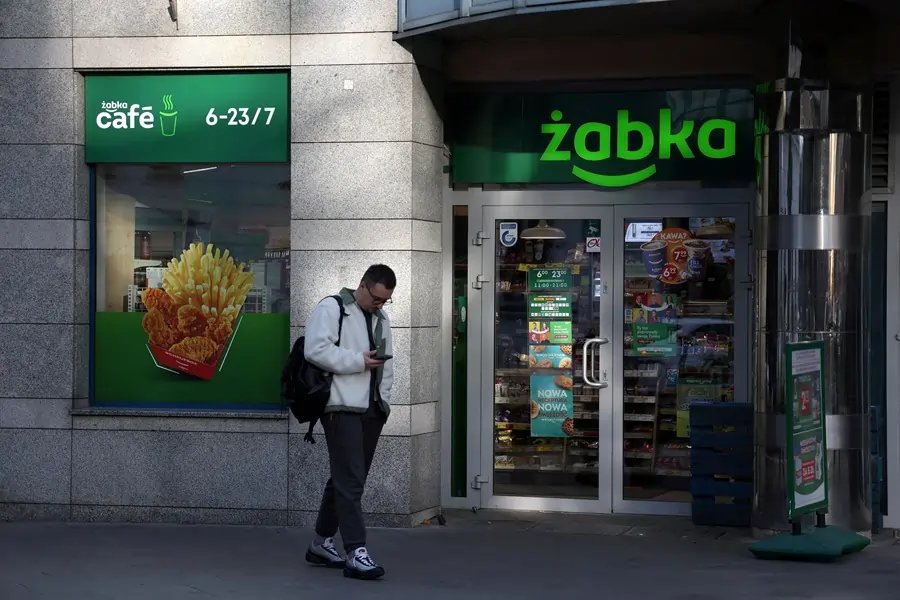
Published by Jessica Weisman-Pitts
Posted on October 28, 2024
3 min readLast updated: January 29, 2026
Add as preferred source on Google(Reuters) -Initial public offerings (IPOs) are slowly coming back in Europe after a summer lull.
Swedish real estate group Sveafastfighter priced its IPO at 3.5 billion crowns ($330.59 million), as it plans to debut in Stockholm by the end of the year, while Spanish energy and water utility Cox Energy plans to raise 300 million euros ($328 million).
British sport nutrition firm Applied Nutrition rose 7% on its London debut in October following an IPO in which it raised 157.5 million pounds ($204.39 million).
However, Spanish frozen bakery producer Europastry and fashion retailer Tendam pulled their IPOs, citing market instability.
Proceeds from IPOs across Europe have more than quadrupled year-on-year to 11.4 billion euros in the first half of 2024, a survey by PricewaterhouseCoopers showed.
Here are some of the biggest IPOs carried out in Europe to date by value:
PUIG
The Luxury beauty and fashion group listed in Spain in May, raising 2.61 billion euros for Puig and its eponymous controlling family. Together with an over-allotment option, the total proceeds reached 2.74 billion euros, cementing Puig’s IPO as the largest in Europe since 2022.
GALDERMA
The skin care firm’s IPO in March, which raised 2.3 billion Swiss francs ($2.7 billion), was the biggest offering in Switzerland since smart meter maker Landis + Gyr raised a similar sum in 2017.
The private equity group’s IPO raised 2.3 billion euros in April, valuing the Dutch firm at around 14 billion euros.
ZABKA GROUP
The Polish convenience store group Zabka made its debut in Warsaw in October in the biggest IPO since Allegro’s flotation in 2020. The firm, valued at 21.5 billion zlotys ($5.34 billion), raised 6.45 billion zlotys via the offering.
DOUGLAS
The German cosmetics retailer, backed by CVC Capital Partners and the Kreke family, carried out an 890 million-euro IPO and made its return to the Frankfurt Stock Exchange in March.
ATHENS INTERNATIONAL AIRPORT
The January IPO of Greece’s largest gateway for tourists marked the first successful major offering in Europe this year. Greece’s privatisation agency raised 785 million euros from the sale, making it Greece’s biggest IPO in 15 years.
SPRINGER NATURE
German academic publisher Springer Nature debuted in Frankfurt in early October after an IPO that was set to raise up to 602 million euros.
RENK
The German tank gearbox manufacturer’s IPO raised around 500 million euros in early February. Its owner, private equity group Triton Partners, placed 33.33 million Renk shares with institutional investors.
EXOSENS
The French optical component firm debuted on Euronext Paris in June, after an IPO that raised around 350 million euros.
PLANISWARE
The French software firm’s IPO raised a total of about 278 million euros in April, in the largest initial offering on the French bourse in the last three years.
($1 = 0.9142 euros)
($1 = 0.8603 Swiss francs)
($1 = 4.0267 zlotys)
($1 = 10.5870 Swedish crowns)
($1 = 0.7706 pounds)
(Compiled by Julia Kotowska, Anna Pruchnicka and Mateusz Rabiega in Gdansk; editing by Milla Nissi and Sharon Singleton)
An IPO, or Initial Public Offering, is the process through which a private company offers shares to the public for the first time, allowing it to raise capital from public investors.
Market instability refers to fluctuations in financial markets that can lead to uncertainty, affecting investor confidence and the ability of companies to raise funds through IPOs.
Proceeds from an IPO are the funds raised by a company through the sale of its shares to the public, which can be used for various purposes such as expansion or debt repayment.
A controlling family in an IPO refers to the family or group that holds a significant portion of a company's shares, influencing its management and strategic decisions.
Valuation in finance is the process of determining the current worth of an asset or a company, often used to assess investment opportunities or during mergers and acquisitions.
Explore more articles in the Investing category