Search
00
GBAF Logo
trophy
Top StoriesInterviewsBusinessFinanceBankingTechnologyInvestingTradingVideosAwardsMagazinesHeadlinesTrends

Subscribe to our newsletter

Get the latest news and updates from our team.

Global Banking and Finance Review

Global Banking and Finance Review - Subscribe to our newsletter

Company

    GBAF Logo
    • About Us
    • Profile
    • Privacy & Cookie Policy
    • Terms of Use
    • Contact Us
    • Advertising
    • Submit Post
    • Latest News
    • Research Reports
    • Press Release
    • Awards▾
      • About the Awards
      • Awards TimeTable
      • Submit Nominations
      • Testimonials
      • Media Room
      • Award Winners
      • FAQ
    • Magazines▾
      • Global Banking & Finance Review Magazine Issue 79
      • Global Banking & Finance Review Magazine Issue 78
      • Global Banking & Finance Review Magazine Issue 77
      • Global Banking & Finance Review Magazine Issue 76
      • Global Banking & Finance Review Magazine Issue 75
      • Global Banking & Finance Review Magazine Issue 73
      • Global Banking & Finance Review Magazine Issue 71
      • Global Banking & Finance Review Magazine Issue 70
      • Global Banking & Finance Review Magazine Issue 69
      • Global Banking & Finance Review Magazine Issue 66
    Top StoriesInterviewsBusinessFinanceBankingTechnologyInvestingTradingVideosAwardsMagazinesHeadlinesTrends

    Global Banking & Finance Review® is a leading financial portal and online magazine offering News, Analysis, Opinion, Reviews, Interviews & Videos from the world of Banking, Finance, Business, Trading, Technology, Investing, Brokerage, Foreign Exchange, Tax & Legal, Islamic Finance, Asset & Wealth Management.
    Copyright © 2010-2026 GBAF Publications Ltd - All Rights Reserved. | Sitemap | Tags | Developed By eCorpIT

    Editorial & Advertiser disclosure

    Global Banking and Finance Review is an online platform offering news, analysis, and opinion on the latest trends, developments, and innovations in the banking and finance industry worldwide. The platform covers a diverse range of topics, including banking, insurance, investment, wealth management, fintech, and regulatory issues. The website publishes news, press releases, opinion and advertorials on various financial organizations, products and services which are commissioned from various Companies, Organizations, PR agencies, Bloggers etc. These commissioned articles are commercial in nature. This is not to be considered as financial advice and should be considered only for information purposes. It does not reflect the views or opinion of our website and is not to be considered an endorsement or a recommendation. We cannot guarantee the accuracy or applicability of any information provided with respect to your individual or personal circumstances. Please seek Professional advice from a qualified professional before making any financial decisions. We link to various third-party websites, affiliate sales networks, and to our advertising partners websites. When you view or click on certain links available on our articles, our partners may compensate us for displaying the content to you or make a purchase or fill a form. This will not incur any additional charges to you. To make things simpler for you to identity or distinguish advertised or sponsored articles or links, you may consider all articles or links hosted on our site as a commercial article placement. We will not be responsible for any loss you may suffer as a result of any omission or inaccuracy on the website.

    Home > Finance > Cash and digital payments – a balancing act to aid financial inclusion
    Finance

    Cash and digital payments – a balancing act to aid financial inclusion

    Published by gbaf mag

    Posted on October 26, 2020

    5 min read

    Last updated: January 21, 2026

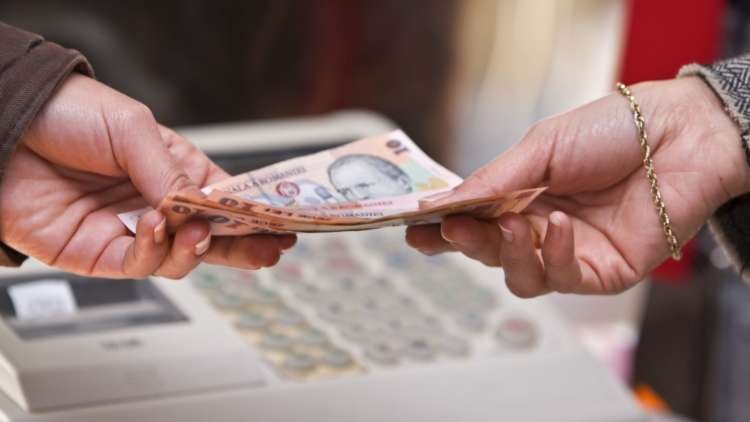
    An insightful image reflecting the debate between cash and digital payments, emphasizing their role in promoting financial inclusion as discussed in the article.
    Balancing cash and digital payments for financial inclusion - Global Banking & Finance Review
    Why waste money on news and opinion when you can access them for free?

    Take advantage of our newsletter subscription and stay informed on the go!

    Subscribe

    By Matthew Jackson, Head of Partner Development, EMEA at PPRO

    The cashless debate is one that continues to spark both conversation and controversy. The pandemic, which has seen many merchants discourage the use of cash to limit the spread of the virus, has accelerated these discussions. M-Pesa, a Kenyan mobile money transfer service, for example, waved its fees to support the move away from cash during the pandemic. Today, many global economies are now questioning whether they should continue to offer cash payments or go cashless by converting solely to digital. Critics say this move would disenfranchise unbanked, cash-dependent consumers and does not drive financial inclusion, while others claim that a failure to go cashless limits innovation in the fintech sector. So, what exactly is the answer?

    The solution lies somewhere in the middle.

    The truth is cash and digital payments don’t have to be mutually exclusive; this is not a zero-sum game as the two payment options can exist together. According to recent PPRO data, over half of US and UK consumers will stop the checkout process if it is too complicated or their preferred methods are not available. Consumers prefer having multiple payment options, whether it be using a bank transfer, a credit card, a mobile wallet or even cash. Payment flexibility is a crucial factor in offering a seamless checkout experience. Some shoppers never carry cash while others view cash as the only way they want – or are able – to pay.

    The key is for merchants to offer a personalised experience for each and every consumer.

    The future of cash

    Despite a seemingly rapid shift towards digital payment methods, cash is not going anywhere. Many regions across the globe are tied to cash-based payments. For example, in Latin America, 21% of e-commerce transactions are completed by cash. Via cash vouchers, many consumers are able to access the global, online marketplace: at the checkout page, consumers are shown a barcode for their order. They then take this barcode (either printed or on their mobile device) to a local convenience store or bank and pay in cash. At that point, the goods are shipped. Even here in the UK, approximately 1.3 million UK adults are classed as unbanked, exposing the large number of consumers affected by any ban on cash.

    Cash is often preferred for a plethora of reasons: It can be easier to use cash for smaller purchases, older consumers may be wary of digital payment methods, and avoiding credit can help shoppers stay within budget.

    Conversely this  year, Bristol was revealed as the contactless capital of the UK, with London leading the way when all card payment types were considered. Tottenham Hotspur’s brand new stadium was also the first stadium in the UK to go completely cashless in a bid to provide the best possible fan experience. The stadium claims fans can now expect increased service speed, shorter queue times and better hygiene as staff won’t be handling cash. With many other venues following this trend, merchants must be able to provide multiple options to consumers or risk excluding part of the market.

    Ensuring inclusivity with digital payments

    Financial inclusion is not just limited to offering cash payments. Each region has its own nuances that influence consumer payment preferences. Consumers want to pay with the payment methods they are comfortable with; a majority of online shoppers will abandon their cart and purchase items on another site if they aren’t offered their preferred way to pay.

    Local payment methods serve as the bridge to connect shoppers with merchants across the globe.

    A great example of this is the rise of the mobile payment method M-Pesa in Kenya. According to PPRO research, more Kenyan consumers have a smartphone (60%) than a bank account (56%). Payment innovations have helped solve consumer needs and enable financial inclusion by turning a smartphone into a virtual bank account. Similarly, in southeast Asia, GrabPay, which started out as food delivery and on-demand taxi app, has evolved into a leading payment method used by 115 million consumers across the region. These sentiments resonate in the UK as well with 45% of UK consumers believing cash will be a thing of the past in just five years.

    Striking a balance

    Whatever the way forward, ultimately payment methods need to enhance the consumer shopping experience and a combination of  both cash and digital payments is a way to enable this. For many regions the lines between cash and digital payments continue to blur.  For example, in Argentina, Mexico and Brazil, cash-based payment methods like RapiPago, Oxxo and Boleto Bancario give many cash-dependent consumers a chance to shop online. Merchants must come to realise that cash can actually complement many digital payment methods, not necessarily restrict them.

    To be able to continue to satisfy the needs of all consumers, merchants need to understand the factors driving consumer behaviors around the world and offer the specific local payment methods to fulfil those needs. In some cases, this is cash and others a digital method. Having a choice is what will not only drive inclusion but also increase sales around the globe. Innovation does not necessarily mean cashless, but rather the industry creating solutions to solve consumer needs.

    More from Finance

    Explore more articles in the Finance category

    Image for Stellantis faces Peugeot model delays due to battery plant issues, Bloomberg News reports
    Stellantis faces Peugeot model delays due to battery plant issues, Bloomberg News reports
    Image for UNICEF calls for criminalization of AI content depicting child sex abuse
    UNICEF calls for criminalization of AI content depicting child sex abuse
    Image for UK asks Air India to explain Boeing Dreamliner fuel-switch incident
    UK asks Air India to explain Boeing Dreamliner fuel-switch incident
    Image for Siemens board to make decision on new chairman no later than 2027
    Siemens board to make decision on new chairman no later than 2027
    Image for Norway's Socialist Party backs down from threat to LNG electricity project
    Norway's Socialist Party backs down from threat to LNG electricity project
    Image for Russian central bank says export outlook to worsen in first quarter
    Russian central bank says export outlook to worsen in first quarter
    Image for MSF says airstrike hit its hospital in South Sudan's Jonglei state
    MSF says airstrike hit its hospital in South Sudan's Jonglei state
    Image for Italy police search House of Doge-owned soccer club in money laundering probe
    Italy police search House of Doge-owned soccer club in money laundering probe
    Image for Four people, including two Chinese nationals, arrested in France on suspicion of spying
    Four people, including two Chinese nationals, arrested in France on suspicion of spying
    Image for Explainer-Why is UN warning of 'imminent financial collapse'?
    Explainer-Why is UN warning of 'imminent financial collapse'?
    Image for As software stocks slump, investors debate AI's existential threat 
    As software stocks slump, investors debate AI's existential threat 
    Image for Italy watchdog blocks BYD advert after Stellantis complaint
    Italy watchdog blocks BYD advert after Stellantis complaint
    View All Finance Posts
    Previous Finance PostRisk Mitigation vs. Risk Avoidance: Why FIs Need to Maintain Risk Appetite and Not Place All Bets on De-Risking
    Next Finance PostThe value of digital identity in payments