Search
00
GBAF Logo
trophy
Top StoriesInterviewsBusinessFinanceBankingTechnologyInvestingTradingVideosAwardsMagazinesHeadlinesTrends

Subscribe to our newsletter

Get the latest news and updates from our team.

Global Banking & Finance Review®

Global Banking & Finance Review® - Subscribe to our newsletter

Company

    GBAF Logo
    • About Us
    • Profile
    • Privacy & Cookie Policy
    • Terms of Use
    • Contact Us
    • Advertising
    • Submit Post
    • Latest News
    • Research Reports
    • Press Release
    • Awards▾
      • About the Awards
      • Awards TimeTable
      • Submit Nominations
      • Testimonials
      • Media Room
      • Award Winners
      • FAQ
    • Magazines▾
      • Global Banking & Finance Review Magazine Issue 79
      • Global Banking & Finance Review Magazine Issue 78
      • Global Banking & Finance Review Magazine Issue 77
      • Global Banking & Finance Review Magazine Issue 76
      • Global Banking & Finance Review Magazine Issue 75
      • Global Banking & Finance Review Magazine Issue 73
      • Global Banking & Finance Review Magazine Issue 71
      • Global Banking & Finance Review Magazine Issue 70
      • Global Banking & Finance Review Magazine Issue 69
      • Global Banking & Finance Review Magazine Issue 66
    Top StoriesInterviewsBusinessFinanceBankingTechnologyInvestingTradingVideosAwardsMagazinesHeadlinesTrends

    Global Banking & Finance Review® is a leading financial portal and online magazine offering News, Analysis, Opinion, Reviews, Interviews & Videos from the world of Banking, Finance, Business, Trading, Technology, Investing, Brokerage, Foreign Exchange, Tax & Legal, Islamic Finance, Asset & Wealth Management.
    Copyright © 2010-2026 GBAF Publications Ltd - All Rights Reserved. | Sitemap | Tags | Developed By eCorpIT

    Editorial & Advertiser disclosure

    Global Banking & Finance Review® is an online platform offering news, analysis, and opinion on the latest trends, developments, and innovations in the banking and finance industry worldwide. The platform covers a diverse range of topics, including banking, insurance, investment, wealth management, fintech, and regulatory issues. The website publishes news, press releases, opinion and advertorials on various financial organizations, products and services which are commissioned from various Companies, Organizations, PR agencies, Bloggers etc. These commissioned articles are commercial in nature. This is not to be considered as financial advice and should be considered only for information purposes. It does not reflect the views or opinion of our website and is not to be considered an endorsement or a recommendation. We cannot guarantee the accuracy or applicability of any information provided with respect to your individual or personal circumstances. Please seek Professional advice from a qualified professional before making any financial decisions. We link to various third-party websites, affiliate sales networks, and to our advertising partners websites. When you view or click on certain links available on our articles, our partners may compensate us for displaying the content to you or make a purchase or fill a form. This will not incur any additional charges to you. To make things simpler for you to identity or distinguish advertised or sponsored articles or links, you may consider all articles or links hosted on our site as a commercial article placement. We will not be responsible for any loss you may suffer as a result of any omission or inaccuracy on the website.

    Home > Finance > Unilever's Indonesia headache worsens with boycott as local brands seize the day
    Finance

    Unilever's Indonesia headache worsens with boycott as local brands seize the day

    Published by Global Banking & Finance Review®

    Posted on January 24, 2025

    5 min read

    Last updated: January 27, 2026

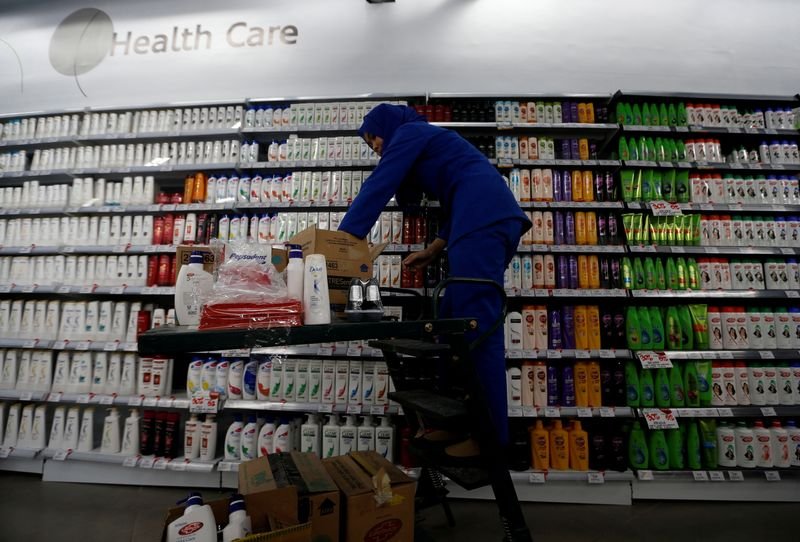
    The image illustrates Unilever's ongoing market challenges in Indonesia as local brands gain traction amidst boycotts. This reflects the company's declining market share and the competitive landscape in the region.
    Unilever's brand decline in Indonesia due to local boycotts - Global Banking & Finance Review
    Why waste money on news and opinion when you can access them for free?

    Take advantage of our newsletter subscription and stay informed on the go!

    Subscribe

    Quick Summary

    Unilever's market share in Indonesia declines due to boycotts and competition from local brands, prompting strategic adjustments.

    Unilever's Market Challenges in Indonesia Amid Boycotts

    By Richa Naidu and Stefanno Sulaiman

    LONDON/JAKARTA (Reuters) - A boycott against Unilever and other multinationals operating in Israel has worsened the global consumer company's loss of market share in Indonesia, Southeast Asia's largest economy, where it is battling smaller, often cheaper local rivals.

    Unilever, like other big consumer goods companies, has been under fire in many Muslim-majority countries for what some shoppers see as tacit support of Israel's military offensive in Gaza through business activity.

    Unilever first said last February that sales growth in Southeast Asia had been hurt by shoppers in Indonesia boycotting its brands in response to the geopolitical situation. In October, it revealed its market share in Indonesia had declined to 34.9% in the third quarter from 38.5% a year before.

    The group's Jakarta-listed business brought in $2.39 billion in 2023, contributing 3.8% to group sales, but the trading environment is difficult. Despite owning major brands including Axe deodorant, Cornetto ice creams and Royco seasoning powder, Unilever has struggled to grow market share for nearly a decade as shoppers switch to cheaper local brands.

    According to research firm Kantar, Unilever's Royco, Lifebuoy and Sunlight brands were among Indonesia's top 10 consumer brands in 2020. During the COVID-19 pandemic, earnings reports show Unilever raised prices sharply to keep up with rising costs. By 2023, only Royco remained in the top 10 with local laundry detergent SoKlin maker Wings Group and Roma biscuit maker Mayora Indah stepping in.

    Unilever is also facing competition from homegrown halal beauty firm Paragon's Wardah, Aice, which makes ice cream, and new international players such as Skintific from China.

    At a local online store, a 400-millilitre bottle of liquid soap made by Wings Group's Nuvo brand was selling for about 20% less than Unilever's Lifebuoy liquid soap in the same size. A 700-ml bottle of Wings' SoKlin liquid laundry detergent was about 7% less than Unilever's Rinso detergent.

    'SOCIETAL CHANGE'

    Unilever's pricing challenges in Indonesia come as recent data shows that the size of Indonesia's middle class shrank between 2019-2024 due to layoffs and lower job opportunities, prompting demand for cheaper groceries, according to local retailers' association Tutum Rahanta.

    Unilever executives said in October they are trying to give their Indonesian brands a makeover given the "significant societal change" taking place, with people increasingly shopping online and looking for better prices. They expect to see an improvement in the next six months, they said.

    Unilever's Indonesia president, Benjie Yap, told Reuters in a statement: "It can be seen that we are navigating in a situation full with challenges, but we clearly understand the steps necessary to overcome it while continuing to adapt to a rapidly evolving market landscape."

    "The decline in market share occurred in almost all categories due to several things, one of which is negative consumer sentiment," Yap said.

    Unilever is aiming for more consistent pricing, getting its products into "more" and "better" stores, and improving the way it manages inventory and sells and distributes products online, it says.

    BOYCOTTS MAKE AN IMPACT

    Unilever acknowledged in October that the boycotts had made a dent in sales, though it has not provided details.

    PT Unilever Indonesia Tbk in October reported an 18.2% decline in quarterly underlying sales to 8.4 trillion Indonesian rupiah ($533 million).

    About 87% of Indonesia's population of 280 million is Muslim, and pro-Palestine groups and apps have emerged urging people to boycott brands, including those made by Unilever.

    A Reuters review of the global "No Thanks" app - built by pro-Palestine developer BashSquare - shows shoppers are urged to boycott, for instance, Ben & Jerry's ice cream while locally produced brands such as Indomie noodles are highlighted as "good for now!".

    The app enables shoppers in many countries to scan product barcodes and recommends buying decisions based on parent companies' action - or inaction - when it comes to the war. The app's Instagram page claims it has 7 million users.

    Riska Rahman, a 31-year-old mother of one, has been boycotting products from Rinso laundry detergent and Pond's moisturiser to Rexona deodorant and Pepsodent toothpaste in protest against Unilever's continued presence in Israel.

    "We cut everything straight away," she said.

    Competitors have enjoyed strong growth in most of Unilever's categories, including packaged food, beauty and home care, analysts said.

    The Indonesian homecare market is expected to grow this year by 11.5% to $3.4 billion, and the packaged food market is estimated to grow roughly 11.7% to $21.8 billion, according to Euromonitor International data.

    Meanwhile, underlying sales for Unilever's homecare and personal goods unit in Indonesia fell 20.8% in the third quarter. Underlying food and refreshment sales were down 13.3%.

    "Local and foreign brands seized this opportunity, ramping up aggressive promotions, particularly on e-commerce platforms," Cheria Widjaja, an analyst at DBS Bank, said. The brokerage last month downgraded Unilever's Indonesia business to 'fully valued' from 'hold'. 

    (Reporting by Richa Naidu and Stefanno Sulaiman. Editing by Matt Scuffham and Elaine Hardcastle)

    Key Takeaways

    • •Unilever's market share in Indonesia has declined due to boycotts.
    • •Local brands are gaining ground against Unilever's products.
    • •Unilever is adjusting its pricing strategy to compete.
    • •The geopolitical situation is affecting consumer sentiment.
    • •Unilever aims to improve its market position in six months.

    Frequently Asked Questions about Unilever's Indonesia headache worsens with boycott as local brands seize the day

    1What is the main topic?

    The article discusses Unilever's declining market share in Indonesia due to boycotts and competition from local brands.

    2How is Unilever responding to market challenges?

    Unilever is adjusting its pricing strategy and improving product distribution to regain market share.

    3What impact have boycotts had on Unilever?

    Boycotts have contributed to a decline in Unilever's sales and market share in Indonesia.

    More from Finance

    Explore more articles in the Finance category

    Image for French miner Eramet's finance chief steps aside temporarily, days after CEO ouster
    French miner Eramet's finance chief steps aside temporarily, days after CEO ouster
    Image for Ukraine's Zelenskiy calls for faster action on air defence, repairs to grid
    Ukraine's Zelenskiy calls for faster action on air defence, repairs to grid
    Image for Goldman Sachs teams up with Anthropic to automate banking tasks with AI agents, CNBC reports
    Goldman Sachs teams up with Anthropic to automate banking tasks with AI agents, CNBC reports
    Image for Analysis-Hims' $49 weight-loss pill rattles investor case for cash-pay obesity market
    Analysis-Hims' $49 weight-loss pill rattles investor case for cash-pay obesity market
    Image for Analysis-Glencore to focus on short-term disposals as Rio deal remains elusive
    Analysis-Glencore to focus on short-term disposals as Rio deal remains elusive
    Image for Belgium's Agomab Therapeutics valued at $716 million as shares fall in Nasdaq debut
    Belgium's Agomab Therapeutics valued at $716 million as shares fall in Nasdaq debut
    Image for Big Tech's quarter in four charts: AI splurge and cloud growth
    Big Tech's quarter in four charts: AI splurge and cloud growth
    Image for EU hikes tariffs on Chinese ceramics to 79% to counter dumping 
    EU hikes tariffs on Chinese ceramics to 79% to counter dumping 
    Image for AI trade splinters as investors get more selective
    AI trade splinters as investors get more selective
    Image for EU extends tariff suspension on $109.8 billion of US imports for six months
    EU extends tariff suspension on $109.8 billion of US imports for six months
    Image for Dog food maker Ollie acquired by Spain’s Agrolimen
    Dog food maker Ollie acquired by Spain’s Agrolimen
    Image for Salzgitter to take over HKM steel joint venture, end clash with Thyssenkrupp
    Salzgitter to take over HKM steel joint venture, end clash with Thyssenkrupp
    View All Finance Posts
    Previous Finance PostM&S seeks to fend off high street headwinds after bumper Christmas
    Next Finance PostGerman exports, industrial production rise more than expected