Headlines
Analysis-Indonesia's New Leader Expands Military's Role in Test of Fragile Democracy
Published by Global Banking & Finance Review®
Posted on January 28, 2025
6 min readLast updated: January 27, 2026
Add as preferred source on Google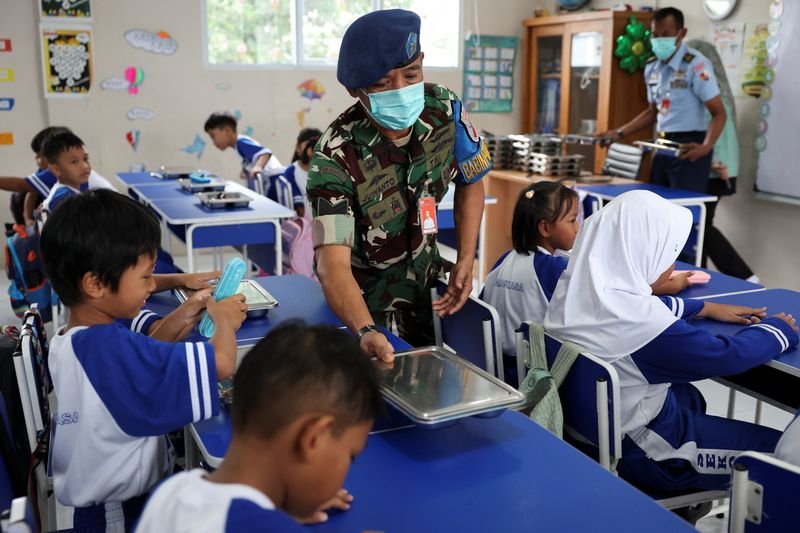
Published by Global Banking & Finance Review®
Posted on January 28, 2025
6 min readLast updated: January 27, 2026
Add as preferred source on GooglePresident Prabowo is expanding military roles in Indonesia, raising concerns about democratic stability and comparisons to Suharto's era.
By Ananda Teresia
JAKARTA (Reuters) - Nearly three decades after the fall of Indonesia's authoritarian leader, General Suharto, the nation's new president is causing unease among liberals and others by increasingly turning to the once-all-powerful military to carry out his governing vision.
Critics of President Prabowo Subianto point to the former defence minister's early actions as a worrying sign of his tendency to replace civilian functions with the military, raising comparisons to a Suharto-era doctrine called "dwifungsi" (dual function) that allowed the armed forces to crush dissent and dominate public life.
Just three months into office after sweeping to a landslide election victory last year, Prabowo has quickly expanded the armed forces' roles in several public areas - including running much of his flagship project to serve free school meals.
His allies in parliament are also preparing legislation that would allow Prabowo to appoint active military officers into senior government positions, dismantling some of the safeguards put in place after Suharto was overthrown in 1998 following an economic crisis and popular uprising.
Prabowo's resounding victory in last year's election was largely driven by younger voters, polls showed, a generation with little or no memory of Suharto's military-backed "New Order" regime.
A former son-in-law of Suharto, Prabowo was a special forces commander under his repressive 32-year reign and was later dismissed from the military amid unproven allegations of human rights abuses.
Supporters of Prabowo, who has denied past rights abuses, say tapping the military for important projects offers efficiencies.
But critics see in Prabowo's moves, including a recent expansion of military command structure, a worrying lurch towards re-militarisation in the world's largest Muslim-majority country.
"He's not abiding by civil supremacy," said analyst Yanuar Nugroho of Prabowo.
"He instead wants to restore the glory of military ... where various kinds of civic-works can be done by the military, arguing it will be faster, more effective," said Yanuar, a former deputy chief of presidential staff to Prabowo's predecessor, Joko Widodo.
Prabowo's office did not respond to repeated requests for comment on military deployment for government projects.
Although not replicating the "dual function" of the past, Prabowo's early reliance on the military is raising concerns among Indonesian observers about the undoing of democratic reforms that sprang up after Suharto was ousted.
"There's a lot of aspects of the Prabowo administration that are seeking to replicate what existed under his former father-in-law Suharto," said political analyst and author of the Indonesia-focused newsletter Reformasi Weekly, Kevin O'Rourke. "Restoring military roles in politics is one aspect."
Under Suharto, there were no checks and balances and the military was also involved in business, O'Rourke said, adding that the same pattern now could erode democratic oversight of government institutions, affecting policymaking.
COMBAT-TRAINED COOKS AND FARMERS
Prabowo, who had a 81% approval rating after his first 100 days in office, has wasted little time in handing over large projects to the armed forces since taking office. The most visible example has been his $28 billion signature project to provide free school meals.
Air Force Colonel Satrya Dharma Wijaya is a case in point.
His usual job is aircraft maintenance, but since November, he has been busy ordering stoves, refrigerators and frying pans to cook meals for thousands of children at a time at a base in Indonesia's capital, Jakarta.
"This was previously a marshalling area where we prepared troops to deploy for an assignment," said Satrya, wearing his short-sleeved blue uniform at Halim Perdanakusuma air base's newly expanded kitchen.
The military was running 100 of the 190 kitchens operating by the project's launch in collaboration with the newly formed National Nutrition Agency, cooking up and delivering food for 570,000 children on its opening day.
Army chief General Maruli Simanjuntak said that a plan is under way for the military to form 100 special "territorial development" units assigned to farming, fisheries and animal husbandry.
Prabowo has also moved swiftly to vastly expand other military-run projects established when he was defence minister.
A programme for soldiers to clear land for cultivation has been increased by 50-fold with the aim of boosting Indonesia's food security from an initial 60,000 hectares to a projected 3 million hectares - an area about the size of Belgium.
He has also ordered the expansion of another of his projects, directing the Air Force to convert its idle land into rice and corn fields to be managed by soldiers and villagers to supply food for the free-meals project.
In addition, he has declared a nationwide extension of a third small military civil-works initiative - laying water pipes for plumbing and irrigation in remote, poor areas.
Army chief Simanjuntak said that turning to soldiers to help run large programmes is effective, as the army follows a strong chain of command, adding that rules are in place to prevent military repression.
"It's impossible to return to the New Order (Suharto) era. There's no way," Simanjuntak said.
SOLDIERS LEADING MINISTRIES?
One key area of concern for critics is around upcoming legislation that would allow Prabowo to appoint active duty military officers to top government jobs for first time in decades.
The legislation, prepared by Prabowo's allies, will soon go before parliament where the president's coalition controls 74% of seats. The bill will be deliberated in coming months, several lawmakers told Reuters.
The president has already tapped former military officers for top roles - such as Foreign Minister Sugiono, who served in the army's special forces before retiring.
Sufmi Dasco Ahmad, deputy speaker of parliament from Prabowo's Gerindra party, said the president should be free to appoint active officers anywhere in government.
"These strategic programmes must be run by people who are disciplined, highly committed and have been trained to be responsible and disciplined," Dasco said.
'DEMOCRATIC BACKSLIDING'
But even some former military men have concerns about Prabowo's instinct to turn to the armed forces.
"Don't give a blank check where soldiers could be placed at any posts. It will ruin the system," retired Lt Gen Agus Widjojo, one of several generals who led post-Suharto military reforms, told Reuters.
Widjojo said the tendency would have policy implications by weakening civilian institutions.
Analyst Yanuar said he fears the trend of militarisation under Prabowo will lead to a "democratic backsliding" and centralisation of power.
"A strong president who is backed by a strong military with almost full control in the parliament," Yanuar said. "This is similar to Suharto: military with dual function."
(Reporting by Ananda Teresia; Writing by Kay Johnson; Editing by Shri Navaratnam)
Critics are worried that President Prabowo's reliance on the military for civilian functions signals a shift towards re-militarization and could undermine democratic reforms established after Suharto's regime.
Prabowo has expanded the military's role in various public areas, including food security initiatives and infrastructure projects, arguing that military efficiency can improve outcomes.
Legislation is being prepared that would allow Prabowo to appoint active military officers to senior government positions, which has raised concerns about the potential erosion of civilian oversight.
Despite concerns, Prabowo enjoys a high approval rating, particularly among younger voters who may not fully remember the implications of military governance during Suharto's era.
Analysts fear that the trend of militarization under Prabowo could lead to democratic backsliding and a concentration of power, reminiscent of the dual function of the military during Suharto's rule.
Explore more articles in the Headlines category