Search
00
GBAF Logo
trophy
Top StoriesInterviewsBusinessFinanceBankingTechnologyInvestingTradingVideosAwardsMagazinesHeadlinesTrends

Subscribe to our newsletter

Get the latest news and updates from our team.

Global Banking & Finance Review®

Global Banking & Finance Review® - Subscribe to our newsletter

Company

    GBAF Logo
    • About Us
    • Profile
    • Privacy & Cookie Policy
    • Terms of Use
    • Contact Us
    • Advertising
    • Submit Post
    • Latest News
    • Research Reports
    • Press Release
    • Awards▾
      • About the Awards
      • Awards TimeTable
      • Submit Nominations
      • Testimonials
      • Media Room
      • Award Winners
      • FAQ
    • Magazines▾
      • Global Banking & Finance Review Magazine Issue 79
      • Global Banking & Finance Review Magazine Issue 78
      • Global Banking & Finance Review Magazine Issue 77
      • Global Banking & Finance Review Magazine Issue 76
      • Global Banking & Finance Review Magazine Issue 75
      • Global Banking & Finance Review Magazine Issue 73
      • Global Banking & Finance Review Magazine Issue 71
      • Global Banking & Finance Review Magazine Issue 70
      • Global Banking & Finance Review Magazine Issue 69
      • Global Banking & Finance Review Magazine Issue 66
    Top StoriesInterviewsBusinessFinanceBankingTechnologyInvestingTradingVideosAwardsMagazinesHeadlinesTrends

    Global Banking & Finance Review® is a leading financial portal and online magazine offering News, Analysis, Opinion, Reviews, Interviews & Videos from the world of Banking, Finance, Business, Trading, Technology, Investing, Brokerage, Foreign Exchange, Tax & Legal, Islamic Finance, Asset & Wealth Management.
    Copyright © 2010-2026 GBAF Publications Ltd - All Rights Reserved. | Sitemap | Tags | Developed By eCorpIT

    Editorial & Advertiser disclosure

    Global Banking & Finance Review® is an online platform offering news, analysis, and opinion on the latest trends, developments, and innovations in the banking and finance industry worldwide. The platform covers a diverse range of topics, including banking, insurance, investment, wealth management, fintech, and regulatory issues. The website publishes news, press releases, opinion and advertorials on various financial organizations, products and services which are commissioned from various Companies, Organizations, PR agencies, Bloggers etc. These commissioned articles are commercial in nature. This is not to be considered as financial advice and should be considered only for information purposes. It does not reflect the views or opinion of our website and is not to be considered an endorsement or a recommendation. We cannot guarantee the accuracy or applicability of any information provided with respect to your individual or personal circumstances. Please seek Professional advice from a qualified professional before making any financial decisions. We link to various third-party websites, affiliate sales networks, and to our advertising partners websites. When you view or click on certain links available on our articles, our partners may compensate us for displaying the content to you or make a purchase or fill a form. This will not incur any additional charges to you. To make things simpler for you to identity or distinguish advertised or sponsored articles or links, you may consider all articles or links hosted on our site as a commercial article placement. We will not be responsible for any loss you may suffer as a result of any omission or inaccuracy on the website.

    Home > Finance > Global crude exports dip as trade routes reshuffle again
    Finance

    Global crude exports dip as trade routes reshuffle again

    Published by Global Banking & Finance Review®

    Posted on January 24, 2025

    5 min read

    Last updated: January 27, 2026

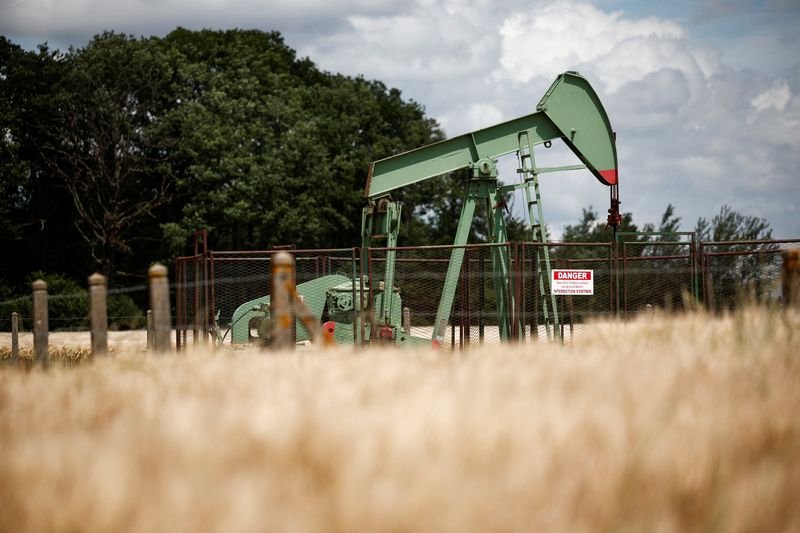
    This image depicts the decline in global crude oil exports in 2024, highlighting shifts in trade routes due to geopolitical factors, reflecting the article's analysis of changing oil flows.
    Graph illustrating the decline in global crude exports and shifting trade routes - Global Banking & Finance Review
    Why waste money on news and opinion when you can access them for free?

    Take advantage of our newsletter subscription and stay informed on the go!

    Subscribe

    Quick Summary

    In 2024, global crude exports fell 2% due to weak demand and reshuffled trade routes, with significant shifts in oil flows from the Middle East to Europe and increased U.S. exports.

    Global Crude Exports Decline as Trade Routes Shift Again

    By Arathy Somasekhar

    HOUSTON (Reuters) - The volume of global crude exports in 2024 declined 2%, the first fall since the COVID-19 pandemic, shipping data showed, due to weak demand growth and as refinery and pipeline changes reshuffled trade routes.

    Global crude flows have been roiled for a second year by war in Ukraine and the Middle East, with tanker shipments rerouted and suppliers and buyers split into regions. Middle East oil exports to Europe declined and more U.S. oil and South American oil went to Europe. Russian oil that formerly went to Europe has been redirected to India and China.

    These shifts have become more pronounced as oil refineries have shut in Europe amid continued attacks on Red Sea shipping. Middle Eastern crude exports to Europe tumbled 22% in 2024, ship tracking data from researcher Kpler showed.

    The shift in oil flows "is creating opportunistic alliances," said Adi Imsirovic, an energy consultant and former oil trader, citing closer relationships between Russia and India, China and Iran that are reshaping oil trade.

    "Oil is no longer flowing along the least cost curve, and the first consequence is tight shipping, which raises freight prices and eventually cuts into refining margins," said Imsirovic.

    The U.S. with its surging shale production has been a winner in the global oil trade. The country exports 4 million barrels per day, boosting its share of global oil trade to 9.5%, behind Saudi Arabia and Russia.

    Trade routes have also been reshuffled by startup of the massive Dangote oil refinery in Nigeria, expansion of Canada's Trans Mountain pipeline to the country's west coast, falling oil output in Mexico, a brief halt in Libyan oil exports, and rising Guyana volumes.

    In 2025, suppliers will keep grappling with falling fuel demand in major consuming centers such as China. Also, more countries will use less oil and more gas, while renewable energy will keep growing.

    "This kind of uncertainty and volatility is the new normal - 2019 was the last 'normal' year," said Erik Broekhuizen, a marine research and consulting manager at ship brokering firm Poten & Partners.

    FURTHER ROOM TO FALL

    Changes in oil demand forecasts have pulled the rug out from historical long-term oil market growth assumptions, Broekhuizen said.

    "In the past, you could always say that there will be healthy long-term demand growth, and that solves a lot of problems over time. That can't really be taken for granted anymore," he said, citing weaker demand in China and Europe.

    China's imports fell about 3% last year with gains in electric and plug-in hybrid cars, and growing use of liquefied natural gas in its heavy trucking. In Europe, lower refining capacity and government mandates to reduce carbon have shaved crude imports by about 1%.

    NEW SUPPLIERS, NEW ROUTES

    Europe's refiners initially cut Russian imports and increased both U.S. and Middle Eastern oil purchases after Russia invaded Ukraine. Attacks on ships in the Red Sea following Israel's war on Gaza pushed up the cost of shipping from the Middle East. Refiners stepped up imports from the U.S. and Guyana to record highs.

    Exports from Iraq declined 82,000 bpd and United Arab Emirates exports fell 35,000 bpd in 2024. Europe added 162,000 bpd from Guyana and 60,000 bpd from the U.S.

    Escalating Middle East conflict around late September and fears of more sanctions from U.S. President-elect Donald Trump led to tighter supply and higher prices of Iranian oil. This prompted Chinese refiners to look at oil from West Africa and Brazil.

    NEW REFINERIES, PIPELINES

    Nigeria's new Dangote refinery consumed enough domestic supply to keep around 13% of Nigeria's crude exports in the country in 2024, up from 2% in 2023, according to Kpler. That cut Nigeria's exports to Europe, and Nigeria also imported 47,000 bpd of U.S. WTI, unusual for a major net exporter.

    New refining capacity ramping up in Bahrain, Oman and Iraq as well as Dos Bocas in Mexico are also likely to soak up oil production in those regions.

    In Canada, the expanded Trans Mountain pipeline can now ship an extra 590,000 bpd to the Pacific Coast, lifting the nation's waterborne exports to a record 550,000 bpd in 2024.

    This has had a ripple effect: With increased Canadian crude flowing to the U.S. West Coast, refineries in the region bought less Saudi Arabian and Latin American crude, while direct shipments from Canada to Asian countries have cut re-exports from the U.S. Gulf Coast.

    While China has been Canada's major buyer, the crude has also found importers in India, Japan, South Korea and Brunei and more Asian refiners are likely to purchase the oil, analysts noted.

    Trump's proposed 25% tariff on Canadian and Mexican crude, the top two foreign oil suppliers to the U.S., could also change oil flows in 2025, analysts said.

    (Reporting by Arathy Somasekhar in Houston, Enes Tunagur in London and Siyi Liu in Singapore; Editing by David Gregorio)

    Key Takeaways

    • •Global crude exports fell 2% in 2024, the first decline since the pandemic.
    • •Middle East oil exports to Europe dropped by 22%.
    • •U.S. oil exports to Europe increased, reshaping trade routes.
    • •New refineries and pipelines are altering global oil flows.
    • •Geopolitical tensions continue to impact oil trade dynamics.

    Frequently Asked Questions about Global crude exports dip as trade routes reshuffle again

    1What is the main topic?

    The article discusses the decline in global crude exports in 2024 and the reshuffling of trade routes due to weak demand and geopolitical tensions.

    2How have trade routes changed?

    Middle East oil exports to Europe have declined, while U.S. and South American oil exports to Europe have increased.

    3What impact does this have on the oil market?

    The reshuffling of trade routes has led to tighter shipping, higher freight prices, and changes in refining margins.

    More from Finance

    Explore more articles in the Finance category

    Image for If US attacks, Iran says it will strike US bases in the region
    If US attacks, Iran says it will strike US bases in the region
    Image for Olympics-Biathlon-Winter Games bring tourism boost to biathlon hotbed of northern Italy
    Olympics-Biathlon-Winter Games bring tourism boost to biathlon hotbed of northern Italy
    Image for Analysis-Bitcoin loses Trump-era gains as crypto market volatility signals uncertainty
    Analysis-Bitcoin loses Trump-era gains as crypto market volatility signals uncertainty
    Image for NatWest closes in on $3.4 billion takeover of wealth manager Evelyn, Sky News reports
    NatWest closes in on $3.4 billion takeover of wealth manager Evelyn, Sky News reports
    Image for Stellantis-backed ACC drops plans for Italian, German gigafactories, union says
    Stellantis-backed ACC drops plans for Italian, German gigafactories, union says
    Image for US wants Russia, Ukraine to end war by summer, Zelenskiy says
    US wants Russia, Ukraine to end war by summer, Zelenskiy says
    Image for Russia launches massive attack on Ukraine's energy system, Zelenskiy says
    Russia launches massive attack on Ukraine's energy system, Zelenskiy says
    Image for Russia launched 400 drones, 40 missiles to hit Ukraine's energy sector, Zelenskiy says
    Russia launched 400 drones, 40 missiles to hit Ukraine's energy sector, Zelenskiy says
    Image for The Kyiv family, with its pets and pigs, defying Russia and the cold
    The Kyiv family, with its pets and pigs, defying Russia and the cold
    Image for Two Polish airports reopen after NATO jets activated over Russian strikes on Ukraine
    Two Polish airports reopen after NATO jets activated over Russian strikes on Ukraine
    Image for French miner Eramet's finance chief steps aside temporarily, days after CEO ouster
    French miner Eramet's finance chief steps aside temporarily, days after CEO ouster
    Image for Ukraine's Zelenskiy calls for faster action on air defence, repairs to grid
    Ukraine's Zelenskiy calls for faster action on air defence, repairs to grid
    View All Finance Posts
    Previous Finance PostParcel locker firm InPost Q4 volumes rise 20%
    Next Finance PostThyssenkrupp Nucera extends CEO contract, names new CFO