
Headlines
Far Right Could Enable Law for First Time in Modern German History
Published by Global Banking & Finance Review®
Posted on January 31, 2025
3 min readLast updated: January 26, 2026
Add as preferred source on Google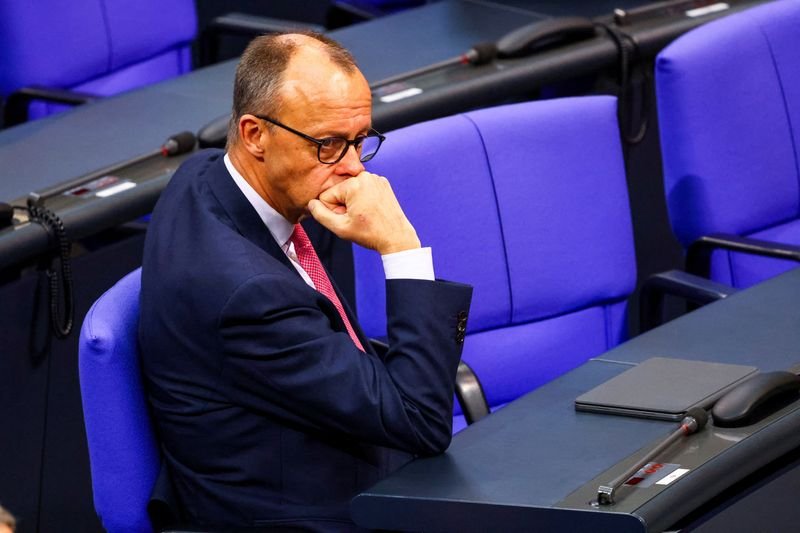
Published by Global Banking & Finance Review®
Posted on January 31, 2025
3 min readLast updated: January 26, 2026
Add as preferred source on GoogleGermany's parliament might pass a law with far-right support, focusing on immigration controls, marking a historic political shift.
By Thomas Escritt and Andreas Rinke
BERLIN (Reuters) - Germany's parliament could pass a law thanks to far-right support for the first time in the country's post-war history on Friday, if an opposition motion on tightening immigration controls passes with the backing of the Alternative for Germany (AfD) party.
Conservative leader Friedrich Merz, whose bloc leads in polls ahead of a Feb. 23 election, says tightening migration controls is a necessary response to a series of high-profile killings in public spaces by people with an immigrant background.
Chancellor Olaf Scholz's Social Democrats and the Greens, partners in his minority government, say they will vote against a proposal that they believe will not solve the problem.
The debate was due start at 11:15 a.m. (1015 GMT), with the vote outcome likely around two hours later.
In the last minutes before the debate, the government parties and their Free Democrat former coalition partners appeared to be working on a compromise that would prevent the vote from taking place by referring it back to committees, party officials told Reuters.
The draft has very little chance of ever coming into force: Merz's own allies in regional governments have said they will vote against any law that passes with far-right backing when it reaches the upper house of parliament.
But the role of the AfD in passing it would be symbolically important in Germany in that it would break a taboo among mainstream parties.
Scholz warned in a podcast for Die Zeit newspaper that Germany risked following Austria into a world where the far-right Freedom Party becomes the dominant political force.
"Everyone said they wouldn't join with the Freedom Party," he said. "And now we might get a Freedom Party chancellor."
Earlier in the week, Germany's two main churches also came out against the law, saying it would not have prevented a stabbing attack in Bavaria or a car-ramming attack on a Christmas market in Magdeburg - an embarrassment for Merz's Christian Democrats.
Even party colleagues have doubts. "The narrative for the SPD and Greens is obvious: for the first time since the 1933 enabling law (which brought Nazi dictator Adolf Hitler to power), there is a majority composed of right radicals, conservatives and liberals in a German parliament. Dreadful!" one former conservative legislator told Reuters.
A DeutschlandTrend poll for public television found that 67% of voters backed permanent border controls, including more than half of the Social Democrats' supporters.
Merz says it would be the government's fault if, because of their opposition, a law he deems necessary passes thanks to the backing of the AfD, currently second in polls.
"We are always ready to discuss the draft law," Merz told Bild newspaper. "This is about our country, not party political tactics."
(Reporting by Thomas Escritt; Editing by Alex Richardson)
The law being discussed involves tightening immigration controls, which could be passed with far-right support for the first time in modern German history.
Chancellor Olaf Scholz's Social Democrats and the Greens are leading the opposition against the proposed law, arguing it will not effectively address the issues at hand.
The AfD's support for the law would symbolically break a long-standing taboo among mainstream parties in Germany, marking a significant shift in the political landscape.
A DeutschlandTrend poll found that 67% of voters support permanent border controls, including a majority of Social Democrats' supporters.
Chancellor Scholz warned that Germany risks following Austria's path, where the far-right Freedom Party could become a dominant political force.
Explore more articles in the Headlines category
