Search
00
GBAF Logo
trophy
Top StoriesInterviewsBusinessFinanceBankingTechnologyInvestingTradingVideosAwardsMagazinesHeadlinesTrends

Subscribe to our newsletter

Get the latest news and updates from our team.

Global Banking & Finance Review®

Global Banking & Finance Review® - Subscribe to our newsletter

Company

    GBAF Logo
    • About Us
    • Profile
    • Privacy & Cookie Policy
    • Terms of Use
    • Contact Us
    • Advertising
    • Submit Post
    • Latest News
    • Research Reports
    • Press Release
    • Awards▾
      • About the Awards
      • Awards TimeTable
      • Submit Nominations
      • Testimonials
      • Media Room
      • Award Winners
      • FAQ
    • Magazines▾
      • Global Banking & Finance Review Magazine Issue 79
      • Global Banking & Finance Review Magazine Issue 78
      • Global Banking & Finance Review Magazine Issue 77
      • Global Banking & Finance Review Magazine Issue 76
      • Global Banking & Finance Review Magazine Issue 75
      • Global Banking & Finance Review Magazine Issue 73
      • Global Banking & Finance Review Magazine Issue 71
      • Global Banking & Finance Review Magazine Issue 70
      • Global Banking & Finance Review Magazine Issue 69
      • Global Banking & Finance Review Magazine Issue 66
    Top StoriesInterviewsBusinessFinanceBankingTechnologyInvestingTradingVideosAwardsMagazinesHeadlinesTrends

    Global Banking & Finance Review® is a leading financial portal and online magazine offering News, Analysis, Opinion, Reviews, Interviews & Videos from the world of Banking, Finance, Business, Trading, Technology, Investing, Brokerage, Foreign Exchange, Tax & Legal, Islamic Finance, Asset & Wealth Management.
    Copyright © 2010-2026 GBAF Publications Ltd - All Rights Reserved. | Sitemap | Tags | Developed By eCorpIT

    Editorial & Advertiser disclosure

    Global Banking & Finance Review® is an online platform offering news, analysis, and opinion on the latest trends, developments, and innovations in the banking and finance industry worldwide. The platform covers a diverse range of topics, including banking, insurance, investment, wealth management, fintech, and regulatory issues. The website publishes news, press releases, opinion and advertorials on various financial organizations, products and services which are commissioned from various Companies, Organizations, PR agencies, Bloggers etc. These commissioned articles are commercial in nature. This is not to be considered as financial advice and should be considered only for information purposes. It does not reflect the views or opinion of our website and is not to be considered an endorsement or a recommendation. We cannot guarantee the accuracy or applicability of any information provided with respect to your individual or personal circumstances. Please seek Professional advice from a qualified professional before making any financial decisions. We link to various third-party websites, affiliate sales networks, and to our advertising partners websites. When you view or click on certain links available on our articles, our partners may compensate us for displaying the content to you or make a purchase or fill a form. This will not incur any additional charges to you. To make things simpler for you to identity or distinguish advertised or sponsored articles or links, you may consider all articles or links hosted on our site as a commercial article placement. We will not be responsible for any loss you may suffer as a result of any omission or inaccuracy on the website.

    Home > Finance > Smaller economies' medium term default risk could have risen
    Finance

    Smaller economies' medium term default risk could have risen

    Published by Global Banking & Finance Review®

    Posted on January 30, 2025

    2 min read

    Last updated: January 26, 2026

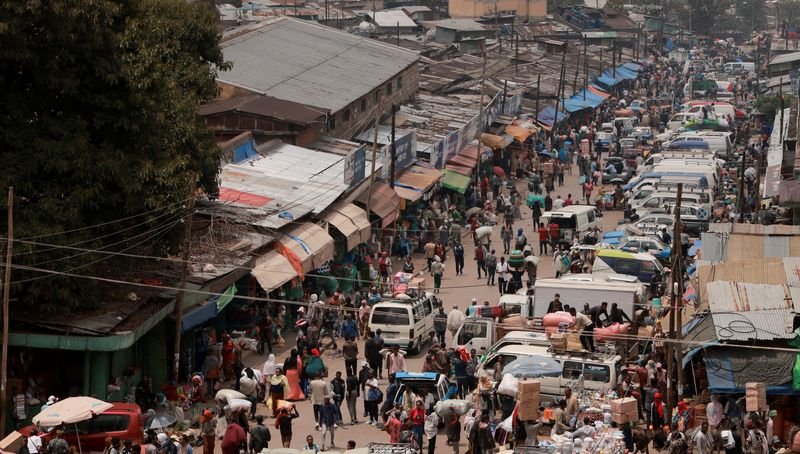
    The image highlights the financial challenges faced by smaller economies, particularly in Africa, related to medium-term default risks. It underscores the implications of rising debt and economic instability as discussed in the article.
    Illustration depicting increased default risk for smaller economies - Global Banking & Finance Review
    Why waste money on news and opinion when you can access them for free?

    Take advantage of our newsletter subscription and stay informed on the go!

    Subscribe

    Tags:debt sustainabilityemerging marketsfinancial crisiscredit growth

    Quick Summary

    Smaller economies, especially in Africa, face rising default risks due to global factors. The G20 Common Framework may offer debt relief solutions.

    Increased Default Risk Looms for Smaller Economies in the Medium Term

    By Karin Strohecker

    LONDON (Reuters) - Some of the world's smallest economies, especially in Africa, could be at increased risk of being unable to pay their debts in the medium term, even as developing nations have emerged from a series of sovereign defaults, financial adviser Lazard said.

    The pandemic, the Ukraine war, and domestic strife have led governments, including Argentina, Ecuador, Ethiopia, Ghana, Sri Lanka and Zambia, to default since 2020.

    Investors do not expect more sovereign defaults in 2025, but credit metrics for smaller and riskier countries, known as frontier markets, point to a structural weakening, especially for governments in Africa, Thomas Lambert, of Lazard's sovereign advisory team, said.

    The U.S. Federal Reserve decided to hold its benchmark interest rate - the basis for global borrowing rates - on Wednesday. Markets expect it to be steady until June as Donald Trump's second administration has left the policy backdrop extremely uncertain.

    Lambert said the refinancing profile for the most fragile nations was modest this year, but that could change between 2026-28 when larger repayments will be due.

    "So it is plausible that in these years a new cycle could start again,” Lambert, one of the authors of the Lazard paper published this week on the subject, told Reuters.

    High U.S. rates add to the difficulties of refinancing, and the paper said the "distance to default has diminished for many countries".

    Emerging market investors have in recent months turned to frontier markets to shelter from the impact of Trump's return to the White House that is expected to heighten trade tensions with Mexico and China - two of the major investment destinations in the asset class.

    The reprieve in potential defaults offered an opportunity to revisit the G20 Common Framework, a debt relief initiative launched during the COVID-19 pandemic to help heavily-indebted countries. It has been criticised following slow restructurings.

    (Reporting by Karin Strohecker, editing by Barbara Lewis)

    Key Takeaways

    • •Smaller economies face increased default risk in the medium term.
    • •Frontier markets show structural weakening, particularly in Africa.
    • •High U.S. rates complicate refinancing for fragile nations.
    • •The G20 Common Framework offers potential debt relief.
    • •Investors are cautious due to geopolitical uncertainties.

    Frequently Asked Questions about Smaller economies' medium term default risk could have risen

    1What factors have led to increased default risks for smaller economies?

    The pandemic, the Ukraine war, and domestic strife have caused several governments, including Argentina, Ecuador, Ethiopia, Ghana, Sri Lanka, and Zambia, to default since 2020.

    2What is the outlook for sovereign defaults in 2025?

    Investors do not expect more sovereign defaults in 2025; however, credit metrics for smaller and riskier countries indicate a structural weakening.

    3How do high U.S. interest rates affect refinancing for smaller economies?

    High U.S. rates complicate refinancing efforts, and the distance to default has diminished for many countries, making it harder for them to manage their debts.

    4What is the G20 Common Framework?

    The G20 Common Framework is a debt relief initiative launched during the COVID-19 pandemic aimed at assisting heavily-indebted countries.

    5When are larger repayments due for fragile nations?

    The refinancing profile for the most fragile nations is modest this year, but it could change between 2026-28 when larger repayments will be due.

    More from Finance

    Explore more articles in the Finance category

    Image for If US attacks, Iran says it will strike US bases in the region
    If US attacks, Iran says it will strike US bases in the region
    Image for Olympics-Biathlon-Winter Games bring tourism boost to biathlon hotbed of northern Italy
    Olympics-Biathlon-Winter Games bring tourism boost to biathlon hotbed of northern Italy
    Image for Analysis-Bitcoin loses Trump-era gains as crypto market volatility signals uncertainty
    Analysis-Bitcoin loses Trump-era gains as crypto market volatility signals uncertainty
    Image for NatWest closes in on $3.4 billion takeover of wealth manager Evelyn, Sky News reports
    NatWest closes in on $3.4 billion takeover of wealth manager Evelyn, Sky News reports
    Image for Stellantis-backed ACC drops plans for Italian, German gigafactories, union says
    Stellantis-backed ACC drops plans for Italian, German gigafactories, union says
    Image for US pushes Russia and Ukraine to end war by summer, Zelenskiy says
    US pushes Russia and Ukraine to end war by summer, Zelenskiy says
    Image for Russia launches massive attack on Ukraine's energy system, Zelenskiy says
    Russia launches massive attack on Ukraine's energy system, Zelenskiy says
    Image for Russia launched 400 drones, 40 missiles to hit Ukraine's energy sector, Zelenskiy says
    Russia launched 400 drones, 40 missiles to hit Ukraine's energy sector, Zelenskiy says
    Image for The Kyiv family, with its pets and pigs, defying Russia and the cold
    The Kyiv family, with its pets and pigs, defying Russia and the cold
    Image for Two Polish airports reopen after NATO jets activated over Russian strikes on Ukraine
    Two Polish airports reopen after NATO jets activated over Russian strikes on Ukraine
    Image for French miner Eramet's finance chief steps aside temporarily, days after CEO ouster
    French miner Eramet's finance chief steps aside temporarily, days after CEO ouster
    Image for Ukraine's Zelenskiy calls for faster action on air defence, repairs to grid
    Ukraine's Zelenskiy calls for faster action on air defence, repairs to grid
    View All Finance Posts
    Previous Finance PostSterling treads water as markets look to Bank of England
    Next Finance PostOlympics-IOC candidate Coe says he should have handled prize money issue differently