
Headlines
Cyprus Leaders Seek New Crossing Points Along 1974 Ceasefire Line
Published by Global Banking & Finance Review®
Posted on January 20, 2025
2 min readLast updated: January 27, 2026
Add as preferred source on Google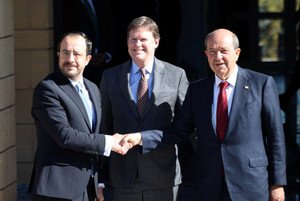
Published by Global Banking & Finance Review®
Posted on January 20, 2025
2 min readLast updated: January 27, 2026
Add as preferred source on GoogleCyprus leaders plan new checkpoints along the 1974 ceasefire line to enhance economic ties and trust. The UN hosted discussions in Nicosia.
NICOSIA (Reuters) - Leaders of war-divided Cyprus said on Monday they supported opening further crossing points along the 1974 ceasefire line splitting the island to meet popular demand, and would work with the United Nations towards that objective.
President Nikos Christodoulides, the Greek Cypriot leader, and Turkish Cypriot leader Ersin Tatar discussed the modalities of new checkpoints at a rare meeting hosted by the United Nations in the divided capital Nicosia.
But they stopped short of announcing additional easings in movement over the truce line that runs along a roughly east-west trajectory on the eastern Mediterranean island.
"The leaders both believe that the opening of new crossing points is critical to promote people-to-people contacts, strengthen economic ties, and build trust," a statement released by the U.N. on behalf of both leaders said.
It said another meeting would follow in the coming days.
Monday's meeting followed months of negotiations by aides focused on where and how many checkpoints should open in addition to the nine crossings used by thousands daily along a 180-km (116-mile) ceasefire line.
It is estimated more than a million people use the checkpoints to cross each year either for employment, education or personal reasons; bonds have tightened since the first pedestrian crossing was opened in April 2003 after almost three decades of isolation.
Greek Cypriots say they do not object to opening one checkpoint advocated by Turkish Cypriots in the east of Nicosia, the island's ethnically-split capital.
They say that in a spirit of reciprocity Turkish Cypriots should agree to opening a checkpoint which Greek Cypriots want. They have identified two, aimed at easing the isolation of some Greek Cypriot-populated regions caused by the jagged geography of the demarcation line.
Greek and Turkish Cypriot political parties have repeatedly urged the political leadership to seal a deal, and civilians added their own call on Friday, a typically busy day where traversing a few metres of boundary can take up to an hour.
"People want to be on both sides, and there is nothing they can do to stop us," said Androulla Shati, a peace activist.
Cyprus was partitioned after a Turkish invasion in 1974, triggered by a coup attempt on the island sponsored by Greece’s then-ruling military junta after years of inter-communal violence. Peace talks collapsed in mid-2017.
(Reporting by Michele Kambas; editing by Mark Heinrich)
President Nikos Christodoulides and Turkish Cypriot leader Ersin Tatar discussed the modalities of new checkpoints along the 1974 ceasefire line to meet popular demand.
There are currently nine crossings used by thousands daily along a 180-km (116-mile) ceasefire line.
Greek Cypriots support opening a checkpoint in the east of Nicosia, advocating for reciprocity from Turkish Cypriots in opening a checkpoint they desire.
It is estimated that more than a million people use the checkpoints to cross each year for employment, education, or personal reasons.
The leaders believe that opening new crossing points is critical to promote people-to-people contacts, strengthen economic ties, and build trust.
Explore more articles in the Headlines category

