Search
00
GBAF Logo
trophy
Top StoriesInterviewsBusinessFinanceBankingTechnologyInvestingTradingVideosAwardsMagazinesHeadlinesTrends

Subscribe to our newsletter

Get the latest news and updates from our team.

Global Banking and Finance Review

Global Banking and Finance Review - Subscribe to our newsletter

Company

    GBAF Logo
    • About Us
    • Profile
    • Privacy & Cookie Policy
    • Terms of Use
    • Contact Us
    • Advertising
    • Submit Post
    • Latest News
    • Research Reports
    • Press Release
    • Awards▾
      • About the Awards
      • Awards TimeTable
      • Submit Nominations
      • Testimonials
      • Media Room
      • Award Winners
      • FAQ
    • Magazines▾
      • Global Banking & Finance Review Magazine Issue 79
      • Global Banking & Finance Review Magazine Issue 78
      • Global Banking & Finance Review Magazine Issue 77
      • Global Banking & Finance Review Magazine Issue 76
      • Global Banking & Finance Review Magazine Issue 75
      • Global Banking & Finance Review Magazine Issue 73
      • Global Banking & Finance Review Magazine Issue 71
      • Global Banking & Finance Review Magazine Issue 70
      • Global Banking & Finance Review Magazine Issue 69
      • Global Banking & Finance Review Magazine Issue 66
    Top StoriesInterviewsBusinessFinanceBankingTechnologyInvestingTradingVideosAwardsMagazinesHeadlinesTrends

    Global Banking & Finance Review® is a leading financial portal and online magazine offering News, Analysis, Opinion, Reviews, Interviews & Videos from the world of Banking, Finance, Business, Trading, Technology, Investing, Brokerage, Foreign Exchange, Tax & Legal, Islamic Finance, Asset & Wealth Management.
    Copyright © 2010-2026 GBAF Publications Ltd - All Rights Reserved. | Sitemap | Tags | Developed By eCorpIT

    Editorial & Advertiser disclosure

    Global Banking and Finance Review is an online platform offering news, analysis, and opinion on the latest trends, developments, and innovations in the banking and finance industry worldwide. The platform covers a diverse range of topics, including banking, insurance, investment, wealth management, fintech, and regulatory issues. The website publishes news, press releases, opinion and advertorials on various financial organizations, products and services which are commissioned from various Companies, Organizations, PR agencies, Bloggers etc. These commissioned articles are commercial in nature. This is not to be considered as financial advice and should be considered only for information purposes. It does not reflect the views or opinion of our website and is not to be considered an endorsement or a recommendation. We cannot guarantee the accuracy or applicability of any information provided with respect to your individual or personal circumstances. Please seek Professional advice from a qualified professional before making any financial decisions. We link to various third-party websites, affiliate sales networks, and to our advertising partners websites. When you view or click on certain links available on our articles, our partners may compensate us for displaying the content to you or make a purchase or fill a form. This will not incur any additional charges to you. To make things simpler for you to identity or distinguish advertised or sponsored articles or links, you may consider all articles or links hosted on our site as a commercial article placement. We will not be responsible for any loss you may suffer as a result of any omission or inaccuracy on the website.

    Home > Finance > Analysis-Baltics brace to cut decades-old ties to Russian grid
    Finance

    Analysis-Baltics brace to cut decades-old ties to Russian grid

    Published by Global Banking and Finance Review

    Posted on February 7, 2025

    5 min read

    Last updated: January 26, 2026

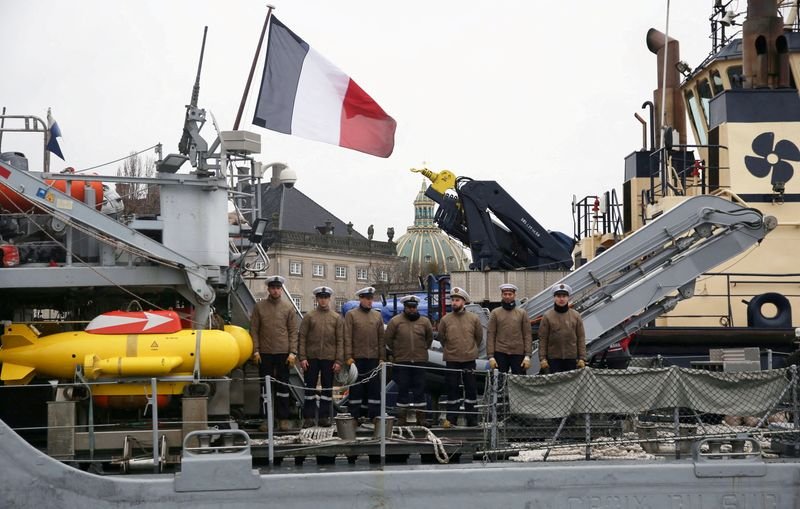
    The image illustrates the Baltic states' significant shift from the Russian power grid to the EU grid, representing a critical move for regional security and energy independence amid geopolitical tensions.
    Baltic states' energy transition from Russian grid to EU integration - Global Banking & Finance Review

    Quick Summary

    The Baltic states are cutting ties with Russia's grid to join the EU network, enhancing security amid regional tensions.

    Baltics Prepare to Sever Russian Grid Ties for EU Integration

    By Andrius Sytas and Marek Strzelecki

    VILNIUS (Reuters) - The Baltic states are set to sever ties with Russia's power grid that date back to the 1950s, and instead integrate further with the European Union, as the suspected sabotage of subsea cables has spurred efforts to strengthen regional security.

    Estonia, Latvia and Lithuania will disconnect from the IPS/UPS joint network early on Saturday and, subject to last-minute tests, they will synchronise with the EU's grid on Sunday.

    Plans to decouple from Russia's grid, debated for decades, gained momentum following Moscow's annexation of Crimea in 2014.

    The three countries have spent nearly 1.6 billion euros ($1.66 billion) since 2018, largely tapping EU funds, to upgrade their grids to prepare.

    For Russia, the decoupling means its Kaliningrad exclave, located between Lithuania, Poland and the Baltic Sea, will be cut off from Russia's main grid, leaving it to maintain its power system alone.

    Moscow has also had to spend 100 billion roubles ($1.03 billion) on preparations, including building several gas-fired power plants.

    "We have taken all measures to ensure the uninterrupted, reliable operation of our electricity system," the Kremlin's spokesperson said.

    UKRAINE INVASION

    The countries have long relied on their former imperial overlord Russia to control frequencies and stabilise networks to avoid outages.

    But in 2022, following Moscow's invasion of Ukraine, the three staunch supporters of Kyiv took the first major step in switching toward the EU for power by halting purchases of electricity from Russia.

    Ukraine hopes to join the EU and NATO, steps the Baltics took in 2004.

    “Decoupling from Russia doesn’t make us vulnerable. On the contrary, it makes us safer," Lithuania's energy minister Zygimantas Vaiciunas told Reuters.

    “At moments like these, threats are not decreasing. They should be expected. We are preparing for all eventualities, up to the most radical scenarios. And we have plans to manage every risk.”

    The Baltic Sea region is on high alert after power cable, telecom links and gas pipeline outages between the Baltics and Sweden or Finland. All were believed to have been caused by ships dragging anchors along the seabed following Russia's invasion of Ukraine.

    The Estlink 2 subsea power link between Estonia and Finland was severed in December by what Finland said was an anchor of a tanker carrying Russian oil, which prompted a rise in power prices.

    Russia denies involvement.

    CRUCIAL LINKS

    Decoupling from Russia makes the Baltics even more reliant on the subsea links between them.

    "Damage to the infrastructure is the main worry. This is where the risks lie and that this is what the worst case scenario could be," ICIS analyst Stefan Konstantinov said.

    The Baltics' links to Russia’s grid, which date back to 1956, meant Russia stabilised and supported their joint power system and that they could, if needed, purchase power from Russian coal- or gas-powered plants. That safety net is being removed.

    For the EU, it also means its grid will have to absorb any disturbances in the Baltics that still rely on power imports via three subsea links with Sweden and Finland as well as an overground connection to Poland.

    "The link between Poland and Lithuania is absolutely crucial ... we are protecting it at any price," a spokesperson for Polish grid operator PSE told Reuters.

    "A couple of years ago, we only worried about trees falling on power lines. After the suspicious sea cables damage, all is different."

    SECURITY CONCERNS

    The Estlink 2 incident spurred regional governments to review energy infrastructure security in the Baltics, Lithuania's Vaiciunas told Reuters.

    Poland and the Baltics have deployed navy assets, elite police units, patrol boats and helicopters to boost security. The Lithuanian military has begun drills to protect the overland connection to Poland.

    Most notably, the NATO military alliance has boosted its presence with frigates, aircraft, and naval drones.

    Damage to both remaining undersea cables would force Baltics to restart their outdated and expensive gas and shale oil plants that have largely sat idle for years.

    Analysts say that could push power prices to levels not seen since the invasion of Ukraine, when energy prices soared.

    Lithuanian grid operator Litgrid said all major Baltic power plants would need to be kept working if the subsea links were forced offline.

    That could make baseload power prices jump to 200-500 euros per megawatt hour from the current 70-100 euros, utilities and analysts have estimated.

    “We will not end up without electricity, but (the subsea link disruptions) would pose certain challenges to consumers, to the industry,” Latvian President Edgars Rinkevics told Reuters.

    Domestically, the three countries have been busy planning for a smooth transition to the EU grid.

    Lithuania's energy ministry told Reuters it has drawn up contingency plans whereby some heavy energy users, such as factories, could be temporarily disconnected from the grid in the event of power shortages, to maintain essential supplies.

    Indicating public anxiety about the switch, sales of diesel power generators increased tenfold in Estonia in January, public broadcaster ERR reported.

    "Outages are very unlikely to occur, but just in case, be prepared to go without electricity for short periods", the Estonian government said.

    ($1 = 97.1000 roubles)

    ($1 = 0.9634 euros)

    (Reporting by Andrius Sytas in Vilnius, Marek Strzelecki in Warsaw, Essi Lehto in Helsinki, Forrest Crellin in Paris, Nerijus Adomaitis in Oslo, Janis Laizans in northeastern Poland, the Moscow bureau, editing by Michael Kahn, Nina Chestney, Jason Neely and Barbara Lewis)

    Key Takeaways

    • •Baltic states to disconnect from Russian grid.
    • •Integration with EU grid set for completion.
    • •Security concerns prompt infrastructure reviews.
    • •Kaliningrad to manage power independently.
    • •NATO presence increased in the Baltic Sea region.

    Frequently Asked Questions about Analysis-Baltics brace to cut decades-old ties to Russian grid

    1What is the main topic?

    The main topic is the Baltic states disconnecting from the Russian power grid to integrate with the EU network.

    2Why are the Baltics decoupling from Russia's grid?

    The decoupling aims to enhance regional security and align with EU power systems amid tensions with Russia.

    3What are the security concerns?

    There are concerns about infrastructure damage, especially subsea cables, amid geopolitical tensions.

    Why waste money on news and opinion when you can access them for free?

    Take advantage of our newsletter subscription and stay informed on the go!

    Subscribe

    More from Finance

    Explore more articles in the Finance category

    Image for Russia's 2026 GDP growth is seen at 1-1.3%, deputy PM Novak says
    Russia's 2026 GDP growth is seen at 1-1.3%, deputy PM Novak says
    Image for UK grocery inflation eases to nine‑month low of 4.0%, says Worldpanel
    UK grocery inflation eases to nine‑month low of 4.0%, says Worldpanel
    Image for UK watchdog reports consumer savings of $215 million in premium finance
    UK watchdog reports consumer savings of $215 million in premium finance
    Image for Germany eyes lasers, spy satellites in military space spending splurge
    Germany eyes lasers, spy satellites in military space spending splurge
    Image for Orsted sells European onshore business to CIP for $1.7 billion
    Orsted sells European onshore business to CIP for $1.7 billion
    Image for Fintech broker Plus500 expands into US prediction markets with Kalshi deal
    Fintech broker Plus500 expands into US prediction markets with Kalshi deal
    Image for Non-Traditional Properties and Lending: What Buyers Should Know Before Applying
    Non-Traditional Properties and Lending: What Buyers Should Know Before Applying
    Image for Kyiv mayor says 1,170 residential buildings without heating after Russian attack
    Kyiv mayor says 1,170 residential buildings without heating after Russian attack
    Image for Publicis forecasts seventh straight year of outperformance as tech pivot drives growth
    Publicis forecasts seventh straight year of outperformance as tech pivot drives growth
    Image for Dulux maker AkzoNobel's trimmed outlook falls short of market view
    Dulux maker AkzoNobel's trimmed outlook falls short of market view
    Image for Airbus CEO says supply chains are a challenge
    Airbus CEO says supply chains are a challenge
    Image for Siltronic's preliminary results beat estimates, flags weak 2026
    Siltronic's preliminary results beat estimates, flags weak 2026
    View All Finance Posts
    Previous Finance PostNetflix considers bid for F1's US broadcast rights, media reports
    Next Finance PostCVC sounds out Italy over plans to buy Telecom Italia stake, sources say