Search
00
GBAF Logo
trophy
Top StoriesInterviewsBusinessFinanceBankingTechnologyInvestingTradingVideosAwardsMagazinesHeadlinesTrends

Subscribe to our newsletter

Get the latest news and updates from our team.

Global Banking & Finance Review®

Global Banking & Finance Review® - Subscribe to our newsletter

Company

    GBAF Logo
    • About Us
    • Profile
    • Privacy & Cookie Policy
    • Terms of Use
    • Contact Us
    • Advertising
    • Submit Post
    • Latest News
    • Research Reports
    • Press Release
    • Awards▾
      • About the Awards
      • Awards TimeTable
      • Submit Nominations
      • Testimonials
      • Media Room
      • Award Winners
      • FAQ
    • Magazines▾
      • Global Banking & Finance Review Magazine Issue 79
      • Global Banking & Finance Review Magazine Issue 78
      • Global Banking & Finance Review Magazine Issue 77
      • Global Banking & Finance Review Magazine Issue 76
      • Global Banking & Finance Review Magazine Issue 75
      • Global Banking & Finance Review Magazine Issue 73
      • Global Banking & Finance Review Magazine Issue 71
      • Global Banking & Finance Review Magazine Issue 70
      • Global Banking & Finance Review Magazine Issue 69
      • Global Banking & Finance Review Magazine Issue 66
    Top StoriesInterviewsBusinessFinanceBankingTechnologyInvestingTradingVideosAwardsMagazinesHeadlinesTrends

    Global Banking & Finance Review® is a leading financial portal and online magazine offering News, Analysis, Opinion, Reviews, Interviews & Videos from the world of Banking, Finance, Business, Trading, Technology, Investing, Brokerage, Foreign Exchange, Tax & Legal, Islamic Finance, Asset & Wealth Management.
    Copyright © 2010-2026 GBAF Publications Ltd - All Rights Reserved. | Sitemap | Tags | Developed By eCorpIT

    Editorial & Advertiser disclosure

    Global Banking & Finance Review® is an online platform offering news, analysis, and opinion on the latest trends, developments, and innovations in the banking and finance industry worldwide. The platform covers a diverse range of topics, including banking, insurance, investment, wealth management, fintech, and regulatory issues. The website publishes news, press releases, opinion and advertorials on various financial organizations, products and services which are commissioned from various Companies, Organizations, PR agencies, Bloggers etc. These commissioned articles are commercial in nature. This is not to be considered as financial advice and should be considered only for information purposes. It does not reflect the views or opinion of our website and is not to be considered an endorsement or a recommendation. We cannot guarantee the accuracy or applicability of any information provided with respect to your individual or personal circumstances. Please seek Professional advice from a qualified professional before making any financial decisions. We link to various third-party websites, affiliate sales networks, and to our advertising partners websites. When you view or click on certain links available on our articles, our partners may compensate us for displaying the content to you or make a purchase or fill a form. This will not incur any additional charges to you. To make things simpler for you to identity or distinguish advertised or sponsored articles or links, you may consider all articles or links hosted on our site as a commercial article placement. We will not be responsible for any loss you may suffer as a result of any omission or inaccuracy on the website.

    Home > Finance > Use of cash after COVID-19
    Finance

    Use of cash after COVID-19

    Published by Gbaf News

    Posted on April 13, 2020

    4 min read

    Last updated: January 21, 2026

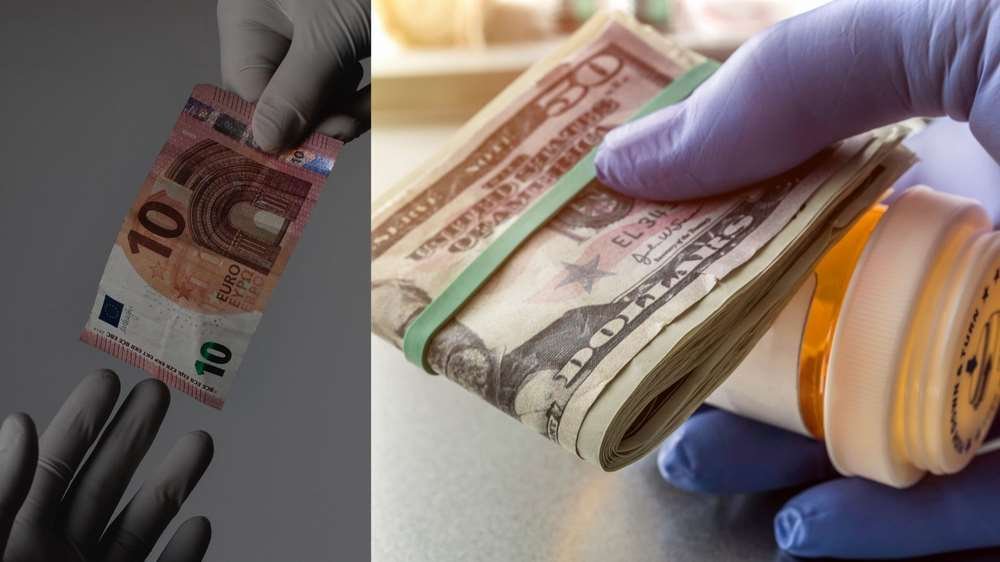
    This image illustrates the transition from cash to contactless payments in a post-COVID-19 world. It highlights the growing acceptance of digital transactions and the evolving landscape of finance as consumers adapt to new payment methods.
    A cashless payment symbol representing the shift from cash to digital methods post-COVID-19 - Global Banking & Finance Review
    Why waste money on news and opinion when you can access them for free?

    Take advantage of our newsletter subscription and stay informed on the go!

    Subscribe

    By Bernard Foot, Strategy Analyst at Payment HSM as a Service provider MYHSM, wonders whether COVID-19 will have a permanent impact on the usage of cash.

    Recently, I looked at the question of whether using cash presented more of a COVID-19 health risk than using contactless. There was no convincing evidence either way, but it’s clear that there’s a sentiment against handling cash and that both consumers and merchants favour a move to contactless and online.

    The move away from cash is nothing new of course, and the writing has been on the wall for many years. But the news of its demise has been premature, as cash had been clinging on to its role in commercial life. The question of the day, though, is whether the temporary antipathy inspired by COVID-19 will translate into a longer-term effect, and what that might look like.

    Of course, if there’s an accelerated desire to move away from cash, then it will likely impact other changes that are already underway within the payments industry. I am thinking particularly of the EU’s Strong Customer Authentication (SCA) requirements. SCA is already being implemented for online banking and is due to be implemented for purchases in 2020. Some consumers will see the attraction of enhanced security and so be more inclined to use their cards. But getting people to accept the need for security is a bit like getting kids to eat their vegetables – you know it’s good for them, but they don’t necessarily like it.

    Bernard Foot

    Bernard Foot

    So, the key factor moving forward will depend on how frictionless the implementation of SCA is – implementers must meet certain requirements, but they can choose how they do that. The latest version of 3-D Secure (now called EMV 3DS 2.2) is designed to enable payment institutions to meet the requirements of SCA and has put a lot of thought into keeping the process frictionless and avoiding customer-terminated transactions. By providing a lot more information about the transaction and the cardholder to the issuer it allows distinctions to be made between low-risk transactions (such as buying a loaf of bread from the shop across the road) and high-risk transactions (purchasing a hi-tech TV in a country you’ve never been active in before). The low-risk transactions should go through transparently, while the high-risk transaction will require some kind of multi-factor authentication, most likely involving a mobile device.

    If SCA for online banking is anything to go by, this will probably accelerate the use of mobile devices for payments – 3DS implementations will probably result in the mobile device being a lot more convenient to use than plastic. Here’s how my online banking works if I am using a PC:

    • Go to the online banking website
    • Enter my 10-digit user ID
    • Enter digits of my PIN
    • Enter characters of my password
    • Wait for an authorisation code to be sent to my mobile device
    • Enter the 6-digit authorisation code into the PC

    Whereas, if I am using my mobile phone:

    • Start the app
    • Enter a 6-digit password

    That’s it. Even if I’m already working at my PC, it’s easier to pick up the mobile to do online banking.

    This brings me to another question that interests me – if there is a switch from cash to card or mobile, will the switch be to credit or debit accounts? The statistics and predictions are quite conclusive – the crown goes to debit. For example, UK Finance’s UK Card Payments 2018 report predicts that by 2027 each UK adult will make 5 transactions a month by credit card, but 28 by debit card (as opposed to 5 and 20 in 2017).

    Personally, I’m a bit bemused by this preference for debit cards. I’m from the generation that grew up with credit cards. So, although I never used the (horribly expensive) credit capability, I got used to enjoying interest-free deferred payment, being able to check my statement before making payments, making a single consolidated payment, cardholder rewards, and protection against fraudulent, disputed, or failed transactions. The only time I use a debit card is to make ATM withdrawals.

    But a younger colleague had a diametrically opposite view – she always used her debit card. For her it was far more important to always know the state of her finances without the possible surprise of a big bill at the end of the month.

    So, the preference for debit probably has a generational effect, but I guess the biggest factor is the lower barrier to getting a debit card compared to getting a credit card.

    What do I conclude from all this? There will probably be a move away from cash accelerated by COVID-19, which will typically be manifested as debit transactions using mobile devices.

    More from Finance

    Explore more articles in the Finance category

    Image for Greenland foreign minister says US talks are positive but the outcome remains uncertain
    Greenland foreign minister says US talks are positive but the outcome remains uncertain
    Image for Hungary's opposition Tisza promises wealth tax, euro adoption in election programme
    Hungary's opposition Tisza promises wealth tax, euro adoption in election programme
    Image for Farmers report 'catastrophic' damage to crops as Storm Marta hits Spain and Portugal
    Farmers report 'catastrophic' damage to crops as Storm Marta hits Spain and Portugal
    Image for If US attacks, Iran says it will strike US bases in the region
    If US attacks, Iran says it will strike US bases in the region
    Image for Olympics-Biathlon-Winter Games bring tourism boost to biathlon hotbed of northern Italy
    Olympics-Biathlon-Winter Games bring tourism boost to biathlon hotbed of northern Italy
    Image for Analysis-Bitcoin loses Trump-era gains as crypto market volatility signals uncertainty
    Analysis-Bitcoin loses Trump-era gains as crypto market volatility signals uncertainty
    Image for NatWest closes in on $3.4 billion takeover of wealth manager Evelyn, Sky News reports
    NatWest closes in on $3.4 billion takeover of wealth manager Evelyn, Sky News reports
    Image for Stellantis-backed ACC drops plans for Italian, German gigafactories, union says
    Stellantis-backed ACC drops plans for Italian, German gigafactories, union says
    Image for US pushes Russia and Ukraine to end war by summer, Zelenskiy says
    US pushes Russia and Ukraine to end war by summer, Zelenskiy says
    Image for Russia launches massive attack on Ukraine's energy system, Zelenskiy says
    Russia launches massive attack on Ukraine's energy system, Zelenskiy says
    Image for Russia launched 400 drones, 40 missiles to hit Ukraine's energy sector, Zelenskiy says
    Russia launched 400 drones, 40 missiles to hit Ukraine's energy sector, Zelenskiy says
    Image for The Kyiv family, with its pets and pigs, defying Russia and the cold
    The Kyiv family, with its pets and pigs, defying Russia and the cold
    View All Finance Posts
    Previous Finance PostHow COVID-19 killed cash and what will replace it.
    Next Finance PostMeasures to face the COVID-19 financial situation