Search
00
GBAF Logo
trophy
Top StoriesInterviewsBusinessFinanceBankingTechnologyInvestingTradingVideosAwardsMagazinesHeadlinesTrends

Subscribe to our newsletter

Get the latest news and updates from our team.

Global Banking & Finance Review®

Global Banking & Finance Review® - Subscribe to our newsletter

Company

    GBAF Logo
    • About Us
    • Profile
    • Privacy & Cookie Policy
    • Terms of Use
    • Contact Us
    • Advertising
    • Submit Post
    • Latest News
    • Research Reports
    • Press Release
    • Awards▾
      • About the Awards
      • Awards TimeTable
      • Submit Nominations
      • Testimonials
      • Media Room
      • Award Winners
      • FAQ
    • Magazines▾
      • Global Banking & Finance Review Magazine Issue 79
      • Global Banking & Finance Review Magazine Issue 78
      • Global Banking & Finance Review Magazine Issue 77
      • Global Banking & Finance Review Magazine Issue 76
      • Global Banking & Finance Review Magazine Issue 75
      • Global Banking & Finance Review Magazine Issue 73
      • Global Banking & Finance Review Magazine Issue 71
      • Global Banking & Finance Review Magazine Issue 70
      • Global Banking & Finance Review Magazine Issue 69
      • Global Banking & Finance Review Magazine Issue 66
    Top StoriesInterviewsBusinessFinanceBankingTechnologyInvestingTradingVideosAwardsMagazinesHeadlinesTrends

    Global Banking & Finance Review® is a leading financial portal and online magazine offering News, Analysis, Opinion, Reviews, Interviews & Videos from the world of Banking, Finance, Business, Trading, Technology, Investing, Brokerage, Foreign Exchange, Tax & Legal, Islamic Finance, Asset & Wealth Management.
    Copyright © 2010-2026 GBAF Publications Ltd - All Rights Reserved. | Sitemap | Tags | Developed By eCorpIT

    Editorial & Advertiser disclosure

    Global Banking & Finance Review® is an online platform offering news, analysis, and opinion on the latest trends, developments, and innovations in the banking and finance industry worldwide. The platform covers a diverse range of topics, including banking, insurance, investment, wealth management, fintech, and regulatory issues. The website publishes news, press releases, opinion and advertorials on various financial organizations, products and services which are commissioned from various Companies, Organizations, PR agencies, Bloggers etc. These commissioned articles are commercial in nature. This is not to be considered as financial advice and should be considered only for information purposes. It does not reflect the views or opinion of our website and is not to be considered an endorsement or a recommendation. We cannot guarantee the accuracy or applicability of any information provided with respect to your individual or personal circumstances. Please seek Professional advice from a qualified professional before making any financial decisions. We link to various third-party websites, affiliate sales networks, and to our advertising partners websites. When you view or click on certain links available on our articles, our partners may compensate us for displaying the content to you or make a purchase or fill a form. This will not incur any additional charges to you. To make things simpler for you to identity or distinguish advertised or sponsored articles or links, you may consider all articles or links hosted on our site as a commercial article placement. We will not be responsible for any loss you may suffer as a result of any omission or inaccuracy on the website.

    Home > Investing > UK must be more clear-eyed about risks of China investment – Labour
    Investing

    UK must be more clear-eyed about risks of China investment – Labour

    Published by maria gbaf

    Posted on September 28, 2021

    3 min read

    Last updated: February 1, 2026

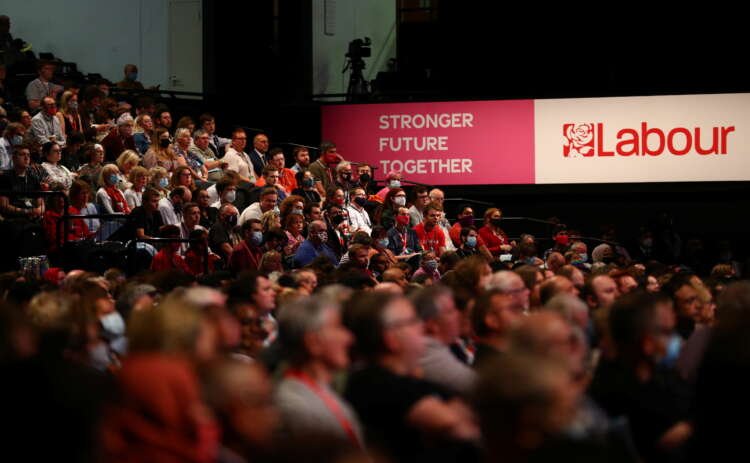
    Image from the Labour Party conference highlighting concerns about Chinese investment in critical UK sectors like nuclear energy, reflecting national security issues.
    Labour Party leaders discussing risks of Chinese investment in UK industries - Global Banking & Finance Review
    Why waste money on news and opinion when you can access them for free?

    Take advantage of our newsletter subscription and stay informed on the go!

    Subscribe

    Quick Summary

    Labour urges the UK to be clear-eyed about China investment risks, focusing on national security in key industries like nuclear energy.

    Labour Calls for Clearer UK Strategy on China Investment Risks

    By William James

    BRIGHTON, England (Reuters) – Britain needs to be more “clear-eyed” about the risks of Chinese investment in key industries like nuclear energy, the opposition Labour Party said on Monday accusing Prime Minister Boris Johnson of an inconsistent strategy toward Beijing.

    In an interview with Reuters, Labour foreign policy chief Lisa Nandy said Chinese involvement in the British economy could not be stopped entirely, but that key industries needed to be better protected in the interest of national security.

    “Some people have likened it to a Cold War type situation. It isn’t, it’s far more complicated than that,” Nandy said on the sidelines of Labour’s annual party conference in Brighton, southern England.

    “We’ve got to be far more clear-eyed about the risks to the UK posed by Chinese investment and the Chinese government.”

    Johnson’s government has itself expressed nation security concerns about Chinese investment, excluding telecoms firm Huawei from its next generation mobile network.

    But China remains involved in the construction of new nuclear power plant in southern England, working with French firm EDF.

    That, coming alongside government criticism of both China’s role in the former British colony of Hong Kong and its treatment of Uyghur Muslims in its western Xinjiang region, amounted to a muddled foreign policy dictated by conflicting government departments, Nandy said.

    “It’s no wonder that the foreign secretary hasn’t been taken seriously in Beijing, when he – now she – can’t even be taken seriously around the cabinet table,” Nandy said, referring to foreign minister Liz Truss and her predecessor Dominic Raab.

    Earlier this year, Johnson’s government voted down parliamentary proposals seeking to ban the government striking trade deals with countries that commit genocide, after a row that focused on China.

    A Labour government, which is not in prospect until 2024 if Johnson seeks a full term as prime minister, would echo U.S. legislation and ban the import of goods produced using modern slavery, Nandy said, citing cotton from Xinjiang as an example.

    China has repeatedly rejected accusations of genocide and human rights abuses in Xinjiang.

    Nandy’s call for a harder line on China echoes that of influential critics in Johnson’s own party, who, while welcoming his approach to Huawei, have expressed concern about the nuclear power project and the treatment of Uyghur Muslims.

    “There’s been a consensus that has formed across the House of Commons that is realistic about Chinese involvement in Britain, but is also quite clear-eyed about it,” Nandy said. “Unfortunately, it doesn’t yet include the government.”

    (Reporting by William James; Editing by Robert Birsel)

    Key Takeaways

    • •Labour urges UK to assess risks of Chinese investment.
    • •Focus on protecting key industries like nuclear energy.
    • •Criticism of Boris Johnson's inconsistent China policy.
    • •Concerns over human rights issues in Xinjiang.
    • •Consensus in Commons on realistic view of China involvement.

    Frequently Asked Questions about UK must be more clear-eyed about risks of China investment – Labour

    1What is the main topic?

    The article discusses the Labour Party's call for the UK to be more cautious about the risks of Chinese investment in key industries.

    2What industries are of concern?

    Key industries like nuclear energy are highlighted as areas needing protection from Chinese investment.

    3What is Labour's stance on human rights?

    Labour criticizes China's human rights record, particularly in Xinjiang, and suggests banning imports linked to modern slavery.

    More from Investing

    Explore more articles in the Investing category

    Image for Understanding the Factors Shaping Bitcoin’s Current Market Conditions
    Understanding the Factors Shaping Bitcoin’s Current Market Conditions
    Image for Understanding Investment Management Consulting Services in the U.S. Market
    Understanding Investment Management Consulting Services in the U.S. Market
    Image for The Role of DST Sponsors and Service Providers in Delaware Statutory Trusts
    The Role of DST Sponsors and Service Providers in Delaware Statutory Trusts
    Image for Understanding Self-Directed IRA Structures and Platform Models
    Understanding Self-Directed IRA Structures and Platform Models
    Image for 1031 Exchanges and Delaware Statutory Trusts: What Investors Need to Know
    1031 Exchanges and Delaware Statutory Trusts: What Investors Need to Know
    Image for Excellence in Innovation – Strategic Investment & Economic Transformation Egypt 2025
    Excellence in Innovation – Strategic Investment & Economic Transformation Egypt 2025
    Image for What Is the Average Pension Pot in the UK? (By Age)
    What Is the Average Pension Pot in the UK? (By Age)
    Image for From Money Printing to Market Surge: The Macro Forces Driving Crypto in 2026
    From Money Printing to Market Surge: The Macro Forces Driving Crypto in 2026
    Image for  Millennials Aren’t Ignoring Retirement. They’re Rebuilding It.
    Millennials Aren’t Ignoring Retirement. They’re Rebuilding It.
    Image for BridgeWise Launches FixedWise, the First AI Solution Bringing Granular Bond Intelligence to the European Market
    BridgeWise Launches FixedWise, the First AI Solution Bringing Granular Bond Intelligence to the European Market
    Image for Why Financial Advisors Are Rethinking Gold Allocations
    Why Financial Advisors Are Rethinking Gold Allocations
    Image for From Opaque to Investable: Yaniv Bertele's Blueprint for Transparent Alternatives
    From Opaque to Investable: Yaniv Bertele's Blueprint for Transparent Alternatives
    View All Investing Posts
    Previous Investing PostOPEC forecasts oil demand rebound before post-2035 plateau
    Next Investing PostCryptocurrencies see sixth straight week of inflows, led by bitcoin -CoinShares data