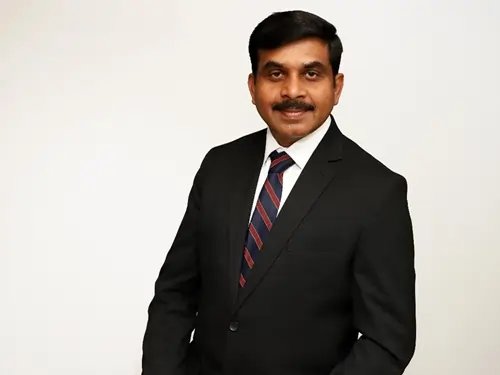
Gunaseelan Namperumal is a seasoned expert in PeopleSoft Enterprise Software, with over two decades of experience revolutionizing operations across the public and financial sectors. His deep understanding of enterprise resource planning (ERP) systems has enabled organizations to achieve significant efficiencies by automating complex processes. Under his leadership, institutions have streamlined operations, reduced costs, and met compliance demands while maintaining a strong focus on security and operational accuracy.
Throughout his career, Gunaseelan has spearheaded projects that have redefined how organizations manage workflows, driving better performance and reliability. His focus on automation and innovation has positioned him as a leader in the field, delivering measurable results that not only improve productivity but also create sustainable, future-ready solutions. In this interview, Gunaseelan shares his vision, highlights key milestones, and offers insights into how technology is shaping the future of enterprise management.
Tell us about your background and how you came to specialize in PeopleSoft Enterprise Software.
My career has always been driven by the desire to find solutions that drive efficiency and innovation. I hold a Bachelor’s degree in Engineering and a Post Graduate degree in Project Management, which provided me with a solid foundation in both technical and management principles. After completing my studies, I was drawn to enterprise technology, particularly ERP systems. PeopleSoft emerged as the perfect platform for automating complex processes, and I found its ability to scale and adapt across industries—whether public or financial—opened up significant opportunities for transformation. Over the years, I’ve worked on various projects that leveraged PeopleSoft’s capabilities to enhance payroll management, compliance, and workflow automation.
You’ve been instrumental in several automation initiatives, particularly in the public sector. Can you share a few examples?
One of the most impactful projects I led was the Direct Deposit Reversal Workflow Automation at a prominent state government finance office. This initiative focused on streamlining the process for handling direct deposit reversals, significantly reducing manual processing times from days to just a few hours. As a result, the state achieved over $221,000 in annual savings. This automation fundamentally transformed how payroll issues were managed for 250,000 state employees. By enhancing operational efficiency and minimizing error risks, we ensured compliance with regulatory requirements while also improving employee satisfaction through timely and accurate payroll processing.
In addition to my work with the state government finance office, I have also led significant automation initiatives at the Pennsylvania Higher Education Assistance Agency (PHEAA). For instance, I implemented an Accounts Payables workflow automation that involved designing a 4-level approval system tailored to specific departmental needs. This system drastically reduced processing times by over 80%, leading to faster payment approvals and improved vendor relationships. Furthermore, at Goldman Sachs, I focused on Payroll Tax Compliance Automation, which not only ensured adherence to regulatory requirements but also saved the organization millions in potential penalties and administrative costs through efficient management of payroll tax processes.
What about your experience in the financial sector? How has your work there evolved?
At Goldman Sachs, my focus was on Payroll Tax Compliance Automation. Financial organizations are highly regulated, and maintaining compliance while improving efficiency is a delicate balance. By automating payroll tax compliance processes, we ensured regulatory adherence while saving millions in potential penalties and administrative costs. The automation provided the company with the agility to adapt to rapid regulatory changes while safeguarding operational integrity.
You’ve also worked in the education sector. How did you apply your PeopleSoft expertise there?
Yes, at the Pennsylvania Higher Education Assistance Agency (PHEAA), a national provider of financial aid services for students, I led several transformative initiatives aimed at improving operational efficiency and streamlining financial processes. One of the key projects I spearheaded was the Accounts Payables workflow automation, which involved designing and implementing a 4-level approval system that accounted for department-specific approval paths. This automation significantly reduced manual intervention, cutting down processing times by over 80% and ensuring more accurate and faster payment approvals. It also brought greater transparency and accountability to the approval process, improving both vendor relationships and internal compliance.
Additionally, I worked on cloud integrations for PeopleSoft HCM and Finance applications, which enabled seamless data flow and improved system interoperability. By integrating PeopleSoft with external platforms such as Compliance360 and SilkRoad, we streamlined compliance and HR processes, including hiring and employee workflow automation.
Another major focus was the Single Sign-On (SSO) implementation, which enhanced security while simplifying system access for 5,000 employees. This implementation not only improved access control but also saved the agency over $1.5 million annually by reducing IT support costs, increasing employee productivity, and preventing potential security breaches. For instance, the SSO system protected sensitive financial data and ensured compliance with regulatory standards, providing an additional layer of security for student loan services.
Moreover, I led the automation of several critical workflows, including bank payment instruction batch processing and employee punch-in/punch-out systems, further optimizing operations and reducing manual effort. Each of these automation efforts contributed to an overall reduction in operational costs and enhanced the user experience, ultimately positioning PHEAA as a more efficient, secure, and modern organization.
How do you see automation evolving, particularly with the integration of AI and machine learning (ML) in PeopleSoft Enterprise Software?
AI and ML are gradually being integrated into ERP systems like PeopleSoft to enhance various functions. In PeopleSoft, AI/ML applications focus on improving operational efficiency, automating routine tasks, and providing predictive insights, especially for payroll management, inventory, supply chain, and compliance checks. Oracle has introduced PeopleSoft Chatbots through its Oracle Digital Assistant platform to handle routine HR tasks like answering inquiries, processing time-off requests, and submitting expense reports. PeopleSoft HCM can also use ML models to predict employee attrition, talent acquisition needs, and workforce planning. Analyzing historical data offers insights into turnover rates, promotion likelihood, and training needs.
In the Financials module, AI can enhance budgeting and forecasting by analyzing historical data and external factors to predict future expenses, revenues, and capital needs. This proactive approach reduces risks and improves decision-making processes. Fraud detection is another area where AI can add value, as machine learning models continuously analyze payroll data in real-time to flag suspicious activities, making systems more secure and efficient. I’m already exploring AI-driven models for automating compliance checks, and I foresee these technologies playing an increasingly important role.
You’re recognized as a leader in technology innovation. What do you think are the most important trends shaping the future of enterprise technology?
Real-time data processing and cloud-based integrations are two key trends. Organizations are increasingly moving towards systems that process data as it happens, enabling quick, data-driven decisions. Cloud computing, with its scalability, will be essential for managing the massive computational power required by AI models. Automation will continue to play a critical role in streamlining operations, reducing costs, and improving accuracy. I believe organizations that can adopt and integrate these technologies into their core systems will have a significant competitive advantage.
You’re an IEEE Senior Member. How has this recognition impacted your career, and what role does it play in your professional growth?
Being an IEEE Senior Member has been a tremendous honor and a significant part of my professional development. IEEE provides a global platform for collaboration, enabling me to connect with other technology leaders. The exchange of ideas and knowledge in this community keeps me at the forefront of industry trends and innovations. It’s also a great avenue for mentorship, allowing me to guide and inspire the next generation of technology professionals, which I find deeply rewarding.
Lastly, how do you give back to the community and the industry?
Giving back has always been a priority for me. I mentor young professionals and frequently speak at conferences and educational institutions to share my experiences and product knowledge gained over decades. I’m also involved in initiatives that promote technology literacy and diversity in the tech sector. By fostering a culture of learning and innovation, I aim to contribute to a more inclusive and forward-thinking technology industry.
Gunaseelan Namperumal’s work across the public, financial, and education sectors showcases the transformative power of PeopleSoft Enterprise Software. His leadership in driving automation, enhancing compliance, and integrating advanced technologies like AI and ML sets a benchmark for innovation in enterprise resource planning. As industries evolve, Gunaseelan’s forward-thinking approach and commitment to efficiency, security, and operational excellence will continue to shape the future of enterprise technology.