Search
00
GBAF Logo
trophy
Top StoriesInterviewsBusinessFinanceBankingTechnologyInvestingTradingVideosAwardsMagazinesHeadlinesTrends

Subscribe to our newsletter

Get the latest news and updates from our team.

Global Banking and Finance Review

Global Banking & Finance Review

Company

    GBAF Logo
    • About Us
    • Profile
    • Privacy & Cookie Policy
    • Terms of Use
    • Contact Us
    • Advertising
    • Submit Post
    • Latest News
    • Research Reports
    • Press Release
    • Awards▾
      • About the Awards
      • Awards TimeTable
      • Submit Nominations
      • Testimonials
      • Media Room
      • Award Winners
      • FAQ
    • Magazines▾
      • Global Banking & Finance Review Magazine Issue 79
      • Global Banking & Finance Review Magazine Issue 78
      • Global Banking & Finance Review Magazine Issue 77
      • Global Banking & Finance Review Magazine Issue 76
      • Global Banking & Finance Review Magazine Issue 75
      • Global Banking & Finance Review Magazine Issue 73
      • Global Banking & Finance Review Magazine Issue 71
      • Global Banking & Finance Review Magazine Issue 70
      • Global Banking & Finance Review Magazine Issue 69
      • Global Banking & Finance Review Magazine Issue 66
    Top StoriesInterviewsBusinessFinanceBankingTechnologyInvestingTradingVideosAwardsMagazinesHeadlinesTrends

    Global Banking & Finance Review® is a leading financial portal and online magazine offering News, Analysis, Opinion, Reviews, Interviews & Videos from the world of Banking, Finance, Business, Trading, Technology, Investing, Brokerage, Foreign Exchange, Tax & Legal, Islamic Finance, Asset & Wealth Management.
    Copyright © 2010-2025 GBAF Publications Ltd - All Rights Reserved.

    Editorial & Advertiser disclosure

    Global Banking and Finance Review is an online platform offering news, analysis, and opinion on the latest trends, developments, and innovations in the banking and finance industry worldwide. The platform covers a diverse range of topics, including banking, insurance, investment, wealth management, fintech, and regulatory issues. The website publishes news, press releases, opinion and advertorials on various financial organizations, products and services which are commissioned from various Companies, Organizations, PR agencies, Bloggers etc. These commissioned articles are commercial in nature. This is not to be considered as financial advice and should be considered only for information purposes. It does not reflect the views or opinion of our website and is not to be considered an endorsement or a recommendation. We cannot guarantee the accuracy or applicability of any information provided with respect to your individual or personal circumstances. Please seek Professional advice from a qualified professional before making any financial decisions. We link to various third-party websites, affiliate sales networks, and to our advertising partners websites. When you view or click on certain links available on our articles, our partners may compensate us for displaying the content to you or make a purchase or fill a form. This will not incur any additional charges to you. To make things simpler for you to identity or distinguish advertised or sponsored articles or links, you may consider all articles or links hosted on our site as a commercial article placement. We will not be responsible for any loss you may suffer as a result of any omission or inaccuracy on the website.

    Home > Business > The importance of weather risk assessments in construction
    Business

    The importance of weather risk assessments in construction

    The importance of weather risk assessments in construction

    Published by Jessica Weisman-Pitts

    Posted on August 24, 2023

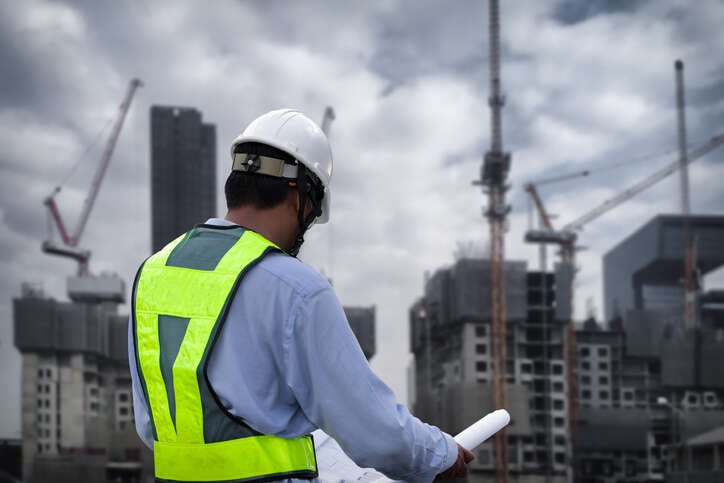
    Featured image for article about Business

    The importance of weather risk assessments in construction

    By Josh Graham, CEO & Founder of EHAB

    Introduction

    Construction projects are time-sensitive undertakings that are often reliant on good weather conditions. However, with global warming, the weather is notoriously unpredictable. It is increasingly difficult to make ten-day weather forecasts – which is a problem for the construction industry.

    According to research at Stanford, when the atmosphere warms by a few degrees Celsius, forecasts for reliable temperature, wind and rainfall become less reliable by about a day.

    That’s why it’s essential to incorporate weather risk assessments into your construction planning process.Read About Construction & Climate Change

    What Are Weather Risk Assessments?

    Weather risk assessments are analyses of the potential risks that severe weather events could pose to your project.

    It is a process by which a construction company can identify the risks associated with working in severe weather conditions and develop plans to mitigate those risks. The assessment should consider the risks posed by the specific weather hazards themselves and the risks associated with implementing safety protocols (e.g., shutting down work, evacuating sites, etc.) in response to those hazards.

    Potential Risks Associated with Extreme Weather Events

    Here are just a few of the potential risks that can be associated with severe weather.

    1. Schedule Delays

    If wet weather causes delays in the delivery of materials or the start of work, it can quickly throw off your entire construction schedule. This can lead to costly delays and lost productivity.

    2. Site Access Issues

    Bad weather can make accessing your construction site difficult or even impossible. This can further delay the start of work and add to the cost of getting materials to the site.

    3. Safety Hazards

    Wet conditions from flash floods can create safety hazards for both workers and passers-by. From slips and falls to traffic accidents, there are a variety of potential risks that need to be considered.

    4. Traffic Disruption

    Deliveries of materials and equipment are essential for continuing progress on site, poor weather can cause travel disruption, sometimes slowing deliveries or preventing them entirely. The same goes for people working at site, if the roads are congested this can eat into time where they could be clearing the site after a storm or snow event.

    Benefits of Weather Risk Assessments in Construction

    The two primary benefits of conducting a weather risk assessment are as follows.

    1. Mitigate Risks

    Incorporating weather risk assessments into your construction planning process is the best way to safeguard against the potential risks we have listed above. By taking the time to identify and understand the risks associated with bad weather, you can ensure that your construction project can withstand anything Mother Nature throws your way.

    You can also make contingency plans for how to deal with weather delays or safety hazards. By being prepared, you can minimise the impact of bad weather on your construction project.

    2. Solve Project Disputes

    Construction contracts often come with clauses that incorporate penalties for missed deadlines. However, if you can prove that the impact of the weather was extreme and outside the normal bounds of weather expected at that time of year then you will be able to claim and extend the programme, or in some cases recoup the cost as well.

    Read About Construction & Climate Change

    If weather delays cause disputes with your construction partners, accurate weather risk assessments can provide the documentation you need to support your position.

    How to Conduct Weather Risk Assessments

    A few different approaches can be taken when conducting weather risk assessments. The most important thing is to use an approach that makes sense for your project. Here are a few standard methods.

    1. Reviewing Historical Data

    One approach is to review historical data for your area to get an idea of what weather conditions you can expect during the construction period. This data can be sourced from local meteorological agencies or private companies specialising in weather data collection and analysis.

    2. Utilising Predictive Models

    Another option is to utilise predictive climate models that generate forecasts based on current conditions and historical data. These models can give you a pretty good idea of what weather conditions you can expect in the coming days, weeks, or months.

    3. Consulting Local Experts

    A third approach is to consult with local experts who have experience dealing with the local climate and its effects on construction projects. These experts might include meteorologists, climatologists, or even construction professionals who have worked in your area before.

    The frequency with which you should conduct weather risk assessments will depend on many factors, including the type of project being undertaken, the location of the project site and the weather conditions that are common in that area. In general, however, most experts recommend that companies conduct assessments yearly — preferably during peak construction season.

    Conclusion

    Weather risk assessments are an essential part of any construction planning process. By taking the time to identify and understand the risks associated with bad weather, construction companies can safeguard against costly delays, lost productivity, and other potential problems.

    Related Posts
    Why Email Deliverability is a Business Risk Your Company Can’t Afford to Ignore
    Why Email Deliverability is a Business Risk Your Company Can’t Afford to Ignore
    Five questions to ask before stepping into Employee Ownership
    Five questions to ask before stepping into Employee Ownership
    Cybersecurity as a Profit Engine: Turning Financial Services Security into Measurable Business Value
    Cybersecurity as a Profit Engine: Turning Financial Services Security into Measurable Business Value
    How Investability Helps Companies Navigate Transformational Times
    How Investability Helps Companies Navigate Transformational Times
    88% of UK and US organisations concerned about state-sponsored cyber attacks as national threat levels surge, IO research reveals
    88% of UK and US organisations concerned about state-sponsored cyber attacks as national threat levels surge, IO research reveals
    One in three SME leaders do not fully understand cash flow, despite 82% facing cash flow problems
    One in three SME leaders do not fully understand cash flow, despite 82% facing cash flow problems
    Inside the Company that Predicted the Remote Work Mega-Trend Before It Became Mainstream
    Inside the Company that Predicted the Remote Work Mega-Trend Before It Became Mainstream
    SEO Consultant Adrian Czarnoleski on How to Increase Business Value Before Exit
    SEO Consultant Adrian Czarnoleski on How to Increase Business Value Before Exit
    No SOC 2, No Deal: Why You’re Already Losing Clients - and What You Can Do About It
    No SOC 2, No Deal: Why You’re Already Losing Clients - and What You Can Do About It
    Jose Tolosa Guides Organizations Forward with Clarity, Purpose, and Integrity
    Jose Tolosa Guides Organizations Forward with Clarity, Purpose, and Integrity
    Reducing Freight Costs to Drive Global Trade Expansion
    Reducing Freight Costs to Drive Global Trade Expansion
    The Psychology of Music in the Modern Workplace
    The Psychology of Music in the Modern Workplace

    Why waste money on news and opinions when you can access them for free?

    Take advantage of our newsletter subscription and stay informed on the go!

    Subscribe

    More from Business

    Explore more articles in the Business category

    Revealed: Low-Cost/No-Cost Marketing Hacks For Results Oriented Businesses

    Revealed: Low-Cost/No-Cost Marketing Hacks For Results Oriented Businesses

    Finance teams still stuck in spreadsheets as manual processes stall digital transformation

    Finance teams still stuck in spreadsheets as manual processes stall digital transformation

    The Future of Remote & Hybrid Leadership: Leading With Data-Driven Foresight

    The Future of Remote & Hybrid Leadership: Leading With Data-Driven Foresight

    2025-2030: The Next Technological Innovations for Business

    2025-2030: The Next Technological Innovations for Business

    The CFO’s New Playbook: 5 Ways AI Is Redefining Finance with Insights from Rishi Oberoi

    The CFO’s New Playbook: 5 Ways AI Is Redefining Finance with Insights from Rishi Oberoi

    Revolutionizing Payments: Secure, Scalable, Sovereign

    Revolutionizing Payments: Secure, Scalable, Sovereign

    Why Trademark Abuse in Paid Search Is a Growing Risk for Financial Institutions

    Why Trademark Abuse in Paid Search Is a Growing Risk for Financial Institutions

    E-commerce Customer Service: Tips

    E-commerce Customer Service: Tips

    When to Automate Your Warehouse: The Tipping Point for Operations Growth

    When to Automate Your Warehouse: The Tipping Point for Operations Growth

    Hurt at Work? 5 Financial Facts You Need to Know

    Hurt at Work? 5 Financial Facts You Need to Know

    Against the Odds: Resilience in Consumer Subsectors Offers Prime Opportunities for Investors

    Against the Odds: Resilience in Consumer Subsectors Offers Prime Opportunities for Investors

    Empower Your Workforce With Financial Wellness This Labor Day

    Empower Your Workforce With Financial Wellness This Labor Day

    View All Business Posts
    Previous Business PostWhat is Vertical SAAS and How Will It Change the Space
    Next Business PostWhy now could be the time for virtual cards in B2B