Technology
The great recalibration: Why 2026 will mandate the hybrid wealth advisor
Published by Barnali Pal Sinha
Posted on March 6, 2026
5 min readLast updated: March 6, 2026

Published by Barnali Pal Sinha
Posted on March 6, 2026
5 min readLast updated: March 6, 2026
By Banesh Prabhu, CEO, IntellectAI
The global financial landscape is entering a period defined by exponential data complexity and accelerating capital movement. For too long, firms have relied on reactive AI, systems designed to analyze historical data and report on past performance. That utility is diminishing. The future belongs to prescriptive AI, autonomous systems that not only forecast but mandate the optimal next action and execute the closure.
Many financial institutions are pursuing digital transformation and celebrating incremental gains. However, this focus on marginal optimization is strategically insufficient. Your current technology approach is misaligned with the structural dynamics of the modern wealth market.
The Status Quo Trap: Two Points of Pressure
The industry is currently facing two significant, interconnected pressures stemming from a reliance on outdated systems and processes.
First, the Mass Affluent Gap. This demographic is growing rapidly and demands sophisticated, self-directed financial tools. When a firm offers a simple brokerage platform without embedded prescriptive insight, it fails to provide the necessary guardrails for portfolio safety and alignment. This absence of guidance translates directly into increased client attrition risk and missed opportunities for scaled growth.
Second, the HNW Productivity Crisis. For high-net-worth and private banking, the challenge centers on human capital. Industry estimates suggest a net deficit of nearly 20,000 qualified Relationship Managers (RMs) is looming in key global markets. The RMs currently retained are consumed by administrative overhead, from manual compliance checks to data synthesis. This drag on efficiency creates unnecessary operational risk and an unsustainable cost-to-serve ratio.
The solution is not about replacing the human element. The core of wealth management remains a deeply emotive, trust-based business, and the final advisory decision must firmly reside with the human.
The actual constraint is not capital; it is the cognitive bandwidth required to manage today's complexity. The modern RM cannot process the necessary insights alone, and the DIY customer cannot be left unguided.
This realization is the Contrarian Truth: we must cease building passive tools and start architecting autonomous, specialized agents or Digital Experts that manage the execution layer of complexity. This liberation allows the human advisor to focus exclusively on strategy, empathy, and client development.
The Mandate: Why Hybrid is Inevitable by 2026
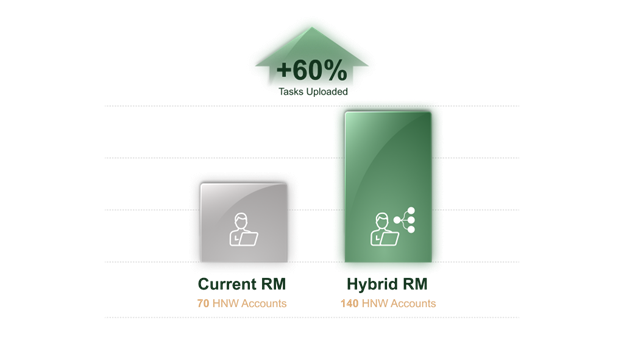
The shift to a unified, hybrid advisory model where humans and agents collaborate is no longer a strategic option, it is a regulatory and economic mandatory baseline.
To deploy this model, the industry must pivot from Reactive AI to Prescriptive AI in their core architecture.
The Architectural Imperative
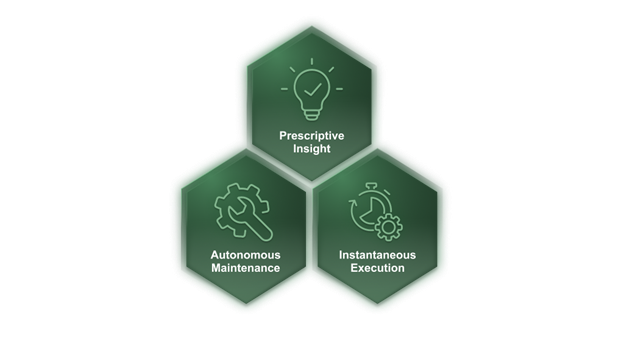
Implementing multi-agent systems requires an architecture that can:
● Provide prescriptive insights by combining data from multiple sources into actionable recommendations.
● Automate routine compliance, monitoring, and administrative tasks to reduce operational risk.
● Execute strategies, such as portfolio adjustments or trade rebalancing, in near real-time to maintain efficiency.
Purple Fabric as the Intelligence Layer
The prescriptive, multi-agent future is delivered through Purple Fabric—Intellect’s AI layer built on the eMACH.ai architecture. eMACH.ai provides a flexible, microservices-based infrastructure capable of scaling and real-time execution, while Purple Fabric integrates data and workflows to generate actionable insights for wealth advisors.”
These imperatives are delivered by specialized agents working in collaboration:
The Intellect AI Path Forward
To execute this architectural mandate, financial institutions require an open, composable technology foundation built on First Principles Thinking.
This is the architectural challenge Intellect AI has solved. The eMACH.ai platform is a proven example of an architecture engineered specifically to meet these imperatives. As an event-driven stack that is microservices and API-enabled, eMACH.ai can be implemented on any cloud and in any data environment. This architectural resilience is the necessary prerequisite to deploying the Digital Experts that power the new hybrid advisor model. We provide the platform required to deliver the prescriptive insight and autonomous maintenance capabilities that define competitive success in 2026.
Adopting production-grade, multi-agent systems will likely become essential for competitive viability in 2026. Firms that implement these systems earlier may gain operational efficiency and strengthen compliance capabilities relative to competitors who delay adoption.
The final question is not if you will pivot, but whether you can afford to wait until your competition has doubled their capacity and secured the audit trail of the future.
Engage with Intellect AI for a private, strategic session on how to deploy this mandated architecture, transforming your cognitive constraint into a durable competitive advantage.
Author:
By Banesh Prabhu, CEO, IntellectAI
Explore more articles in the Technology category