Investing
Stocks Pinned Near All-Time Highs, Yen Slips After Ueda’s Comments
Published by Jessica Weisman-Pitts
Posted on September 20, 2024
4 min readLast updated: January 29, 2026
Add as preferred source on Google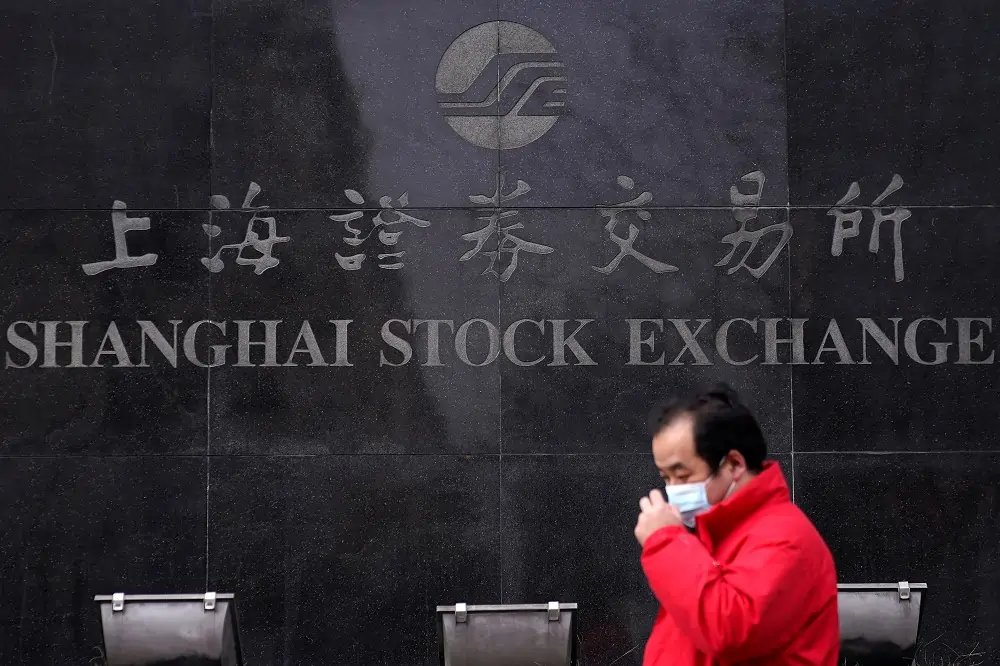
Published by Jessica Weisman-Pitts
Posted on September 20, 2024
4 min readLast updated: January 29, 2026
Add as preferred source on GoogleBy Sruthi Shankar and Stella Qiu
(Reuters) – World stocks hovered near record highs on Friday, underpinned by a big interest rate cut from the Federal Reserve earlier this week, while the yen eased after Bank of Japan Governor Kazuo Ueda tempered expectations around imminent rate hikes.
The dollar climbed 0.8% on the Japanese currency to 143.75 on the back of Ueda’s remarks having earlier fallen around 0.6% to 141.74 earlier after the BOJ kept interest rates steady in a widely expected move.
The yen lost ground as Ueda gave few hints on when the central bank could raise rates again and said uncertainty around the U.S. economy and market volatility could impact its policy moves.
The dollar steadied broadly after suffering losses earlier this week after the Fed delivered a 50 basis point rate cut and assured investors the jumbo-sized reduction was a measure to safeguard a resilient economy, rather than an emergency response to recent weakness in the labour market. [FRX/]
“It’s effectively Fed put. What Chairman Powell said was that they’re carefully watching the labour market, and if it slows too much they’re prepared to act,” said Marija Veitmane, head of equity research at State Street Global Markets.
Powell also said that he doesn’t see the labour market as inflationary – that’s a positive message for risky assets.
The MSCI index of world stocks edged up 0.1% after Thursday’s 1.6% jump took it to a record high. It was headed for a 1.5% weekly rise.
European stocks eased 0.6% from two-week highs, with automakers leading the slide after Mercedes-Benz cut its full-year profit margin target for the second time in less than two months, on the back of weakness in China. [.EU]
Wall Street futures were also slightly lower, after the S&P 500 surged to a record close on Thursday. [.N]
CHINA WOES
In China, the central bank kept its benchmark lending rates on hold, countering expectations for a move lower. Chinese blue chips edged up 0.2% but remained close to a seven-month low touched earlier in the week.
Markets were really hoping that the policy action taken by Chinese authorities will work. They’ve done a lot of little things but unfortunately not enough to turn around the slowdown in economic activities,” said State Street’s Veitmane.
It’s a big source of weakness globally.”
The onshore yuan strengthened to the highest in nearly 16 months after the People’s Bank of China’s surprise move, leading to intervention by state banks to prevent it from appreciating too fast.
Overnight, Wall Street finally had the time to digest the Federal Reserve’s first rate cut. With more easing to come, investors are wagering on continued U.S. economic growth and better-than-expected jobless claims data added to the view that the labour market remained healthy.
Markets imply a 40% chance the Fed will cut by another 50 basis points in November and have 73 basis points priced in by year-end. Rates are seen at 2.83% by the end of 2025, which is now thought to be the Fed’s estimate of neutral.
The British pound was buoyant at $1.3300, earlier rallying to the highest since March 2022.
Data on Friday showed British retail sales rose by a stronger-than-expected 1% in August and growth in July was revised up. The Bank of England held rates steady on Thursday.
Commodities also held onto their weekly gains. Gold touched a fresh record high at $2,610.10 an ounce and oil prices are set for their second straight week of gain.
Brent futures slipped 0.3% to $74.67 a barrel, but are still up 4.6% this week. [O/R]
(Reporting by Stella Qiu and Sruthi Shankar; Editing by Christopher Cushing, Jamie Freed, Sam Holmes and Gareth Jones)
Foreign exchange, or forex, refers to the global marketplace where currencies are traded. It involves the conversion of one currency into another for various purposes, including trade and investment.
A central bank is a financial institution responsible for managing a country's currency, money supply, and interest rates. It also oversees the banking system and implements monetary policy.
A rate cut is a reduction in the interest rate set by a central bank. This action is typically taken to stimulate economic growth by making borrowing cheaper.
Market volatility refers to the degree of variation in trading prices over time. High volatility indicates significant price fluctuations, while low volatility suggests stable prices.
An interest rate is the amount charged by a lender to a borrower for the use of assets, expressed as a percentage of the principal. It can influence economic activity and inflation.
Explore more articles in the Investing category