Search
00
GBAF Logo
trophy
Top StoriesInterviewsBusinessFinanceBankingTechnologyInvestingTradingVideosAwardsMagazinesHeadlinesTrends

Subscribe to our newsletter

Get the latest news and updates from our team.

Global Banking & Finance Review®

Global Banking & Finance Review® - Subscribe to our newsletter

Company

    GBAF Logo
    • About Us
    • Profile
    • Privacy & Cookie Policy
    • Terms of Use
    • Contact Us
    • Advertising
    • Submit Post
    • Latest News
    • Research Reports
    • Press Release
    • Awards▾
      • About the Awards
      • Awards TimeTable
      • Submit Nominations
      • Testimonials
      • Media Room
      • Award Winners
      • FAQ
    • Magazines▾
      • Global Banking & Finance Review Magazine Issue 79
      • Global Banking & Finance Review Magazine Issue 78
      • Global Banking & Finance Review Magazine Issue 77
      • Global Banking & Finance Review Magazine Issue 76
      • Global Banking & Finance Review Magazine Issue 75
      • Global Banking & Finance Review Magazine Issue 73
      • Global Banking & Finance Review Magazine Issue 71
      • Global Banking & Finance Review Magazine Issue 70
      • Global Banking & Finance Review Magazine Issue 69
      • Global Banking & Finance Review Magazine Issue 66
    Top StoriesInterviewsBusinessFinanceBankingTechnologyInvestingTradingVideosAwardsMagazinesHeadlinesTrends

    Global Banking & Finance Review® is a leading financial portal and online magazine offering News, Analysis, Opinion, Reviews, Interviews & Videos from the world of Banking, Finance, Business, Trading, Technology, Investing, Brokerage, Foreign Exchange, Tax & Legal, Islamic Finance, Asset & Wealth Management.
    Copyright © 2010-2026 GBAF Publications Ltd - All Rights Reserved. | Sitemap | Tags | Developed By eCorpIT

    Editorial & Advertiser disclosure

    Global Banking & Finance Review® is an online platform offering news, analysis, and opinion on the latest trends, developments, and innovations in the banking and finance industry worldwide. The platform covers a diverse range of topics, including banking, insurance, investment, wealth management, fintech, and regulatory issues. The website publishes news, press releases, opinion and advertorials on various financial organizations, products and services which are commissioned from various Companies, Organizations, PR agencies, Bloggers etc. These commissioned articles are commercial in nature. This is not to be considered as financial advice and should be considered only for information purposes. It does not reflect the views or opinion of our website and is not to be considered an endorsement or a recommendation. We cannot guarantee the accuracy or applicability of any information provided with respect to your individual or personal circumstances. Please seek Professional advice from a qualified professional before making any financial decisions. We link to various third-party websites, affiliate sales networks, and to our advertising partners websites. When you view or click on certain links available on our articles, our partners may compensate us for displaying the content to you or make a purchase or fill a form. This will not incur any additional charges to you. To make things simpler for you to identity or distinguish advertised or sponsored articles or links, you may consider all articles or links hosted on our site as a commercial article placement. We will not be responsible for any loss you may suffer as a result of any omission or inaccuracy on the website.

    Home > Investing > Stock, bonds punch-drunk after rout, watch interest rate signals
    Investing

    Stock, bonds punch-drunk after rout, watch interest rate signals

    Published by Jessica Weisman-Pitts

    Posted on June 14, 2022

    4 min read

    Last updated: February 6, 2026

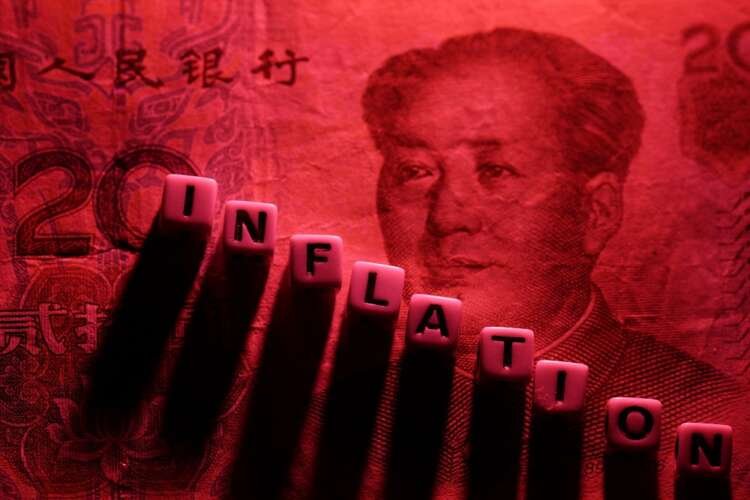
    This image illustrates the financial turmoil in stock and bond markets due to rising interest rates. It highlights the impact of monetary policy changes on investments, reflecting concerns over inflation and recession as discussed in the article.
    Stock market trends and interest rate signals amidst economic volatility - Global Banking & Finance Review
    Why waste money on news and opinion when you can access them for free?

    Take advantage of our newsletter subscription and stay informed on the go!

    Subscribe

    Tags:interest ratesfinancial markets

    By Sujata Rao

    LONDON (Reuters) – U.S. Treasury yields held near multi-year highs on Tuesday, while stock markets reeled from the previous session’s rout on signs that central banks’ action to curb inflation would tip the world economy into recession.

    Wall Street looks set for a slightly firmer open, though Nasdaq and S&P 500 futures gave up the bulk of gains made earlier in the day. Monday’s sell-off confirmed a so-called bear market for the S&P 500 index, which is down more than 20% from its most recent closing high.

    Expectations are growing that central banks, especially the U.S. Federal Reserve, may have to up the pace of policy-tightening to stamp on inflation, potentially sparking economic recession. Markets now see the Fed’s rate hike cycle peaking around 4%, rather than the 3% seen last month.

    (Graphic: https://fingfx.thomsonreuters.com/gfx/mkt/zjvqkgxgavx/Pasted%20image%201655115726737.png)

    Those expectations lifted U.S. 10-year borrowing costs, the benchmark interest rate for the global economy, as high as 3.44% on Monday, a 2011 peak.

    While yields slipped on Tuesday to around 3.3% they remain some 180 basis points (bps) above end-2021 levels.

    With the Fed due to start a two-day meeting later on Tuesday, markets waited to see if it could raise rates by a bigger-than-expected 75 bps, a possibility flagged by several investment banks, including Goldman Sachs.

    That move, which would be the biggest increase since 1994, is also almost fully priced for Wednesday.

    That repricing has pummelled assets that benefited from rock-bottom interest rates – stocks, crypto, junk-rated bonds and emerging markets.

    “Quite simply, when we see monetary tightening the order of what we are seeing globally, something is going to break,” said Timothy Graf, head of EMEA macro strategy at State Street.

    “Stock markets are reflecting the reality of the first-order effect of tighter financial conditions,” Graf said, predicting that with U.S. stock valuations still above COVID-time lows, there was more pain to come.

    “I think there are other shoes to drop,” he added.

    MSCI’s index of global shares slipped 0.3%, extending Monday’s 3.7% fall, while a pan-European equity index slumped 1% to March 2020 lows.

    Asian shares too fell 1%, catching up with Monday’s bleak Wall Street session, when the S&P 500 and the Nasdaq indexes lost 4% and 4.7% respectively.

    There was little let-up for crypto markets, where bitcoin and ether plumbed new 18-month lows, reacting to interest rate expectations and crypto lender Celsius Network’s decision to freeze withdrawals.

    Bitcoin which fell as low as $20,816, is down more than 50% this year.

    World markets latest lurch lower was triggered on Friday by U.S. data showing annual inflation to May shot up by 8.6%.

    The ensuing bond sell-off lifted two-year U.S. yields more than 50 basis points over two sessions, pushing them above 10-year borrowing costs on Monday in the so-called curve inversion that is considered a harbinger of recession.

    Two-year yields eased to 3.3% on Tuesday, versus its 3.43% peak, its highest since 2007. The yield curve remains flat reflecting concern for the world economy, especially as commodity prices offer little respite.

    Brent crude futures rose above $123 a barrel, supported by the tight oil supply picture.

    State Street’s Graf does not see recession as inevitable but acknowledged that “monetary tightening and the squeeze on real incomes from commodity prices mean the probability has gone up”.

    Markets are also having to contend with the dollar’s surge to new 20-year peaks against a basket of currencies.

    It eased 0.10% on Tuesday, offering respite to other currencies, but the yen continues to languish at 24-year lows against the greenback.

    With the Bank of Japan expanding bond purchases on Tuesday and unlikely to budge from ultra-low rates policy at its Friday meeting, yen respite looks unlikely.

    “Given Wednesday may see the Fed go 75 bps and flag more, while the BOJ on Friday will only flag more bond-buying, the yen is not going to stay at these levels for long. It’s going to get much, much worse,” Rabobank strategist Michael Every said.

    (Graphic: https://fingfx.thomsonreuters.com/gfx/mkt/zgpomdwllpd/King%20dollar.JPG)

    (Reporting by Sujata Rao; additional reporting by Scott Murdoch and Alun John in Hong Kong; Editing by David Evans and Alex Richardson)

    Frequently Asked Questions about Stock, bonds punch-drunk after rout, watch interest rate signals

    1What is a central bank?

    A central bank is a national institution that manages a country's currency, money supply, and interest rates. It oversees monetary policy and regulates the banking system.

    2What is inflation?

    Inflation is the rate at which the general level of prices for goods and services rises, eroding purchasing power. It is typically measured by the Consumer Price Index (CPI).

    3What is a bear market?

    A bear market is a period in which the prices of securities fall by 20% or more from recent highs, typically characterized by widespread pessimism and negative investor sentiment.

    4What is a yield curve inversion?

    A yield curve inversion occurs when short-term interest rates exceed long-term rates, often signaling an impending recession as it reflects investor expectations of declining economic growth.

    More from Investing

    Explore more articles in the Investing category

    Image for Understanding the Factors Shaping Bitcoin’s Current Market Conditions
    Understanding the Factors Shaping Bitcoin’s Current Market Conditions
    Image for Understanding Investment Management Consulting Services in the U.S. Market
    Understanding Investment Management Consulting Services in the U.S. Market
    Image for The Role of DST Sponsors and Service Providers in Delaware Statutory Trusts
    The Role of DST Sponsors and Service Providers in Delaware Statutory Trusts
    Image for Understanding Self-Directed IRA Structures and Platform Models
    Understanding Self-Directed IRA Structures and Platform Models
    Image for 1031 Exchanges and Delaware Statutory Trusts: What Investors Need to Know
    1031 Exchanges and Delaware Statutory Trusts: What Investors Need to Know
    Image for Excellence in Innovation – Strategic Investment & Economic Transformation Egypt 2025
    Excellence in Innovation – Strategic Investment & Economic Transformation Egypt 2025
    Image for What Is the Average Pension Pot in the UK? (By Age)
    What Is the Average Pension Pot in the UK? (By Age)
    Image for From Money Printing to Market Surge: The Macro Forces Driving Crypto in 2026
    From Money Printing to Market Surge: The Macro Forces Driving Crypto in 2026
    Image for  Millennials Aren’t Ignoring Retirement. They’re Rebuilding It.
    Millennials Aren’t Ignoring Retirement. They’re Rebuilding It.
    Image for BridgeWise Launches FixedWise, the First AI Solution Bringing Granular Bond Intelligence to the European Market
    BridgeWise Launches FixedWise, the First AI Solution Bringing Granular Bond Intelligence to the European Market
    Image for Why Financial Advisors Are Rethinking Gold Allocations
    Why Financial Advisors Are Rethinking Gold Allocations
    Image for From Opaque to Investable: Yaniv Bertele's Blueprint for Transparent Alternatives
    From Opaque to Investable: Yaniv Bertele's Blueprint for Transparent Alternatives
    View All Investing Posts
    Previous Investing PostEuropean stocks post six straight days of losses
    Next Investing PostHow will the ECB contain fragmentation risk in euro area bond markets?