Finance
SNB Lowers Threshold Factor for Sight Deposit Interest Payments
Published by Uma Rajagopal
Posted on December 16, 2024
1 min readLast updated: January 28, 2026
Add as preferred source on Google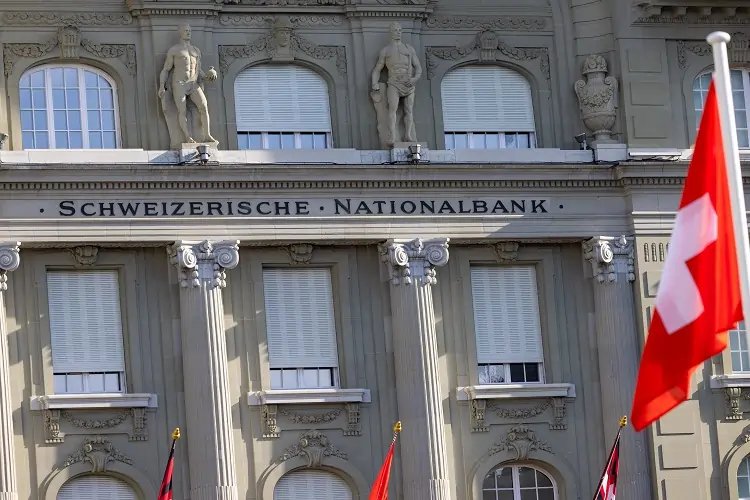
Published by Uma Rajagopal
Posted on December 16, 2024
1 min readLast updated: January 28, 2026
Add as preferred source on GoogleZURICH (Reuters) – The Swiss National Bank will lower the threshold factor where it pays interest on sight deposits to commercial banks lodging money with it overnight, the central bank said on Monday.
ZURICH (Reuters) – The Swiss National Bank will lower the threshold factor where it pays interest on sight deposits to commercial banks lodging money with it overnight, the central bank said on Monday.
The SNB will pay interest at its policy rate of 0.5% to banks up to 20 times their minimum reserve requirement from February 1 next year, down from 22 times previously.
Sight deposits held above the threshold will be remunerated at a discount rate, which is currently 0%.
The SNB said the change in thresholds was to counteract the increase in reserve requirements for lenders that the SNB introduced earlier this year.
Sight deposits held by the SNB have ballooned in recent years as a result of the SNB’s foreign currency purchases. On Monday, the SNB said it held 456 billion Swiss francs ($512.30 billion) in sight deposits.
The move follows the latest cut in the SNB’s interest rate, which was lowered by 50 basis points last week to 0.5%, the lowest level since November 2022.
Monday’s adjustment “has no impact on the current monetary policy stance”, the SNB said.
($1 = 0.8901 Swiss francs)
(Reporting by John Revill and Rachel More, editing by Thomas Seythal)
A central bank is a financial institution responsible for managing a country's currency, money supply, and interest rates. It oversees monetary policy and aims to maintain economic stability.
Sight deposits are funds held in bank accounts that can be withdrawn on demand without any notice. They are typically used for everyday transactions and are a key component of a bank's liquidity.
An interest rate is the amount charged by lenders to borrowers for the use of money, expressed as a percentage of the principal. It can vary based on economic conditions and monetary policy.
Monetary policy refers to the actions taken by a central bank to manage the money supply and interest rates to achieve macroeconomic goals such as controlling inflation and stabilizing currency.
A reserve requirement is the minimum amount of reserves that a bank must hold against deposits. It is set by the central bank and influences the bank's ability to lend money.
Explore more articles in the Finance category