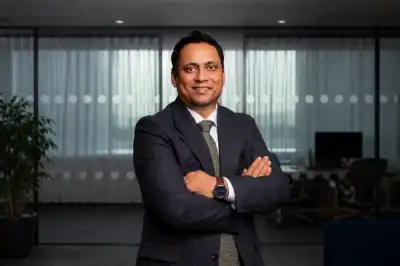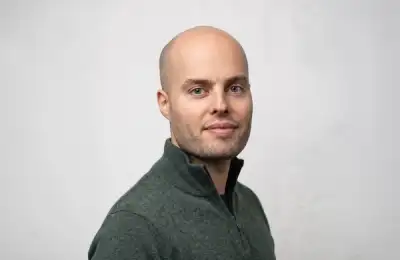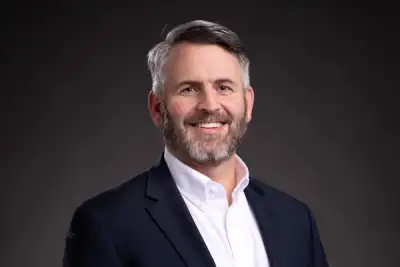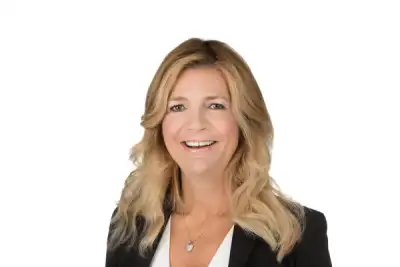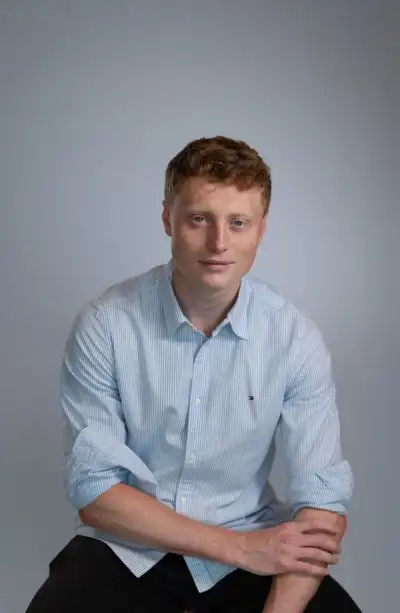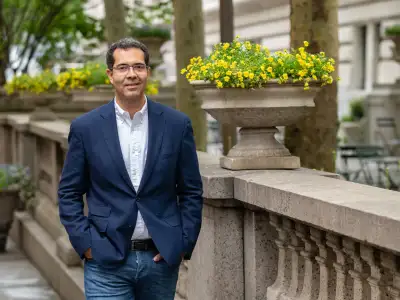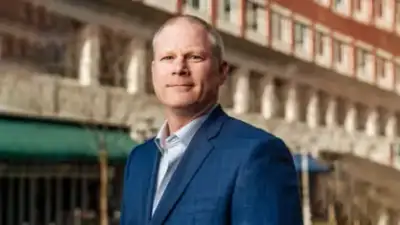

A Q&A with Grant Nicholson, Founder of Pharaoh Capital
As energy markets grow more unpredictable and global supply chains buckle under pressure, long-term energy certainty is quickly becoming one of the most valuable — and elusive — assets on the balance sheet.
For finance leaders, the old model of “wait and hope” no longer works. Predictable pricing, stable infrastructure, and off-balance-sheet decarbonisation are no longer ESG bonuses — they’re survival strategies.
At the heart of this shift is Grant Nicholson, founder of Pharaoh Capital, a private UK-based renewables operator delivering long-term, no-CAPEX solar infrastructure to commercial and industrial clients across the UK.
In this exclusive Q&A, we sit down with Nicholson to unpack how he’s helping CFOs, lenders, and institutional investors navigate the energy transition — without sacrificing financial performance.
Q: Grant, let’s start simple. Why is energy certainty such a critical issue for financial decision-makers right now?
A:
Because volatility kills strategy. You can’t forecast when your biggest OPEX line item swings 200% in 12 months. We’ve seen CFOs throw out entire budgets because energy costs just nuked their margins. Boards don’t want nice ESG decks — they want predictable inputs. We give them fixed-price solar, funded entirely off balance sheet. That’s energy certainty. And it’s becoming a weapon in competitive industries.
Q: How does your model turn a traditionally capital-heavy energy upgrade into a low-risk financial asset?
A:
Simple. The client doesn’t buy the asset — we do. We fund, build, own, and maintain the solar infrastructure. The business signs a long-term Power Purchase Agreement (PPA) for the energy — at a fixed rate, cheaper than grid. That means no CapEx, no maintenance, no distraction. And from day one, they’re cashflow-positive on energy. Think of it like leasing a building — but the rent is 30–40% cheaper than your current landlord (the grid).
Q: What types of businesses or investors does this model appeal to most?
A:
We’re seeing demand from all angles. Commercial landlords, logistics firms, data centres, and manufacturing — anywhere energy is a major cost line. On the funding side, private credit funds, family offices, and increasingly infrastructure arms of banks. They’re hunting for yield, and our projects provide it: stable cashflows, long-term contracts, and measurable carbon reduction. That’s a win-win across both the asset and ESG mandates.
Q: You mentioned 30–40% savings. Are those real numbers or best-case scenarios?
A:
They’re real. We’ve installed on warehouse portfolios where clients are saving six figures annually. And that’s before we talk about carbon reduction or tenant benefits. We don’t pitch this as an ESG play with a “maybe” payback. We pitch it as a financial instrument that just happens to decarbonise your business.
Q: What makes your projects more “bankable” compared to legacy solar providers?
A:
Most solar operators either over-promise or overcomplicate. We’re different. Our projects are backed by private debt, underpinned by long-term contracts, and installed with speed and precision. We can go from handshake to switch-on in under 8 weeks. That velocity, plus financial predictability, makes us attractive to lenders and credit committees. We’re not building green dreams — we’re building stable assets that pay.
Q: Why aren’t more businesses moving faster on this, then?
A:
Two reasons: legacy mindset and noise. Many execs still think “solar = subsidies or CapEx.” That’s outdated. Our model is CapEx-free. The second problem is noise. Too many cowboys in this space. It muddies the water. We’re trying to change that — one installation, one client, one PPA at a time.
Q: How does your approach align with the ESG frameworks investors are now demanding?
A:
Perfectly. Most ESG frameworks are hungry for real, quantifiable impact — not marketing spin. Our installs cut Scope 2 emissions, improve reporting, and don’t mess with operational cash. That ticks ESG, treasury, and board boxes in one go. Plus, because it’s infrastructure, it’s durable — not some policy-dependent gimmick.
Q: From a financing point of view, is this a debt story, equity story, or both?
A:
Right now, we’re a private debt story. We’ve raised facility lines that allow us to scale fast without selling equity. That gives us speed and pricing power. Long-term, we may open to institutional equity — but only if it strengthens execution. We’re not chasing unicorn valuations. We’re chasing throughput, cashflow, and impact.
Q: Finally, what’s your message to the banking and finance community reading this?
A:
Energy is no longer a utility issue. It’s a boardroom issue. And energy certainty is now a competitive advantage. If you're a lender, ask yourself: are your borrowers protected against future price shocks? If not — they should be calling us. If you're an investor looking for stable yield, stop chasing tech and start backing the grid.
“We’re not building hype. We’re building solar assets that cut bills, cut carbon, and create yield — fast.”
— Grant Nicholson, Founder, Pharaoh Capital