Search
00
GBAF Logo
trophy
Top StoriesInterviewsBusinessFinanceBankingTechnologyInvestingTradingVideosAwardsMagazinesHeadlinesTrends

Subscribe to our newsletter

Get the latest news and updates from our team.

Global Banking and Finance Review

Global Banking & Finance Review

Company

    GBAF Logo
    • About Us
    • Profile
    • Privacy & Cookie Policy
    • Terms of Use
    • Contact Us
    • Advertising
    • Submit Post
    • Latest News
    • Research Reports
    • Press Release
    • Awards▾
      • About the Awards
      • Awards TimeTable
      • Submit Nominations
      • Testimonials
      • Media Room
      • Award Winners
      • FAQ
    • Magazines▾
      • Global Banking & Finance Review Magazine Issue 79
      • Global Banking & Finance Review Magazine Issue 78
      • Global Banking & Finance Review Magazine Issue 77
      • Global Banking & Finance Review Magazine Issue 76
      • Global Banking & Finance Review Magazine Issue 75
      • Global Banking & Finance Review Magazine Issue 73
      • Global Banking & Finance Review Magazine Issue 71
      • Global Banking & Finance Review Magazine Issue 70
      • Global Banking & Finance Review Magazine Issue 69
      • Global Banking & Finance Review Magazine Issue 66
    Top StoriesInterviewsBusinessFinanceBankingTechnologyInvestingTradingVideosAwardsMagazinesHeadlinesTrends

    Global Banking & Finance Review® is a leading financial portal and online magazine offering News, Analysis, Opinion, Reviews, Interviews & Videos from the world of Banking, Finance, Business, Trading, Technology, Investing, Brokerage, Foreign Exchange, Tax & Legal, Islamic Finance, Asset & Wealth Management.
    Copyright © 2010-2025 GBAF Publications Ltd - All Rights Reserved.

    Editorial & Advertiser disclosure

    Global Banking and Finance Review is an online platform offering news, analysis, and opinion on the latest trends, developments, and innovations in the banking and finance industry worldwide. The platform covers a diverse range of topics, including banking, insurance, investment, wealth management, fintech, and regulatory issues. The website publishes news, press releases, opinion and advertorials on various financial organizations, products and services which are commissioned from various Companies, Organizations, PR agencies, Bloggers etc. These commissioned articles are commercial in nature. This is not to be considered as financial advice and should be considered only for information purposes. It does not reflect the views or opinion of our website and is not to be considered an endorsement or a recommendation. We cannot guarantee the accuracy or applicability of any information provided with respect to your individual or personal circumstances. Please seek Professional advice from a qualified professional before making any financial decisions. We link to various third-party websites, affiliate sales networks, and to our advertising partners websites. When you view or click on certain links available on our articles, our partners may compensate us for displaying the content to you or make a purchase or fill a form. This will not incur any additional charges to you. To make things simpler for you to identity or distinguish advertised or sponsored articles or links, you may consider all articles or links hosted on our site as a commercial article placement. We will not be responsible for any loss you may suffer as a result of any omission or inaccuracy on the website.

    Home > Investing > Robinhood closes at $34.82 in grim stock market debut
    Investing

    Robinhood closes at $34.82 in grim stock market debut

    Robinhood closes at $34.82 in grim stock market debut

    Published by Jessica Weisman-Pitts

    Posted on July 30, 2021

    Featured image for article about Investing

    By Echo Wang and Noor Zainab Hussain

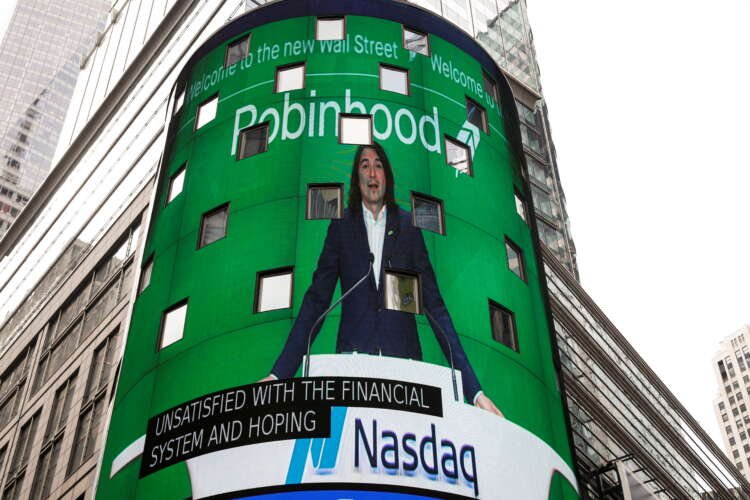
    (Reuters) – Robinhood Markets Inc’s shares closed more than 8% lower at $34.82 per share on their first day of trading, as many investors who used the popular trading app to participate in this year’s “meme” stock trading frenzy snubbed its initial public offering (IPO)

    Only 16 of the 99 U.S.-listed companies that were worth at least $10 billion when they went public declined on their first day, according to Dealogic, whose data goes back to 1995.

    “A year ago we were trading the stock at 15 bucks a share. And our most recent trades in early June were $55 a share (in the private market),” said Glen Anderson, president of Rainmaker Securities, a secondary trading platform for private pre-IPO shares. Anderson said they traded about $200 million in Robinhood stocks in the private market last year.

    Robinhood’s easy-to-use interface has made it a hit among young investors trading from home on cryptocurrencies and stocks such as GameStop Corp during the COVID-19 pandemic. Some IPO investors stayed on the sidelines, citing concerns over its frothy valuation, the risk of regulators cracking down on Robinhood’s business, and lingering anger with the company’s imposition of trading curbs when the meme stock trading frenzy flared in January. In an unusual move, Robinhood had said it would reserve between 20% and 35% of its shares for its users. Many IPOs benefit from excluding retail investors, who end up fueling a first-day trading pop by snapping up shares in the open market. By letting many retail investors under the IPO tent, Robinhood made big gains less likely for investors on the first day.”The market believes that institutional investors will hold on for a longer time, and retail investors are more likely to flip,” said Reena Aggarwal, professor of finance at Georgetown University. Robinhood shares priced at $38 in the IPO. Stanford University roommates Vlad Tenev and Baiju Bhatt founded the company in 2013. The two will hold a majority of the voting power, with Bhatt keeping around 39% of the outstanding stock and Tenev about 26.2%. “It maybe seemed like a good idea to offer (the IPO) to your customers, but it might not be very helpful when it comes to controlling how the shares are allocated and the beginning of the trading of this IPO,” said Kathleen Smith at Renaissance Capital in Greenwich, Connecticut. Robinhood enraged some investors and U.S. lawmakers this year when it restricted trading in some popular stocks following a 10-fold rise in deposit requirements at its clearinghouse. It has been at the center of many regulatory probes. The company disclosed this week that it has received inquiries from U.S. regulators looking into whether its employees traded shares of GameStop and AMC Entertainment Holdings, Inc before the trading curbs were placed at the end of January.


    (Reporting by Echo Wang in New York; Noor Zainab Hussain, Ankur Banerjee and Niket Nishant in Bengaluru; Editing by Arun Koyyur and Howard Goller)


    By Echo Wang and Noor Zainab Hussain

    (Reuters) – Robinhood Markets Inc’s shares closed more than 8% lower at $34.82 per share on their first day of trading, as many investors who used the popular trading app to participate in this year’s “meme” stock trading frenzy snubbed its initial public offering (IPO)

    Only 16 of the 99 U.S.-listed companies that were worth at least $10 billion when they went public declined on their first day, according to Dealogic, whose data goes back to 1995.

    “A year ago we were trading the stock at 15 bucks a share. And our most recent trades in early June were $55 a share (in the private market),” said Glen Anderson, president of Rainmaker Securities, a secondary trading platform for private pre-IPO shares. Anderson said they traded about $200 million in Robinhood stocks in the private market last year.

    Robinhood’s easy-to-use interface has made it a hit among young investors trading from home on cryptocurrencies and stocks such as GameStop Corp during the COVID-19 pandemic. Some IPO investors stayed on the sidelines, citing concerns over its frothy valuation, the risk of regulators cracking down on Robinhood’s business, and lingering anger with the company’s imposition of trading curbs when the meme stock trading frenzy flared in January. In an unusual move, Robinhood had said it would reserve between 20% and 35% of its shares for its users. Many IPOs benefit from excluding retail investors, who end up fueling a first-day trading pop by snapping up shares in the open market. By letting many retail investors under the IPO tent, Robinhood made big gains less likely for investors on the first day.”The market believes that institutional investors will hold on for a longer time, and retail investors are more likely to flip,” said Reena Aggarwal, professor of finance at Georgetown University. Robinhood shares priced at $38 in the IPO. Stanford University roommates Vlad Tenev and Baiju Bhatt founded the company in 2013. The two will hold a majority of the voting power, with Bhatt keeping around 39% of the outstanding stock and Tenev about 26.2%. “It maybe seemed like a good idea to offer (the IPO) to your customers, but it might not be very helpful when it comes to controlling how the shares are allocated and the beginning of the trading of this IPO,” said Kathleen Smith at Renaissance Capital in Greenwich, Connecticut. Robinhood enraged some investors and U.S. lawmakers this year when it restricted trading in some popular stocks following a 10-fold rise in deposit requirements at its clearinghouse. It has been at the center of many regulatory probes. The company disclosed this week that it has received inquiries from U.S. regulators looking into whether its employees traded shares of GameStop and AMC Entertainment Holdings, Inc before the trading curbs were placed at the end of January.


    (Reporting by Echo Wang in New York; Noor Zainab Hussain, Ankur Banerjee and Niket Nishant in Bengaluru; Editing by Arun Koyyur and Howard Goller)


    Related Posts
     Millennials Aren’t Ignoring Retirement. They’re Rebuilding It.
    Millennials Aren’t Ignoring Retirement. They’re Rebuilding It.
    BridgeWise Launches FixedWise, the First AI Solution Bringing Granular Bond Intelligence to the European Market
    BridgeWise Launches FixedWise, the First AI Solution Bringing Granular Bond Intelligence to the European Market
    Why Financial Advisors Are Rethinking Gold Allocations
    Why Financial Advisors Are Rethinking Gold Allocations
    From Opaque to Investable: Yaniv Bertele's Blueprint for Transparent Alternatives
    From Opaque to Investable: Yaniv Bertele's Blueprint for Transparent Alternatives
    Private Equity Needs AI Advocates
    Private Equity Needs AI Advocates
    Understanding the Global Impact of Rising Medical Insurance Premiums on the Middle Class
    Understanding the Global Impact of Rising Medical Insurance Premiums on the Middle Class
    The New Model Driving Creative Investment in University Innovation
    The New Model Driving Creative Investment in University Innovation
    The return of tangible assets in modern portfolios
    The return of tangible assets in modern portfolios
    Retro Bikes And Insurance: What You Should Know?
    Retro Bikes And Insurance: What You Should Know?
    Top Stocks Powering the AI Boom in 2025
    Top Stocks Powering the AI Boom in 2025
    How often should you update your estate plan? The events that demand a refresh
    How often should you update your estate plan? The events that demand a refresh
    Top 5 Mutual Funds in the UAE: Performance, Features, and How to Invest
    Top 5 Mutual Funds in the UAE: Performance, Features, and How to Invest

    Why waste money on news and opinions when you can access them for free?

    Take advantage of our newsletter subscription and stay informed on the go!

    Subscribe

    Previous Investing PostVirus variant threatens to cool oil demand recovery – Reuters poll
    Next Investing PostMerck sees recovery in non-COVID vaccine demand as quarterly sales beat estimates

    More from Investing

    Explore more articles in the Investing category

    How One Investor Learned to Find Value Through a Wider Lens

    How One Investor Learned to Find Value Through a Wider Lens

    Freedom Holding Corp’s Global Rise: Why Institutional Investors Are Betting Big

    Freedom Holding Corp’s Global Rise: Why Institutional Investors Are Betting Big

    Pro Visionary Helps Australians Strengthen Their Financial Resilience Through Licensed Wealth Strategies

    Pro Visionary Helps Australians Strengthen Their Financial Resilience Through Licensed Wealth Strategies

    How ZenInvestor Is Breaking Down Barriers to Financial Literacy and Empowering Everyday Investors Nationwide

    How ZenInvestor Is Breaking Down Barriers to Financial Literacy and Empowering Everyday Investors Nationwide

    Edward L. Shugrue III on Returning to the Office: A Cultural Shift and Investment Opportunity

    Edward L. Shugrue III on Returning to the Office: A Cultural Shift and Investment Opportunity

    How Private Capital Can Build Public Good

    How Private Capital Can Build Public Good

    Private Equity Has a Major Speed and Capacity Problem

    Private Equity Has a Major Speed and Capacity Problem

    Navigating AI Investing Tools: Wealth Management Disruption Ahead

    Navigating AI Investing Tools: Wealth Management Disruption Ahead

    MTF Trading Explained: What It Is, How It Works, and Key Benefits

    MTF Trading Explained: What It Is, How It Works, and Key Benefits

    Private Equity Has Trust Issues With AI

    Private Equity Has Trust Issues With AI

    Merifund Capital Management on FTSE 100 Gains

    Merifund Capital Management on FTSE 100 Gains

    Sycamine Capital Management sets outlook on Japan equities

    Sycamine Capital Management sets outlook on Japan equities

    View All Investing Posts