Search
00
GBAF Logo
trophy
Top StoriesInterviewsBusinessFinanceBankingTechnologyInvestingTradingVideosAwardsMagazinesHeadlinesTrends

Subscribe to our newsletter

Get the latest news and updates from our team.

Global Banking & Finance Review®

Global Banking & Finance Review® - Subscribe to our newsletter

Company

    GBAF Logo
    • About Us
    • Profile
    • Privacy & Cookie Policy
    • Terms of Use
    • Contact Us
    • Advertising
    • Submit Post
    • Latest News
    • Research Reports
    • Press Release
    • Awards▾
      • About the Awards
      • Awards TimeTable
      • Submit Nominations
      • Testimonials
      • Media Room
      • Award Winners
      • FAQ
    • Magazines▾
      • Global Banking & Finance Review Magazine Issue 79
      • Global Banking & Finance Review Magazine Issue 78
      • Global Banking & Finance Review Magazine Issue 77
      • Global Banking & Finance Review Magazine Issue 76
      • Global Banking & Finance Review Magazine Issue 75
      • Global Banking & Finance Review Magazine Issue 73
      • Global Banking & Finance Review Magazine Issue 71
      • Global Banking & Finance Review Magazine Issue 70
      • Global Banking & Finance Review Magazine Issue 69
      • Global Banking & Finance Review Magazine Issue 66
    Top StoriesInterviewsBusinessFinanceBankingTechnologyInvestingTradingVideosAwardsMagazinesHeadlinesTrends

    Global Banking & Finance Review® is a leading financial portal and online magazine offering News, Analysis, Opinion, Reviews, Interviews & Videos from the world of Banking, Finance, Business, Trading, Technology, Investing, Brokerage, Foreign Exchange, Tax & Legal, Islamic Finance, Asset & Wealth Management.
    Copyright © 2010-2026 GBAF Publications Ltd - All Rights Reserved. | Sitemap | Tags | Developed By eCorpIT

    Editorial & Advertiser disclosure

    Global Banking & Finance Review® is an online platform offering news, analysis, and opinion on the latest trends, developments, and innovations in the banking and finance industry worldwide. The platform covers a diverse range of topics, including banking, insurance, investment, wealth management, fintech, and regulatory issues. The website publishes news, press releases, opinion and advertorials on various financial organizations, products and services which are commissioned from various Companies, Organizations, PR agencies, Bloggers etc. These commissioned articles are commercial in nature. This is not to be considered as financial advice and should be considered only for information purposes. It does not reflect the views or opinion of our website and is not to be considered an endorsement or a recommendation. We cannot guarantee the accuracy or applicability of any information provided with respect to your individual or personal circumstances. Please seek Professional advice from a qualified professional before making any financial decisions. We link to various third-party websites, affiliate sales networks, and to our advertising partners websites. When you view or click on certain links available on our articles, our partners may compensate us for displaying the content to you or make a purchase or fill a form. This will not incur any additional charges to you. To make things simpler for you to identity or distinguish advertised or sponsored articles or links, you may consider all articles or links hosted on our site as a commercial article placement. We will not be responsible for any loss you may suffer as a result of any omission or inaccuracy on the website.

    Home > Investing > Resurgent stock market evokes memories of long-gone bubble on Tokyo’s ‘Wall Street’
    Investing

    Resurgent stock market evokes memories of long-gone bubble on Tokyo’s ‘Wall Street’

    Published by linker 5

    Posted on March 2, 2021

    4 min read

    Last updated: January 21, 2026

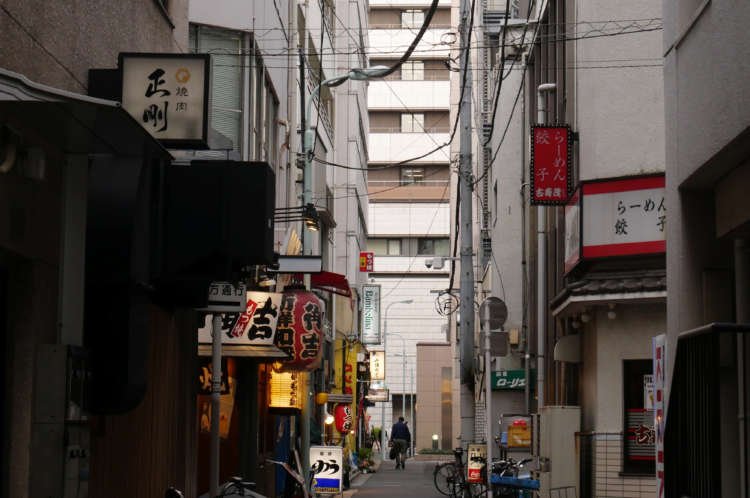
    The image depicts a nearly empty bar in Tokyo's Kayabacho district, highlighting the contrast between today's quiet scene and the bustling atmosphere during the stock market bubble of the late 1980s.
    Quiet Kayabacho district bar reflects on Tokyo's stock market bubble era - Global Banking & Finance Review
    Why waste money on news and opinion when you can access them for free?

    Take advantage of our newsletter subscription and stay informed on the go!

    Subscribe

    By Junko Fujita

    TOKYO (Reuters) – At the almost empty “Wall Street” bar and restaurant in Tokyo’s Kayabacho financial district, three groups of patrons dine quietly at tables separated by partitions.

    The sedate scene is a far cry from the area’s heyday 30 years ago when traders flush from big wins on the nearby Tokyo Stock Exchange routinely crowded the restaurant’s bar, downing glasses of premium whiskey.

    Even though Japanese stocks are scaling giddy heights not seen since the asset inflation bubble of the late 1980s and early 1990s, bars and restaurants in the financial district aren’t along for the ride.

    Kayabacho’s streets are instead eerily quiet.

    “During the bubble era, people came here to drink a glass of Ballantine’s 30-year-old (whisky) for 5,500 yen ($52), even when there’s no seats available, just standing by the cash register,” “Wall Street” owner Kenichi Inoue, 62, told Reuters.

    Inoue opened the European style bar and restaurant in 1989, the year the Nikkei index hit a record peak, aiming to serve drinks and food at the affordable price of around $30 per person.

    Brokers and traders packed into the bar almost every evening, with tables at the back usually filled by workers from Yamaichi Securities, then the country’s fourth largest brokerage.

    “It was easy to guess the size of the crowd for the evening,” said Inoue. “If the market was up, I knew it would be busy.”

    Inoue’s restaurant wasn’t the only establishment to benefit during the boom. Coffee shops scattered throughout Kayabacho were filled with brokers exchanging information on the market.

    The ‘Tatsumi’ restaurant was popular with superstitious traders because it served tempura, or deep fried vegetables and fish. The Japanese word for “deep-fry”, ageru, has the same sound as the word “boost”.

    “Back then brokers used to come here in a group. They gave us 100,000 yen in cash in an advance,” said 62-year-old owner, Masahiko Tsuda, citing a figure equivalent to around $800 at the time. “If that was not enough, they paid the difference at the end of the week.”

    The party came to an end when the stocks bubble burst in the early 1990s. Yamaichi was one of four major banks and brokerages that collapsed in 1997.

    Compounding the market slide, the Tokyo Stock Exchange in 1999 completed a decade-long switch to electronic trading, closing the formerly bustling trading floor.

    The number of brokerage employees almost halved from a peak of 170,000 nationwide in 1991 to 91,000 last year, according to the Japan Securities Dealers Association.

    With them went much of the vibrancy of Kayabacho, a downturn that has been exacerbated by the coronavirus pandemic, which has led to trading restrictions on bars and restaurants across Tokyo.

    REDEVELOPMENT PLANS

    Redevelopment plans for Kayabacho, which houses many small and old buildings, have been in train for several years, with attempts to rebrand the area as a fintech hub. Heiwa Real Estate, the owner of the stock exchange building, plans to open a 15-storey office tower in the area later this year.

    But the revamp lags the refurbishment of neighbouring districts like Marunouchi and Nihonbashi, where major property developers Mitsubishi Estate and Mitsui Fudosan have created hubs for global firms.

    Adding to Kayabacho’s woes, the coronavirus pandemic has dealt a blow to the real estate market across Tokyo, as more people work from home and domestic economic growth slows.

    “Kayabacho’s atmosphere is dark and gloomy,” said Yoko Hattori, 52, the owner of a standing bar, New Kayaba. “The economy is bad. Many buildings here are old but renovation is not easy because it costs money.”

    Tsuda said he no longer sees people flashing lots of cash at his restaurant, while Inoue said “Wall Street” was facing the most critical time of its history.

    Inoue has attempted to diversify his menu from the pasta, pizza and grilled meats that catered to mostly male stockbrokers, adding organic food and cold press juice for more health-conscious customers.

    He is grateful that his own business never relied too heavily on the excesses of the bubble era: “If this had been an high-end restaurant, it would have been closed a long time ago.”

    (Additional reporting by Mayu Sakoda and Hiroko Hamada; editing by Jane Wardell)


    More from Investing

    Explore more articles in the Investing category

    Image for Understanding the Factors Shaping Bitcoin’s Current Market Conditions
    Understanding the Factors Shaping Bitcoin’s Current Market Conditions
    Image for Understanding Investment Management Consulting Services in the U.S. Market
    Understanding Investment Management Consulting Services in the U.S. Market
    Image for The Role of DST Sponsors and Service Providers in Delaware Statutory Trusts
    The Role of DST Sponsors and Service Providers in Delaware Statutory Trusts
    Image for Understanding Self-Directed IRA Structures and Platform Models
    Understanding Self-Directed IRA Structures and Platform Models
    Image for 1031 Exchanges and Delaware Statutory Trusts: What Investors Need to Know
    1031 Exchanges and Delaware Statutory Trusts: What Investors Need to Know
    Image for Excellence in Innovation – Strategic Investment & Economic Transformation Egypt 2025
    Excellence in Innovation – Strategic Investment & Economic Transformation Egypt 2025
    Image for What Is the Average Pension Pot in the UK? (By Age)
    What Is the Average Pension Pot in the UK? (By Age)
    Image for From Money Printing to Market Surge: The Macro Forces Driving Crypto in 2026
    From Money Printing to Market Surge: The Macro Forces Driving Crypto in 2026
    Image for  Millennials Aren’t Ignoring Retirement. They’re Rebuilding It.
    Millennials Aren’t Ignoring Retirement. They’re Rebuilding It.
    Image for BridgeWise Launches FixedWise, the First AI Solution Bringing Granular Bond Intelligence to the European Market
    BridgeWise Launches FixedWise, the First AI Solution Bringing Granular Bond Intelligence to the European Market
    Image for Why Financial Advisors Are Rethinking Gold Allocations
    Why Financial Advisors Are Rethinking Gold Allocations
    Image for From Opaque to Investable: Yaniv Bertele's Blueprint for Transparent Alternatives
    From Opaque to Investable: Yaniv Bertele's Blueprint for Transparent Alternatives
    View All Investing Posts
    Previous Investing PostRobinhood now a go-to for young investors and short sellers
    Next Investing PostEuropean shares end higher as commodity majors reverse losses