Search
00
GBAF Logo
trophy
Top StoriesInterviewsBusinessFinanceBankingTechnologyInvestingTradingVideosAwardsMagazinesHeadlinesTrends

Subscribe to our newsletter

Get the latest news and updates from our team.

Global Banking & Finance Review®

Global Banking & Finance Review® - Subscribe to our newsletter

Company

    GBAF Logo
    • About Us
    • Profile
    • Privacy & Cookie Policy
    • Terms of Use
    • Contact Us
    • Advertising
    • Submit Post
    • Latest News
    • Research Reports
    • Press Release
    • Awards▾
      • About the Awards
      • Awards TimeTable
      • Submit Nominations
      • Testimonials
      • Media Room
      • Award Winners
      • FAQ
    • Magazines▾
      • Global Banking & Finance Review Magazine Issue 79
      • Global Banking & Finance Review Magazine Issue 78
      • Global Banking & Finance Review Magazine Issue 77
      • Global Banking & Finance Review Magazine Issue 76
      • Global Banking & Finance Review Magazine Issue 75
      • Global Banking & Finance Review Magazine Issue 73
      • Global Banking & Finance Review Magazine Issue 71
      • Global Banking & Finance Review Magazine Issue 70
      • Global Banking & Finance Review Magazine Issue 69
      • Global Banking & Finance Review Magazine Issue 66
    Top StoriesInterviewsBusinessFinanceBankingTechnologyInvestingTradingVideosAwardsMagazinesHeadlinesTrends

    Global Banking & Finance Review® is a leading financial portal and online magazine offering News, Analysis, Opinion, Reviews, Interviews & Videos from the world of Banking, Finance, Business, Trading, Technology, Investing, Brokerage, Foreign Exchange, Tax & Legal, Islamic Finance, Asset & Wealth Management.
    Copyright © 2010-2026 GBAF Publications Ltd - All Rights Reserved. | Sitemap | Tags | Developed By eCorpIT

    Editorial & Advertiser disclosure

    Global Banking & Finance Review® is an online platform offering news, analysis, and opinion on the latest trends, developments, and innovations in the banking and finance industry worldwide. The platform covers a diverse range of topics, including banking, insurance, investment, wealth management, fintech, and regulatory issues. The website publishes news, press releases, opinion and advertorials on various financial organizations, products and services which are commissioned from various Companies, Organizations, PR agencies, Bloggers etc. These commissioned articles are commercial in nature. This is not to be considered as financial advice and should be considered only for information purposes. It does not reflect the views or opinion of our website and is not to be considered an endorsement or a recommendation. We cannot guarantee the accuracy or applicability of any information provided with respect to your individual or personal circumstances. Please seek Professional advice from a qualified professional before making any financial decisions. We link to various third-party websites, affiliate sales networks, and to our advertising partners websites. When you view or click on certain links available on our articles, our partners may compensate us for displaying the content to you or make a purchase or fill a form. This will not incur any additional charges to you. To make things simpler for you to identity or distinguish advertised or sponsored articles or links, you may consider all articles or links hosted on our site as a commercial article placement. We will not be responsible for any loss you may suffer as a result of any omission or inaccuracy on the website.

    Home > Finance > Real-Time Trends Currently Gaining Popularity in Payments Market
    Finance

    Real-Time Trends Currently Gaining Popularity in Payments Market

    Published by linker 5

    Posted on November 9, 2020

    5 min read

    Last updated: January 21, 2026

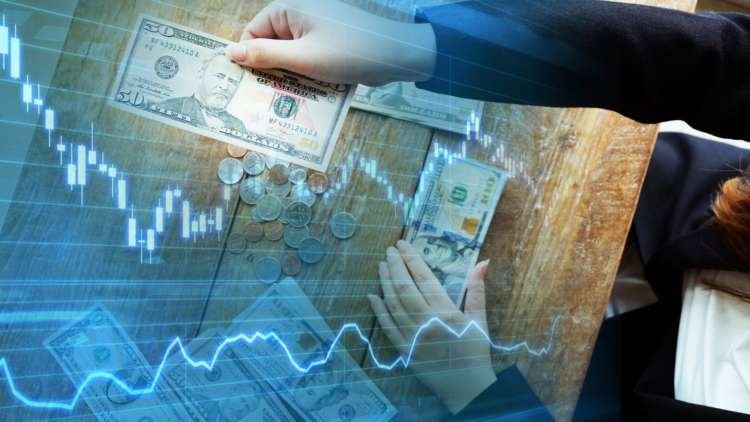
    A visual representation of the latest trends in the payments market, highlighting innovations such as buy now, pay later and super apps, as discussed in the article.
    Illustration of cashless payment trends in the finance industry - Global Banking & Finance Review
    Why waste money on news and opinion when you can access them for free?

    Take advantage of our newsletter subscription and stay informed on the go!

    Subscribe

    Payment providers are coming up with new ways to aid the pandemic-struck consumer. 

    The current circumstances called for implementing novel solutions in the payments market to accommodate the newly-risen demand for cashless options, as well as the need for flexibility to combat pandemic-induced uncertainty. Marius Galdikas, CEO of ConnectPay, shared his insights on the up-and-coming trends in the industry as payment providers spruce up their efforts to offer better products.

    Buy now, pay later

    Delayed payments are a budget-friendly shopping option, which may expand as COVID-19 threatens income security, hence the appearance of buy now, pay later shopping services. Enabling consumers to pay in monthly installments eases uncertainty about a large one-off expense, decreasing perceived risk for the consumer.

    The new service, known as PayPal in 3, allows the purchase of goods priced between GBP 42 and 2,000, in three equal, interest-free installments, which are automated during the purchase timeline. The PayPal offering arrives on the tails of Pay in 4, the equivalent service for the US market.

    “Flexibility is key at the moment. Consumers are unsure about the future, which has resulted in stricter budgeting – the priority is covering day-to-day expenses, after all. Bi-monthly payments create less pressure, as smaller installments are more manageable to pay off, and it doesn’t come across a single huge hit to savings. I think we’ll see more business adopting such an approach, catering to the customer reassurance,” said Galdikas.

    Payments via super apps

    A super app is an umbrella app, which accommodates a multitude of services, ranging from food delivery to taxi services, and so on. The pandemic pushed these applications to expand their versatility even more, as they started to integrate various payment options, for example, carrying cashless point-of-purchase for multiple vendors.

    Super apps like Alipay or Grab stemmed from simple beginnings but took off for their utility. As convenience remains paramount, the trend, which first sparked in China, is now expanding across the border, aiming to present streamlined payment options at the customers’ fingertips.

    “This perfectly illustrates the current trend towards a one-click future, where any purchase, request, or transaction is a single-tap away,” noted Mr Galdikas. “With customers rooting for simplicity-backed efficiency, such applications are very likely to continue growing in popularity.”

    Marius Galdikas, CEO at ConnectPay

    Marius Galdikas, CEO at ConnectPay

    “In addition, super apps could help define new layers of consumer behavior, expanding market reach for payment providers, and present new key insights to reflect upon,” he added.

    QR Code Boom

    Using a physical-space 2D code is quite easy and versatile, as it can facilitate donations, micropayments, or other point-of-purchase tools. That is why QR codes made forays as one of the most popular tools during the past few months of the pandemic, when consumers and businesses saw mobile wallets in a new light.

    So far, the integration of physically printed codes and e-wallets has taken over the Southeast Asian markets. US-based providers, however, are yet to catch up with the trend. Yet the tech has been around for more than a decade, only waiting for the current use case of cashless purchases.

    “A QR code is an easy addition to extend the use of electronic wallets into the physical space of shops or venues,” said M. Galdikas. “The main appeal is that there is less complexity in its integration, making it ideal for small-scale vendors to jump on the cashless payments trend and offer their clientele a safer option to settle their purchases.”

    Mobile point-of-sale

    As the popularity of cash wanes, substitutes are gaining traction, such as mobile point-of-sale, or mPOS. MPOS tools work in place of card payments, and harness the already well-accepted mobile wallets. A good example would be the prevalence of ApplePay, a common trend for Western consumers, who use the app to replace credit cards. The pandemic fueled their usage even more, as supermarket POS terminals already show a 59% increase in ApplePay usage since May 2020.

    “Increased security and convenience add to the potential growth of Apple’s wallet or, as a matter of fact, any other mPOS usage,” explained Mr Galdikas. “Cashless payments are still playing a key role in limiting exposure to coronavirus threats. Thus using an mPOS equals spending less time at the store, which adds to its general appeal of usefulness.”

    Biometrics-enhanced security

    As electronic payments grow both in volume and complexity – fraud follows, therefore monitoring consumer identities, cross-border remittances, automation, as well as various point-of-purchase options becomes more of a challenge. This is where biometrics steps in as an additional layer of security for combating potential identity abuse scams. Utilizing unique consumer characteristics or real-time location data enables to verify a user’s digital identity, preventing scams or account takeovers.

    “Biometrics has been recognized as a crucial part of security at all levels,” said M. Galdikas. “Reflecting on the SCA law, stating mandatory two-factor authentication for all online transactions and contactless payments within the EU, biometrics is outlined as one of the key safeguards for authorization. With the common threats becoming more technologically sophisticated, reliance on biometrics will only continue to increase, as it is harder to fake.”

    More from Finance

    Explore more articles in the Finance category

    Image for Russia launches massive attack on Ukraine's energy system, Zelenskiy says
    Russia launches massive attack on Ukraine's energy system, Zelenskiy says
    Image for Russia launched 400 drones, 40 missiles to hit Ukraine's energy sector, Zelenskiy says
    Russia launched 400 drones, 40 missiles to hit Ukraine's energy sector, Zelenskiy says
    Image for The Kyiv family, with its pets and pigs, defying Russia and the cold
    The Kyiv family, with its pets and pigs, defying Russia and the cold
    Image for Two Polish airports reopen after NATO jets activated over Russian strikes on Ukraine
    Two Polish airports reopen after NATO jets activated over Russian strikes on Ukraine
    Image for French miner Eramet's finance chief steps aside temporarily, days after CEO ouster
    French miner Eramet's finance chief steps aside temporarily, days after CEO ouster
    Image for Ukraine's Zelenskiy calls for faster action on air defence, repairs to grid
    Ukraine's Zelenskiy calls for faster action on air defence, repairs to grid
    Image for Goldman Sachs teams up with Anthropic to automate banking tasks with AI agents, CNBC reports
    Goldman Sachs teams up with Anthropic to automate banking tasks with AI agents, CNBC reports
    Image for Analysis-Hims' $49 weight-loss pill rattles investor case for cash-pay obesity market
    Analysis-Hims' $49 weight-loss pill rattles investor case for cash-pay obesity market
    Image for Analysis-Glencore to focus on short-term disposals as Rio deal remains elusive
    Analysis-Glencore to focus on short-term disposals as Rio deal remains elusive
    Image for Belgium's Agomab Therapeutics valued at $716 million as shares fall in Nasdaq debut
    Belgium's Agomab Therapeutics valued at $716 million as shares fall in Nasdaq debut
    Image for Big Tech's quarter in four charts: AI splurge and cloud growth
    Big Tech's quarter in four charts: AI splurge and cloud growth
    Image for EU hikes tariffs on Chinese ceramics to 79% to counter dumping 
    EU hikes tariffs on Chinese ceramics to 79% to counter dumping 
    View All Finance Posts
    Previous Finance PostThree ways SMEs can save money on foreign exchange
    Next Finance PostThe Future is Digital: Brits Wave Goodbye to Bank Notes for a New Era of Payment