Search
00
GBAF Logo
trophy
Top StoriesInterviewsBusinessFinanceBankingTechnologyInvestingTradingVideosAwardsMagazinesHeadlinesTrends

Subscribe to our newsletter

Get the latest news and updates from our team.

Global Banking & Finance Review®

Global Banking & Finance Review® - Subscribe to our newsletter

Company

    GBAF Logo
    • About Us
    • Profile
    • Privacy & Cookie Policy
    • Terms of Use
    • Contact Us
    • Advertising
    • Submit Post
    • Latest News
    • Research Reports
    • Press Release
    • Awards▾
      • About the Awards
      • Awards TimeTable
      • Submit Nominations
      • Testimonials
      • Media Room
      • Award Winners
      • FAQ
    • Magazines▾
      • Global Banking & Finance Review Magazine Issue 79
      • Global Banking & Finance Review Magazine Issue 78
      • Global Banking & Finance Review Magazine Issue 77
      • Global Banking & Finance Review Magazine Issue 76
      • Global Banking & Finance Review Magazine Issue 75
      • Global Banking & Finance Review Magazine Issue 73
      • Global Banking & Finance Review Magazine Issue 71
      • Global Banking & Finance Review Magazine Issue 70
      • Global Banking & Finance Review Magazine Issue 69
      • Global Banking & Finance Review Magazine Issue 66
    Top StoriesInterviewsBusinessFinanceBankingTechnologyInvestingTradingVideosAwardsMagazinesHeadlinesTrends

    Global Banking & Finance Review® is a leading financial portal and online magazine offering News, Analysis, Opinion, Reviews, Interviews & Videos from the world of Banking, Finance, Business, Trading, Technology, Investing, Brokerage, Foreign Exchange, Tax & Legal, Islamic Finance, Asset & Wealth Management.
    Copyright © 2010-2026 GBAF Publications Ltd - All Rights Reserved. | Sitemap | Tags | Developed By eCorpIT

    Editorial & Advertiser disclosure

    Global Banking & Finance Review® is an online platform offering news, analysis, and opinion on the latest trends, developments, and innovations in the banking and finance industry worldwide. The platform covers a diverse range of topics, including banking, insurance, investment, wealth management, fintech, and regulatory issues. The website publishes news, press releases, opinion and advertorials on various financial organizations, products and services which are commissioned from various Companies, Organizations, PR agencies, Bloggers etc. These commissioned articles are commercial in nature. This is not to be considered as financial advice and should be considered only for information purposes. It does not reflect the views or opinion of our website and is not to be considered an endorsement or a recommendation. We cannot guarantee the accuracy or applicability of any information provided with respect to your individual or personal circumstances. Please seek Professional advice from a qualified professional before making any financial decisions. We link to various third-party websites, affiliate sales networks, and to our advertising partners websites. When you view or click on certain links available on our articles, our partners may compensate us for displaying the content to you or make a purchase or fill a form. This will not incur any additional charges to you. To make things simpler for you to identity or distinguish advertised or sponsored articles or links, you may consider all articles or links hosted on our site as a commercial article placement. We will not be responsible for any loss you may suffer as a result of any omission or inaccuracy on the website.

    Home > Investing > Oil rises after U.S. crude drawdowns, supply tightness
    Investing

    Oil rises after U.S. crude drawdowns, supply tightness

    Published by Jessica Weisman-Pitts

    Posted on June 2, 2022

    3 min read

    Last updated: February 6, 2026

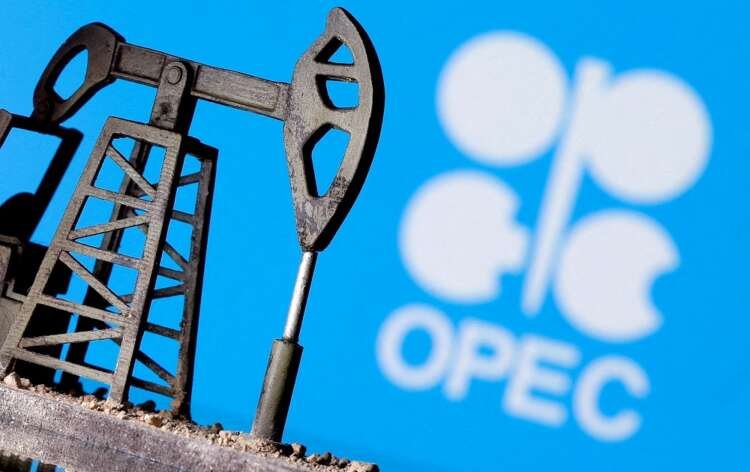
    This image features a 3D-printed oil pump jack in front of the OPEC logo, symbolizing the current oil market dynamics as prices fall due to potential OPEC output increases amidst Russian production losses.
    3D-printed oil pump jack in front of OPEC logo illustrating oil market dynamics - Global Banking & Finance Review
    Why waste money on news and opinion when you can access them for free?

    Take advantage of our newsletter subscription and stay informed on the go!

    Subscribe

    Tags:oil and gasfinancial marketsInvestment Strategies

    By Laura Sanicola

    (Reuters) -Oil prices edged higher on Thursday after U.S. crude inventories fell more than expected amid high demand for fuel and OPEC+ agreed to boost crude output to compensate for a drop in Russian production.

    U.S. crude oil stockpiles fell last week by 5.1 million barrels to 414.7 million barrels, compared with analysts’ expectations in a Reuters poll for a 1.3 million-barrel drop.

    Brent futures rose $1.16, or 1%, to $117.45 a barrel by 12:06 p.m. EDT (1606 GMT), while U.S. West Texas Intermediate (WTI) crude rose $1.51, or 1.3%, to $116.77.

    Prices, however, were also supported by the European Union’s sixth package of sanctions against Russia, approved on Thursday, which will include an immediate ban on new insurance contracts for ships carrying Russian oil and a six month phase-out on existing contracts.

    The benchmarks have mostly marched higher for several weeks as Russian exports have been squeezed by U.S. and EU sanctions against Moscow over its Feb. 24 invasion of Ukraine, an action Moscow calls a “special military operation.”

    The market has also seen support from China’s gradual emergence from strict COVID-19 lockdowns.

    Oil prices fell earlier on Thursday ahead of the OPEC+ meeting on expectations Saudi Arabia and other OPEC members could boost oil output to offset a drop in Russian production.

    The Organization of the Petroleum Exporting Countries and allies including Russia, known as OPEC+, agreed to raise output by 648,000 barrels per day (bpd) in July and 648,000 bpd in August, a source told Reuters.

    “While OPEC+ agreed to increase their production quota by a bit more than the market expected, in reality it does very little to add additional supplies as OPEC+ was already falling short of its existing quotas by over 2 million barrels per day,” said Andrew Lipow, president of Lipow Oil Associates in Houston

    Russian production has fallen by around 1 million bpd following sanctions.

    One OPEC+ source familiar with the Russian position said Moscow could agree to other producers raising production to compensate for its lower output but not necessarily making up all the shortfall.

    The Kremlin says it can re-route oil exports to minimize losses from EU sanctions, but analysts remain skeptical.

    “The extent to which this will prove achievable is questionable, however. Russian oil production is therefore likely to fall again in the coming months,” said Commerzbank analyst Carsten Fritsch, who also questioned OPEC+’s ability to add considerably more oil to the market.

    (Additional reporting by Scott DiSavino in New York, Rowena Edwards in London and Yuka Obayashi in Tokyo; Editing by Marguerita Choy and Barbara Lewis)

    Frequently Asked Questions about Oil rises after U.S. crude drawdowns, supply tightness

    1What is OPEC+?

    OPEC+ is a coalition of oil-producing countries, including members of the Organization of the Petroleum Exporting Countries (OPEC) and other nations like Russia, that coordinate oil production to influence prices.

    2What are crude oil inventories?

    Crude oil inventories refer to the stockpiles of crude oil held by a country or company, which are monitored to assess supply levels and market demand.

    3What is Brent crude oil?

    Brent crude oil is a major trading classification of crude oil originating from the North Sea, used as a benchmark for pricing oil globally.

    4What is West Texas Intermediate (WTI)?

    West Texas Intermediate (WTI) is a grade of crude oil used as a benchmark in oil pricing, primarily produced in the United States.

    5What are sanctions in the context of oil production?

    Sanctions are restrictions imposed by countries or international bodies to limit trade or financial transactions, often targeting specific nations to influence their policies or actions.

    More from Investing

    Explore more articles in the Investing category

    Image for Understanding the Factors Shaping Bitcoin’s Current Market Conditions
    Understanding the Factors Shaping Bitcoin’s Current Market Conditions
    Image for Understanding Investment Management Consulting Services in the U.S. Market
    Understanding Investment Management Consulting Services in the U.S. Market
    Image for The Role of DST Sponsors and Service Providers in Delaware Statutory Trusts
    The Role of DST Sponsors and Service Providers in Delaware Statutory Trusts
    Image for Understanding Self-Directed IRA Structures and Platform Models
    Understanding Self-Directed IRA Structures and Platform Models
    Image for 1031 Exchanges and Delaware Statutory Trusts: What Investors Need to Know
    1031 Exchanges and Delaware Statutory Trusts: What Investors Need to Know
    Image for Excellence in Innovation – Strategic Investment & Economic Transformation Egypt 2025
    Excellence in Innovation – Strategic Investment & Economic Transformation Egypt 2025
    Image for What Is the Average Pension Pot in the UK? (By Age)
    What Is the Average Pension Pot in the UK? (By Age)
    Image for From Money Printing to Market Surge: The Macro Forces Driving Crypto in 2026
    From Money Printing to Market Surge: The Macro Forces Driving Crypto in 2026
    Image for  Millennials Aren’t Ignoring Retirement. They’re Rebuilding It.
    Millennials Aren’t Ignoring Retirement. They’re Rebuilding It.
    Image for BridgeWise Launches FixedWise, the First AI Solution Bringing Granular Bond Intelligence to the European Market
    BridgeWise Launches FixedWise, the First AI Solution Bringing Granular Bond Intelligence to the European Market
    Image for Why Financial Advisors Are Rethinking Gold Allocations
    Why Financial Advisors Are Rethinking Gold Allocations
    Image for From Opaque to Investable: Yaniv Bertele's Blueprint for Transparent Alternatives
    From Opaque to Investable: Yaniv Bertele's Blueprint for Transparent Alternatives
    View All Investing Posts
    Previous Investing PostOil edges higher as supply still seen tight after OPEC+ hike
    Next Investing PostEuropean shares rise after two-day decline