Finance
Islamic Finance Futures
Published by Gbaf News
Posted on July 23, 2014
4 min readLast updated: January 22, 2026
Add as preferred source on Google
Published by Gbaf News
Posted on July 23, 2014
4 min readLast updated: January 22, 2026
Add as preferred source on GoogleIn the UK the number of banks offering Islamic financial services is more than four times greater than any other country in Western Europe: holdings of Islamic assets total around $19 billion.
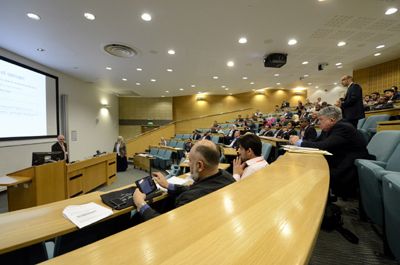
In serving the growing interest in Islamic financial services, the 4th Islamic Banking and Finance Conference was recently hosted by the Gulf One Centre for Economic Research at Lancaster University Management School. The conference drew more than 100 delegates from over 30 countries, including Malaysia, Australia, the USA, France, Algeria, Pakistan and Saudi Arabia.
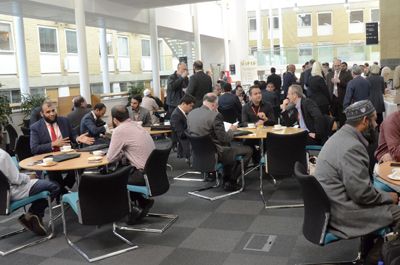 Research and discussion highlighted the growth potential of Islamic finance, with real benefits for business and financial communities. Islamic banking is now practised in more than 20 countries, with a steadily growing suite of services and instruments, including bonds, equity indices and insurance. Annual growth, estimated to be around 16%, was relatively unaffected by the global financial crisis. In excess of $1.2 trillion of Islamic finance products are currently offered by 350 institutions worldwide.
The conference keynote speech was given by Professor Thorsten Beck of Cass Business School and Tilburg University. In examining the role of Islamic banking in the modern world, he highlighted a research study of the international performance of Islamic and conventional banks, comparing aspects of business orientation, efficiency, asset quality and stability. Islamic banks were shown to be more capitalised but less cost-efficient, which could be due to differences in the business model. Included among possible lines for future research enquiry, are the drivers for continuing expansion of the industry, its role in financial inclusion, the products on offer and the type of customers who use Islamic banking services.
The best paper award went to an analysis of the stock market reaction to 131 ‘sukuk’ issuances’. Sukuk are Islamic bonds that constitute undivided shares in the ownership of the tangible assets associated with a particular project. Sukuk differ from conventional bonds, where investors receive a return in terms of interest and the repayment of the principal on a specific date. In reviewing sukuk issues in eight countries, over the period 2006-2013, the type of sukuk and the choice of scholars hired to certify those securities were important determinants of the market valuation of the issuing company. In particular, Ijara (lease) sukuk structures exerted a positive influence on the stock price of the issuing firm. The author pointed to the relevance of Shariah compliant risk and its impact on the mechanics of financial products in the quest for standardisation and regulation in Islamic finance.
 Another interesting contribution extended empirical work linking investor mood and financial market behaviour, with particular attention given to the psychological impact of Ramadan celebrations. Using extended data from seven predominantly Muslim countries, ‘herding’ activity was shown to be significant during Ramadan in a majority of the markets examined.
One idea to emerge which has important policy implications for the UK, is a proposal on Islamic student loans. The objective is to enable access to university education for Muslims, who are bound by Shariah rules in financing annual fees of £9000. The conventional system of student loans is not Shariah-compliant because, in adding a predetermined interest charge to the repayment schedule, it breaches the centuries-old probation on usury. By contrast, Islamic student loans could be based on equity participation, a prominent mode of financing in Islamic finance. Islamic student loans’ mode of financing could receive additional interest from institutional investors that see several benefits in this endeavour, which in turn would extend the applicability of these loans. Moreover, a first mover advantage would be likely for the UK in offering this novel type of student financing.
A recurring theme in discussions is the relative resilience of Islamic Finance, as compared to conventional counterparts. The evidence-based consensus that has emerged is that the unique characteristics of Islamic banking afforded greater protection from the shocks of the international credit crunch of 2008. It is this conclusion that has particularly attracted the attention of market participants and researchers to the Shariah-compliant structure of Islamic banking: the liquidity buffers, leverage ratios, managerial efficiency and bespoke financial products.
With the rapid growth that is expected to continue in this sector, the Islamic Banking and Finance Conference promises to become a focal point for academics, administrators, advisory bodies and practitioners alike.
Dr Vasilis Pappas, Deputy Director, Lancaster University Management School, Gulf One Lancaster Centre for Economic Research, www.lancaster.ac.uk/lums/golcer
Explore more articles in the Finance category