Investing
Investment Trends 2026: World's Capital Is Flowing into Dubai Real Estate
Published by Barnali Pal Sinha
Posted on March 2, 2026
6 min readLast updated: March 2, 2026
Published by Barnali Pal Sinha
Posted on March 2, 2026
6 min readLast updated: March 2, 2026
Dubai’s real estate market has reached an unprecedented milestone. A recent analysis from brokerage firm W Capital reveals that the emirate has surpassed AED 2 trillion ($544.5 billion) in total property transactions over the past five years. In the following article, we’ll break down the key driver...
Dubai’s real estate market has reached an unprecedented milestone. A recent analysis from brokerage firm W Capital reveals that the emirate has surpassed AED 2 trillion ($544.5 billion) in total property transactions over the past five years. In the following article, we’ll break down the key drivers behind this remarkable growth and explain how to invest in this booming market.
According to the Dubai Land Department (DLD), the market's expansion is evident in both value and volume. Transaction numbers hit a record-breaking 214,912 by the end of 2025 –
a striking 38.7% jump compared to 2024.
Annual Real Estate Sales Breakdown: Comparison Table
| Year | Sales value (Billion AED) | Number of transactions |
| 2021 | 149.0 | 60,213 |
| 2022 | 265.5 | 97,446 |
| 2023 | 401.0 | 129,000 |
| 2024 | 522.36 | 180,860 |
| 2025 | 682.6 | 214,912 |
| Total | > 2 trillion | ~682,431 |
Dubai’s real estate surge is being driven by three key factors: progressive government policies, a fundamental supply shortage, and strategic infrastructure spending.
The market's resilience is largely due to government initiatives that attract global capital. Long-term residency initiatives, such as the Golden Visa, have transformed Dubai into a primary destination for international buyers. Simultaneously, enhanced transparency from the Dubai Land Department has built trust among investors.
Dubai’s population has officially surpassed 4 million. The city's rapid population growth continues to outpace construction, with new unit deliveries struggling to keep up. This sustained imbalance keeps occupancy rates near full capacity in sought-after areas and supports strong rental yields for investors.
Major public works are directly boosting property prices. For example, the announcement of the new Metro Blue Line with 14 new stations has redirected buyer interest toward previously overlooked suburban districts. By improving connectivity, the government is actively creating new prime real estate zones.
Under Law No. 7 of 2006, foreigners can acquire full ownership in designated freehold zones – such as Palm Jumeirah, Downtown Dubai, and Dubai Marina – or secure leasehold rights for up to 99 years.
This legislative framework has transformed Dubai into a magnet for global capital. Today, over 95% of prime developments sit within foreign-accessible areas, making it one of the world's most welcoming property markets.
However, traditional real estate investment comes with barriers: high entry costs, especially in premium districts, loads of paperwork, and limited liquidity that locks up capital for years. For international investors, there's also the need to travel or manage properties from afar.
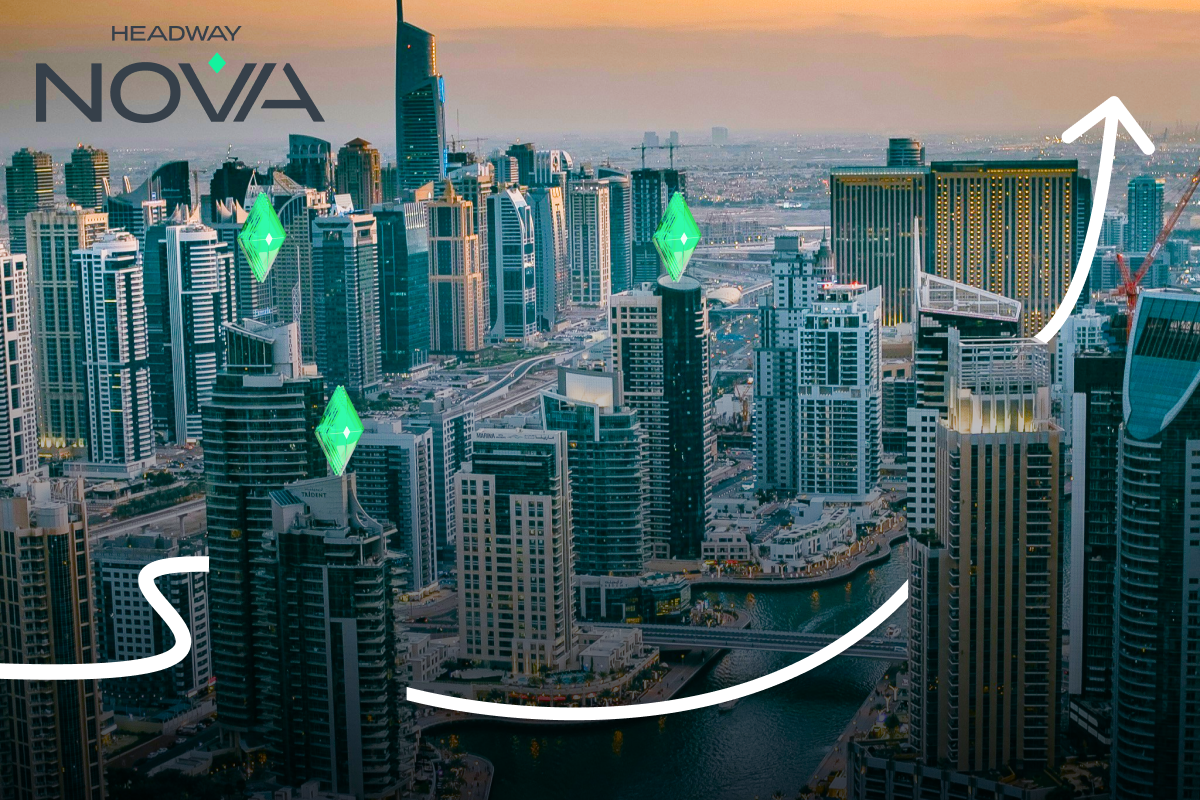
Digital platforms, like Headway NOVA, remove all these barriers through tokenization. Instead of purchasing physical property, investors buy tokens – digital shares of real apartments. These tokens give the right to benefit from rental income and property appreciation.
The platform enables fractional investment, allowing global investors to build diversified portfolios across multiple Dubai properties. Tokens offer liquidity through a dedicated resale market, while NOVA handles all legal and administrative processes – from acquisitions to rental management. This means investors can access Dubai's prime real estate market without the paperwork, without buying an entire property, and without leaving home.
According to a report by the Deloitte Center for Financial Services, tokenized real estate is forecast to grow from under $0.3 trillion in 2024 to nearly $4 trillion by 2035, driven by fractional ownership and broader investor access.
During the boom, almost any investment delivered a win. Now, the market is expected to switch toward "settled maturity," and success requires selectivity and strategy.
A common investor mistake is obsessing over short-term appreciation. But true success isn't just about price jumps – it's about performance. The focus must now shift to consistent passive income through rental yields and long-term capital preservation.
Even as price growth stabilizes, well-located, high-demand properties continue to perform. The greatest risk today isn't buying "late" – it's buying without logic, driven by FOMO rather than strategic thinking.
The recent surge was most fueled by high transaction volumes in mid-market districts. In 2025, apartment prices in these areas rose sharply, with Dubai Silicon Oasis (DSO) recording a 29% increase to reach approximately AED 1,501 per square foot, while Jumeirah Village Circle (JVC) saw annual price gains of around 17%.
With location more critical than ever, investor focus has shifted toward areas offering "intrinsic value" – such as proximity to new infrastructure or unique lifestyle features.
Jumeirah Village Circle is the ROI leader in the mid-market, offering 7–9% rental yields thanks to its central location and established amenities like Circle Mall.
Dubai Silicon Oasis is poised for 6–8% capital gains as the new Metro Blue Line improves connectivity. High tenant demand from nearby tech firms and Academic City ensures strong occupancy.
MBR City is an "urban-resort" destination offering lagoon-side living close to Downtown, popular with expatriates seeking green space and luxury without the premium price tag.
Palm Jebel Ali is the long-term play for high-net-worth investors. With major infrastructure milestones reached, this waterfront giant offers significant scale and potential for capital preservation.
Expo City Dubai isevolving into a major corporate hub. The relocation of global events and company headquarters is driving demand for both short-term serviced apartments and long-term rentals.
Dubai's real estate sector has clearly entered a new chapter. And the opportunities haven't disappeared. For investors seeking accessibility, tokenization platforms like Headway NOVA are lowering barriers that once required significant capital and complex paperwork. Dubai's real estate story is far from over; it's simply entering its most sustainable and inclusive chapter yet.
Disclaimer: Despite these opportunities, investors should be mindful of evolving regulatory frameworks and market risks. Tokenization infrastructure is still nascent in many jurisdictions, with regulatory clarity and cross‑border compliance requirements continuing to develop. Uncertainty in how digital asset laws, taxation, and blockchain‑based titles will be interpreted can create execution and settlement challenges for international buyers. Additionally, periods of rapid price growth can be followed by correction phases, especially in markets exposed to global macroeconomic trends and interest rate shifts.
Explore more articles in the Investing category