Search
00
GBAF Logo
trophy
Top StoriesInterviewsBusinessFinanceBankingTechnologyInvestingTradingVideosAwardsMagazinesHeadlinesTrends

Subscribe to our newsletter

Get the latest news and updates from our team.

Global Banking and Finance Review

Global Banking & Finance Review

Company

    GBAF Logo
    • About Us
    • Profile
    • Privacy & Cookie Policy
    • Terms of Use
    • Contact Us
    • Advertising
    • Submit Post
    • Latest News
    • Research Reports
    • Press Release
    • Awards▾
      • About the Awards
      • Awards TimeTable
      • Submit Nominations
      • Testimonials
      • Media Room
      • Award Winners
      • FAQ
    • Magazines▾
      • Global Banking & Finance Review Magazine Issue 79
      • Global Banking & Finance Review Magazine Issue 78
      • Global Banking & Finance Review Magazine Issue 77
      • Global Banking & Finance Review Magazine Issue 76
      • Global Banking & Finance Review Magazine Issue 75
      • Global Banking & Finance Review Magazine Issue 73
      • Global Banking & Finance Review Magazine Issue 71
      • Global Banking & Finance Review Magazine Issue 70
      • Global Banking & Finance Review Magazine Issue 69
      • Global Banking & Finance Review Magazine Issue 66
    Top StoriesInterviewsBusinessFinanceBankingTechnologyInvestingTradingVideosAwardsMagazinesHeadlinesTrends

    Global Banking & Finance Review® is a leading financial portal and online magazine offering News, Analysis, Opinion, Reviews, Interviews & Videos from the world of Banking, Finance, Business, Trading, Technology, Investing, Brokerage, Foreign Exchange, Tax & Legal, Islamic Finance, Asset & Wealth Management.
    Copyright © 2010-2025 GBAF Publications Ltd - All Rights Reserved.

    Editorial & Advertiser disclosure

    Global Banking and Finance Review is an online platform offering news, analysis, and opinion on the latest trends, developments, and innovations in the banking and finance industry worldwide. The platform covers a diverse range of topics, including banking, insurance, investment, wealth management, fintech, and regulatory issues. The website publishes news, press releases, opinion and advertorials on various financial organizations, products and services which are commissioned from various Companies, Organizations, PR agencies, Bloggers etc. These commissioned articles are commercial in nature. This is not to be considered as financial advice and should be considered only for information purposes. It does not reflect the views or opinion of our website and is not to be considered an endorsement or a recommendation. We cannot guarantee the accuracy or applicability of any information provided with respect to your individual or personal circumstances. Please seek Professional advice from a qualified professional before making any financial decisions. We link to various third-party websites, affiliate sales networks, and to our advertising partners websites. When you view or click on certain links available on our articles, our partners may compensate us for displaying the content to you or make a purchase or fill a form. This will not incur any additional charges to you. To make things simpler for you to identity or distinguish advertised or sponsored articles or links, you may consider all articles or links hosted on our site as a commercial article placement. We will not be responsible for any loss you may suffer as a result of any omission or inaccuracy on the website.

    Home > Investing > INVESTING IN POST-SANCTIONS IRAN
    Investing

    INVESTING IN POST-SANCTIONS IRAN

    INVESTING IN POST-SANCTIONS IRAN

    Published by Gbaf News

    Posted on December 9, 2015

    Featured image for article about Investing

    BY AZADESH MESKARIAN, HEAD OF IRAN DESK, ZAIWALLA & CO. LLP

    Impact of sanctions on the Iranian economy

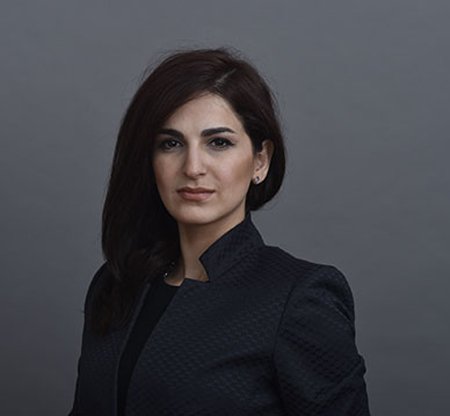
    Azadeh Meskarian, Zaiwalla & Co.

    Azadeh Meskarian, Zaiwalla & Co.

    The imposition of blanket sanctions and extensive trade restrictions by the US, EU and other countries on Iran’s financial, banking and energy sectors has crippled its economy in the past few years.

    Exchange rates and the depreciating value of the Iranian Rial has significantly affected the day to day lives of local Iranians, foreign companies and individuals with an interest in investing in the country. As a result, foreign investors with significant presence in Iran were left with no option but to close down and/or significantly reduce their activities.

    These prohibitions made it impossible, for Iranian banks and their foreign subsidiaries to carry out transactions with the rest of the world. Furthermore, many European banks with representative offices in Iran had to close down or significantly reduce their activities and resources in Iran. The cut-off of key banking channels, corresponding relationships and swift services has distanced  Iran’s financial sector from the international banking sector. This negatively impacted the value of the Iranian Rial and the rate of inflation reached a high of 34.7% between March 2013-March 2014, and then fell to 15.5% the following year after President Rouhani’s election.

    What remains essential even after the Implementation Day is the re-establishment of banking channels and international corresponding relationship with Iranian banks and their foreign branches and subsidiaries. Although the return of international banking services to Iran is bound to happen, the removal of sanctions would not necessarily mean an immediate return of foreign banks to Iran, and I believe it will take much more than that for that to happen. Banks have faced extensive fines by US authorities (most recent Deutsche Bank paid fines of $258m for dealing with US sanctioned Iranians and Syrians) for breaching international sanctions relating to Iran and will remain hesitant in entering the Iranian market. Iran will need to meet the international standard of relevant regulatory frameworks and deal with significant money-laundering concerns for the return of foreign international banks.

    INVESTING IN POST-SANCTIONS IRAN

    Domestic and International opportunities by lifting of sanctions

    As the largest untapped market with a very young population, the lifting of sanctions will bring around a host of new opportunities to foreign businesses with a prior presence in Iran as well as those interested in entering the Iranian market. Delegations from various European countries have been visiting officials in Iran since the finalisation of the JCPOA in July 2015 elaborating various opportunities in tourism, transportation, technology, foodstuff, aviation and machinery as well as oil and gas.

    Those interested should be aware of the domestic applicable law, recent changes in the Iranian law, international restrictions that remain on trading with Iran and the possibility of snap-back of sanctions , although it is unlikely for Iran not to abide by its agreed obligations as set out under the JCPOA. Those interested should bear in mind what will happen to any deals they enter into between Implementation Day and potential snap-back of sanctions. Working around the Iranian economy and complex politics can be tricky and requires assistance.

    New Iranian legislations such as the Foreign Investment Promotion and Protection Act have come into force in an attempt to attract more foreign investment, removing previous restrictions on the percentage of foreign shareholding in Iran, and the possibility of registering an Iranian company with 100% foreign capital as well as unlimited transfer of capital and dividends where applicable.

    Investors and businesses must be vigilant of sanctions that will remain in place after the Implementation Day —some UN, EU sanctions, as well as all primary US sanctions applicable to all US citizens will remain in place —and businesses must ensure they comply will all applicable sanctions to prevent problems.

    Investors should also take advice on protecting their intellectual property rights to protect their interest in Iran, this is perhaps also another area that domestic Iranian law will require further improvement to make the market more attractive.

    Framework in which foreign investment will flow in to post-sanctions Iran

    Iran as the holder of the world’s largest gas reserve and the fourth-biggest oil reserves, has revealed its modelled Iran Petroleum Contract (IPC) earlier last month (21-22 November) replacing its previous buyback deals. This is in line with Iran’s widely publicised intention to increase its oil production capacity after the lifting of sanction under the JCPOA as of Implementation Day, to approximately 5million barrels a day from about 1mb since the imposition of blanket sanctions on Iran’s oil and gas sector.

    The IPC replaces the previous unattractive buyback deals. The new IPC will cover different stages of exploration, development and production and will be offered to contractors as an integrated package for an estimated duration of 15 to 20 years. Iran hopes to attract around $30bn of foreign investment necessary to substantiate its intention to increase its oil production despite the falling oil prices. Although as far foreign investment is concerned, changes to domestic law may be necessary to make the system more transparent and reliable.

    Another thing to note is the possibility of snap-back of the sanctions if there is doubt about Iran’s performance under the JCPOA, so it may take time for the necessary level of confidence to build up for significant foreign investment.

    The new framework is expected to create a win-win situation for both the foreign investors and the Iranian side of the deal, and hopefully attract medium-sized foreign investors as well as the previously present MNCs. It will also bring about potential opportunities for foreign companies to book reserves or take equity stakes in Iranian companies. It is worth noting that NIOC will maintain exclusive ownership of all resources.

    Related Posts
     Millennials Aren’t Ignoring Retirement. They’re Rebuilding It.
    Millennials Aren’t Ignoring Retirement. They’re Rebuilding It.
    BridgeWise Launches FixedWise, the First AI Solution Bringing Granular Bond Intelligence to the European Market
    BridgeWise Launches FixedWise, the First AI Solution Bringing Granular Bond Intelligence to the European Market
    Why Financial Advisors Are Rethinking Gold Allocations
    Why Financial Advisors Are Rethinking Gold Allocations
    From Opaque to Investable: Yaniv Bertele's Blueprint for Transparent Alternatives
    From Opaque to Investable: Yaniv Bertele's Blueprint for Transparent Alternatives
    Private Equity Needs AI Advocates
    Private Equity Needs AI Advocates
    Understanding the Global Impact of Rising Medical Insurance Premiums on the Middle Class
    Understanding the Global Impact of Rising Medical Insurance Premiums on the Middle Class
    The New Model Driving Creative Investment in University Innovation
    The New Model Driving Creative Investment in University Innovation
    The return of tangible assets in modern portfolios
    The return of tangible assets in modern portfolios
    Retro Bikes And Insurance: What You Should Know?
    Retro Bikes And Insurance: What You Should Know?
    Top Stocks Powering the AI Boom in 2025
    Top Stocks Powering the AI Boom in 2025
    How often should you update your estate plan? The events that demand a refresh
    How often should you update your estate plan? The events that demand a refresh
    Top 5 Mutual Funds in the UAE: Performance, Features, and How to Invest
    Top 5 Mutual Funds in the UAE: Performance, Features, and How to Invest

    Why waste money on news and opinions when you can access them for free?

    Take advantage of our newsletter subscription and stay informed on the go!

    Subscribe

    Previous Investing PostFIXED INCOME FOCUS: OUTLOOK FOR 2016
    Next Investing PostInvestors urged to think global after The Great Divergence’s weak start

    More from Investing

    Explore more articles in the Investing category

    How One Investor Learned to Find Value Through a Wider Lens

    How One Investor Learned to Find Value Through a Wider Lens

    Freedom Holding Corp’s Global Rise: Why Institutional Investors Are Betting Big

    Freedom Holding Corp’s Global Rise: Why Institutional Investors Are Betting Big

    Pro Visionary Helps Australians Strengthen Their Financial Resilience Through Licensed Wealth Strategies

    Pro Visionary Helps Australians Strengthen Their Financial Resilience Through Licensed Wealth Strategies

    How ZenInvestor Is Breaking Down Barriers to Financial Literacy and Empowering Everyday Investors Nationwide

    How ZenInvestor Is Breaking Down Barriers to Financial Literacy and Empowering Everyday Investors Nationwide

    Edward L. Shugrue III on Returning to the Office: A Cultural Shift and Investment Opportunity

    Edward L. Shugrue III on Returning to the Office: A Cultural Shift and Investment Opportunity

    How Private Capital Can Build Public Good

    How Private Capital Can Build Public Good

    Private Equity Has a Major Speed and Capacity Problem

    Private Equity Has a Major Speed and Capacity Problem

    Navigating AI Investing Tools: Wealth Management Disruption Ahead

    Navigating AI Investing Tools: Wealth Management Disruption Ahead

    MTF Trading Explained: What It Is, How It Works, and Key Benefits

    MTF Trading Explained: What It Is, How It Works, and Key Benefits

    Private Equity Has Trust Issues With AI

    Private Equity Has Trust Issues With AI

    Merifund Capital Management on FTSE 100 Gains

    Merifund Capital Management on FTSE 100 Gains

    Sycamine Capital Management sets outlook on Japan equities

    Sycamine Capital Management sets outlook on Japan equities

    View All Investing Posts